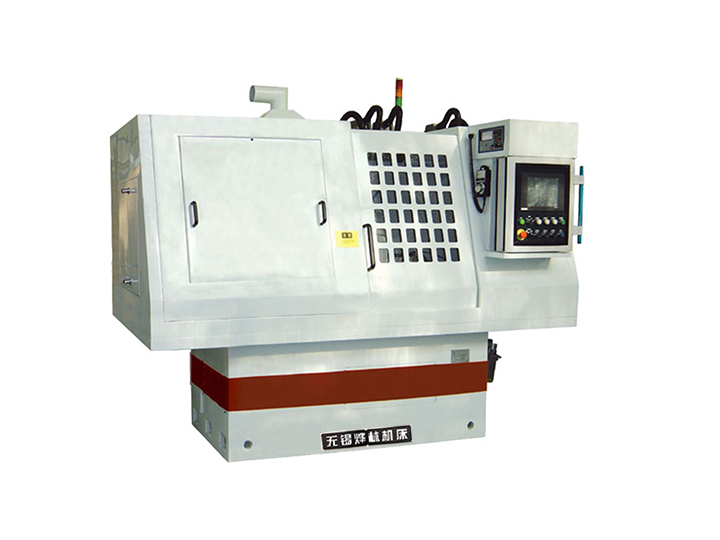
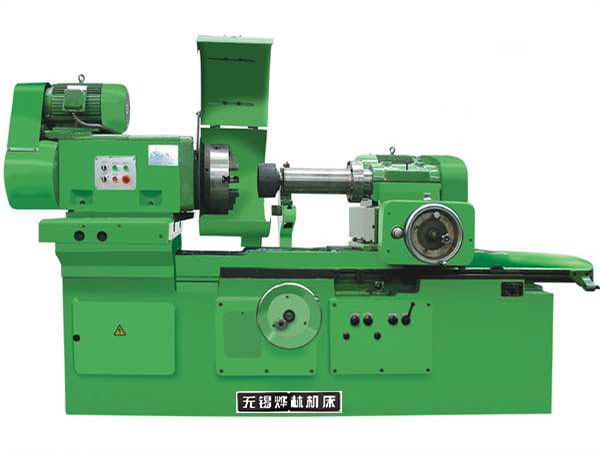
Why Prices Vary So Widely
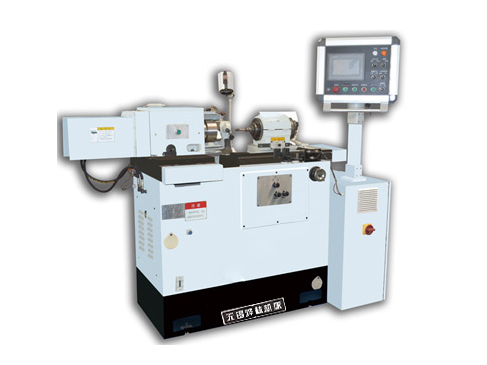
The price of a CNC cylindrical grinder spans an order of magnitude. A small entry-level machine costs $60K; a large universal CNC machine with automation costs $700K. Same basic process, same basic machine, ten times the price. Why?
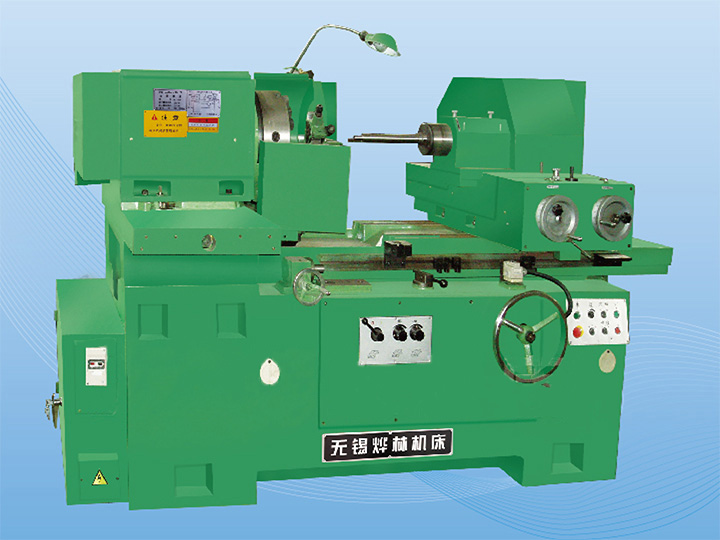
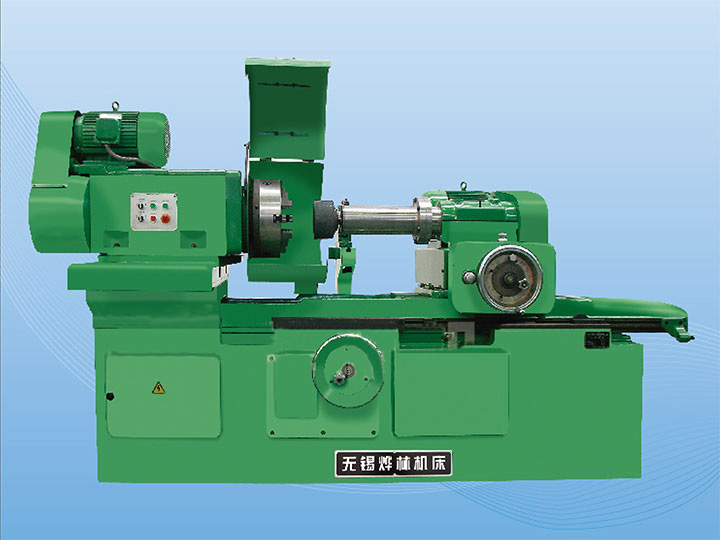
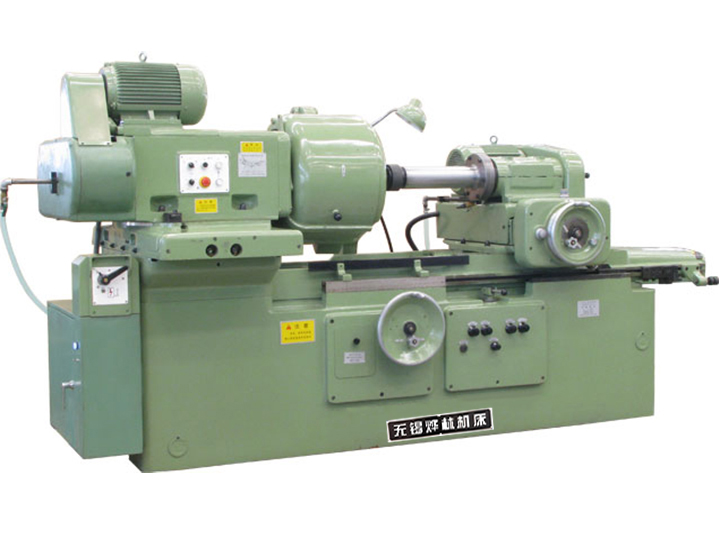
The answer is configuration. A cylindrical grinder is a platform; the price depends on what is mounted on the platform. Three things drive the price:
Size. Swing diameter and between-centers length scale the bed, the wheelhead, the workhead, the tailstock, the guards, the way covers, and the shipping crate. A 320 mm swing machine uses a smaller bed than a 1000 mm swing machine, and the cost difference is roughly proportional to the mass of cast iron involved.
Rigidity and spindle power. Higher rigidity and higher spindle power mean larger bearings, larger motors, larger castings, and more precision assembly. A 7.5 kW spindle costs roughly twice as much as a 3.7 kW spindle; a 15 kW spindle costs roughly three times.
Automation and options. Automatic loader, in-process gauging, automatic wheel dresser, enclosure, chip conveyor, coolant filtration, fire suppression, and a long list of smaller options. A machine with full automation costs 2–3× a stripped machine.
For broader context on the choice between CNC and manual, see CNC vs Manual Cylindrical Grinder.
Price by Machine Class
Indicative 2026 FOB Wuxi prices (Yelin product line reference, in US dollars):
|
Class |
Swing |
Length |
Price range |
|
Entry CNC cylindrical grinder |
320 mm |
500–1000 mm |
$60,000–$100,000 |
|
Production CNC cylindrical grinder |
320–500 mm |
1000–2000 mm |
$120,000–$220,000 |
|
Universal CNC cylindrical grinder |
320–500 mm |
1000–2000 mm |
$180,000–$320,000 |
|
Heavy-duty CNC cylindrical grinder |
630–1000 mm |
2000–4000 mm |
$300,000–$500,000 |
|
Specialty CNC grinder (cam, crank, etc.) |
varies |
varies |
$250,000–$700,000 |
|
Manual cylindrical grinder (no CNC) |
320 mm |
500–1000 mm |
$20,000–$45,000 |
The above is for the machine only. Add the items below to get a realistic budget.
Options That Add to the Price
Every CNC cylindrical grinder can be configured with options. The most common and their typical 2026 cost (added to the base price):
|
Option |
Cost (US$) |
What it does |
|
Automatic wheel dresser |
$5,000–$15,000 |
Dresses the wheel on schedule, compensates for dress depth. Standard on most CNC machines. |
|
In-process gauging (Marposs or similar) |
$8,000–$20,000 |
Touches the part during grinding, signals size to controller. Required for size-tight specs and lights-out operation. |
|
Automatic loader (gantry or robot) |
$30,000–$120,000 |
Loads parts into the chuck or between centers. Justifies itself on runs above 1,000 parts/mo. |
|
Steady rest (manual) |
$3,000–$8,000 |
Supports the workpiece for slender parts. Manual adjustment. |
|
Steady rest (automatic, servo-driven) |
$15,000–$40,000 |
Same, with servo-driven positioning. Required for long shafts. |
|
Enclosure (full) |
$8,000–$25,000 |
Full guarding with doors and interlock. Required for CE-marked machines in the EU. |
|
Chip conveyor |
$3,000–$10,000 |
Removes chips from the work envelope. Useful on production machines. |
|
Coolant filtration (magnetic + paper) |
$4,000–$15,000 |
Cleans coolant below 25 μm. Required for fine-grit grinding. |
|
Fire suppression |
$3,000–$8,000 |
Automatic fire detection and suppression. Required in some jurisdictions. |
|
Wheel balancer (auto) |
$4,000–$12,000 |
Balances wheel+flange assembly automatically. Reduces vibration, improves finish. |
|
3D wheel-profiling software |
$2,000–$8,000 |
Programs non-round profiles (cam, form). Required for cam and form grinding. |
A typical fully configured production CNC cylindrical grinder has $50,000–$120,000 of options on top of the base machine. A realistic 2026 budget for a fully optioned 320 mm swing CNC cylindrical grinder is $130,000–$200,000, depending on options.
What Is Not Included in the Machine Price
Buyers often miss these line items. Budget them in advance:
Shipping. A 5,000 kg cylindrical grinder from Wuxi to a US port runs $8,000–$15,000 by sea freight. EU is similar. Air freight is 5× as fast and 5× as expensive.
Insurance. Typically 0.3–0.5% of machine value. $300–$1,000 for a $200K machine.
Import duty and customs. Depends on destination. US: 0% on most machine tools (HTS 8461). EU: 0–2.7%. Other regions: 0–15%.
Installation. Crane, rigging, electrical hookup, hydraulic hookup, coolant hookup, leveling, alignment. Typically $5,000–$15,000 per machine.
Operator training. 3–5 days on-site or at the manufacturer's facility. $3,000–$10,000 plus travel.
Foundation work. Concrete pad, vibration isolation, anchor bolts. $5,000–$20,000 depending on existing shop conditions.
Initial tooling. Wheel flanges, dresser diamonds, chuck jaws, mandrels. $3,000–$10,000 per machine.
Total non-machine costs typically add 10–20% to the machine price. Plan for it.
Price by Region of Origin
Where the machine is built affects the price for comparable configurations:
|
Region |
Relative price (320 mm CNC cylindrical grinder) |
Strength |
|
China (Wuxi, Shanghai, etc.) |
1.0× baseline |
Cost; flexibility on custom builds |
|
Germany |
2.5–4.0× baseline |
Build quality; long-term reliability |
|
Japan |
2.5–4.5× baseline |
Precision; long-term reliability |
|
Switzerland |
3.5–5.5× baseline |
Top precision; niche applications |
|
USA |
2.0–3.5× baseline |
Domestic support; aerospace certification |
|
Italy |
1.8–3.0× baseline |
Universal machine expertise |
China-built CNC cylindrical grinders have closed the precision gap with German and Japanese machines by roughly 80% since 2015. For most production applications below the top tier of aerospace and medical, a Chinese-built
CNC cylindrical grinder delivers 90% of the performance at 30–40% of the price.
Total Cost of Ownership: Five-Year View
Capital cost is the visible number. The hidden cost is what happens over the life of the machine. For a typical 320 mm swing CNC cylindrical grinder in 2026:
|
Item |
Year 1 |
Annual (years 2–5) |
Five-year total |
|
Machine (FOB Wuxi, 320 mm CNC) |
$120,000 |
n/a |
$120,000 |
|
Shipping + install + foundation |
$25,000 |
n/a |
$25,000 |
|
Training (initial) |
$5,000 |
$1,000 |
$9,000 |
|
Energy (4,000 hr/yr at $0.10/kWh, 12 kW avg) |
n/a |
$4,800 |
$19,200 |
|
Coolant (top-up + replacement) |
n/a |
$3,000 |
$12,000 |
|
Wheels (consumables) |
$2,000 |
$8,000 |
$34,000 |
|
Spare parts (bearings, belts, filters) |
n/a |
$3,000 |
$12,000 |
|
Maintenance labor |
n/a |
$2,000 |
$8,000 |
|
Operator labor (1 FTE at $40K/yr) |
n/a |
$40,000 |
$160,000 |
|
Total |
$152,000 |
$61,800 |
$399,200 |
The five-year TCO is roughly $400K, with operator labor at $160K being the largest single line. A fully loaded CNC machine with auto-loader can cut the operator labor to one operator per 4 machines, dropping the labor line to $80K over five years and saving $80K. That is more than the cost of the loader.
When the Price Is Too Low to Be Real
Three red flags in a CNC cylindrical grinder quote:
Unrealistic base price. A 320 mm swing CNC cylindrical grinder below $50,000 FOB Wuxi is almost certainly a stripped machine or a machine built from outdated components. Ask what is included.
Controller not listed. A real CNC cylindrical grinder has a Fanuc, Siemens, Mitsubishi, or Heidenhain controller. If the quote does not specify a controller, ask.
Spindle bearings not specified. A production cylindrical grinder uses NSK, SKF, or FAG spindle bearings, name-brand and greased-for-life or oil-lubricated. If the bearings are not specified, the spindle is probably a low-end spindle.
Three more things to check:
Cast iron vs welded steel bed. A cast iron bed is the standard for precision grinding. Welded steel beds deform over time and lose accuracy. Ask.
Linear scales on X and Z axes. Required for tight tolerance work. Some lower-end machines use rotary encoders only, which lose accuracy with ballscrew wear.
Coolant system completeness. A production cylindrical grinder needs a coolant tank, pump, filter, and nozzle system. A machine with a "coolant ready" plumbed block but no tank is not ready for production.
Financing and Lead Times in 2026
Lead times for CNC cylindrical grinders in 2026:
Stock CNC cylindrical grinder: 4–8 weeks. Some Chinese manufacturers keep a small stock of popular configurations.
Built-to-order CNC cylindrical grinder: 12–20 weeks for standard configurations, 24–36 weeks for special configurations.
German/Japanese CNC cylindrical grinder: 24–52 weeks. Lead times have stretched since 2022.
Financing:
Direct purchase: most common. Cash or line of credit.
Equipment leasing: 3–5 year leases, 5–8% interest. Useful for cash flow.
Manufacturer financing: some large manufacturers (not Yelin) offer financing directly. Worth checking for big orders.
Bank loan: typical for small shops. 5–7 year term, 6–10% interest.
For first-time buyers, a 5-year lease at 7% interest on a $200K machine is roughly $4,000/month. Compare that to the operator labor savings ($3,000–$5,000/month vs manual) and the lease pays
for itself if the labor savings are real.
Resale Value
CNC cylindrical grinders hold their value well. A 10-year-old machine in good condition sells for 40–60% of its original price on the used market. A 20-year-old machine in good condition sells for 20–35%. The depreciation curve is roughly:
Year 1: 85% of new value (after install and commissioning)
Year 3: 65–70%
Year 5: 55–60%
Year 10: 40–50%
Year 15: 25–35%
Year 20: 15–25%
A machine well-maintained (regular service, fresh paint, calibrated) sells for the upper end. A machine neglected (leaking hydraulics, scratched paint, drifted accuracy) drops to the lower end or below.
How to Get an Accurate Quote
A useful quote has nine items. Ask for all of them in writing:
Machine model and configuration (swing, length, spindle power)
Controller make and model (Fanuc 0i-TF, Siemens 828D, etc.)
Axis configuration (X, Z, C, additional axes)
Options list with line-item prices
Standard accessories (chuck, dresser, flanges, etc.)
Warranty terms (parts and labor, length, exclusions)
Lead time (from PO to delivery)
Payment terms (deposit, balance, letter of credit)
Installation scope (what is included, what is the buyer's responsibility)
Compare three quotes from three manufacturers against this list. The cheapest quote that covers all nine items is usually the right quote. The cheapest quote overall is usually missing something important.
Where to Cut Cost Without Killing the Machine
Five places where buyers can save money without sacrificing capability:
Choose a Chinese-built machine over German or Japanese for general production. Save 50–70% for 90% of the precision.
Skip the in-process gauging on first article. Add it later when production volume justifies. Save $8K–$20K.
Skip the auto-loader on first machine. Manual load is fine for low-volume. Add the loader on the second machine when volume justifies. Save $30K–$120K.
Choose the smaller swing. A 320 mm swing machine costs half of a 500 mm swing machine. If your largest part fits, choose the smaller. Save $50K–$150K.
Skip the enclosure on a non-EU machine. An enclosure is required for CE marking in the EU but not elsewhere. Save $8K–$25K.
Three places where cutting cost kills the machine:
Choosing a welded steel bed over cast iron. The machine loses accuracy within 5 years.
Skipping the linear scales. The machine drifts within 3 years.
Buying an off-brand controller. Service and parts become difficult. Buy Fanuc, Siemens, Mitsubishi, or Heidenhain.
Summary: Realistic 2026 Budgets
|
Use case |
Configuration |
Realistic budget (US$) |
|
Small job shop, low volume, mixed work |
Manual cylindrical grinder |
$25,000–$50,000 |
|
Job shop with repeat work, mixed volume |
CNC cylindrical grinder, 320 mm, basic options |
$80,000–$120,000 |
|
Production shop, 1,000+ parts/mo |
CNC cylindrical grinder, 320 mm, full options, no loader |
$150,000–$220,000 |
|
Production shop with lights-out |
CNC cylindrical grinder with auto-loader |
$200,000–$350,000 |
|
High-volume OEM production |
CNC cylindrical grinder + auto-loader + gauging + conveyor |
$300,000–$500,000 |
|
Universal machine for toolroom + production |
Universal CNC cylindrical grinder, 320 mm, full options |
$200,000–$350,000 |
|
Heavy-duty crankshaft/camshaft production |
CNC crankshaft or camshaft grinder |
$300,000–$800,000 |
These budgets include machine + options + shipping + install. Add 10–20% for training, foundation, and initial tooling if this is a first machine in a new shop.
FAQ
Q: How much does a CNC cylindrical grinder cost in 2026?
A: For a small 320 mm swing machine, US $60,000–$100,000 base price. A 500 mm swing production machine, $120,000–$220,000. A large universal or special-purpose machine, $250,000–$700,000. Add 30–50% for options, shipping, install, and training for a fully budgeted number.
Q: Is a CNC cylindrical grinder worth the cost vs manual?
A: For production work (10+ identical parts per week), yes. The CNC pays back in 18–30 months through labor savings, scrap reduction, and throughput gain. For toolroom and one-off work, no. A well-set manual grinder is faster and cheaper for varied work. See CNC vs Manual Cylindrical Grinder.
Q: What is the cheapest CNC cylindrical grinder?
A: A stripped 320 mm swing CNC cylindrical grinder from a Chinese manufacturer starts around $60,000 FOB Wuxi. Add options, shipping, and install for a realistic budget of $90,000–$120,000.
Q: How much does it cost to add automation to a CNC cylindrical grinder?
A: Automatic loader: $30,000–$120,000 depending on type (gantry, robot, magazine). Auto wheel dresser: $5,000–$15,000 (usually included). In-process gauging: $8,000–$20,000. Full automation package: $60,000–$160,000 added to the base machine.
Q: How much does shipping cost for a CNC cylindrical grinder?
A: Sea freight from China to a US port for a 5,000 kg machine: $8,000–$15,000. EU similar. Air freight is 5× as fast and 5× as expensive.
Q: What is the lead time for a CNC cylindrical grinder?
A: Stock configurations from China: 4–8 weeks. Built-to-order from China: 12–20 weeks. Built-to-order from Germany or Japan: 24–52 weeks.
Q: Can I finance a CNC cylindrical grinder?
A: Yes. Equipment leasing is common. A 5-year lease on a $200K machine at 7% interest is roughly $4,000/month. Compare to operator labor savings vs manual operation.
Q: What is the resale value of a CNC cylindrical grinder?
A: A 10-year-old machine in good condition sells for 40–60% of its new price. A 20-year-old machine in good condition sells for 20–35%. Regular maintenance and calibration preserve the upper end of the range.
Bottom Line
A CNC cylindrical grinder in 2026 costs $60,000–$700,000 depending on size, rigidity, spindle power, and options. A realistic budget for a fully configured 320 mm swing production machine is $150,000–$220,000, including options and shipping. Add 10–20% for install, training, and initial tooling.
The price gap between Chinese-built and German/Japanese-built machines has closed to roughly 2–3× for comparable configuration. For most production applications, the precision difference is below the capability of the process. For aerospace, medical, and motorsport top-tier, the precision difference matters — pay the German/Japanese premium.
If you are sizing a CNC cylindrical grinder for your shop, see the full Yelin CNC cylindrical grinder line or send us your part print, batch size, and tolerance requirements for a written indication of price, lead time, and configuration.
 English