Why This Question Comes Up So Often
Cylindrical grinding and centerless grinding both finish the outside diameter of a round part. They look similar from across the shop. Buyers routinely spec the wrong one, then live with higher cycle times, scrap rates, or scrap wheels for years before anyone questions the original choice.
The two methods are not competitors. They are two different answers to the same question — how do I hold a round shape on this part — and the answer depends on geometry, batch size, and the tolerances already on the drawing. This guide walks through how each method actually works, where it earns its keep, and the decision points that pick one over the other.
If you need a broader refresher on grinder types first, see Grinding Machine Types: A Practical Guide to Choosing the Right One.
How Cylindrical Grinding Works
A
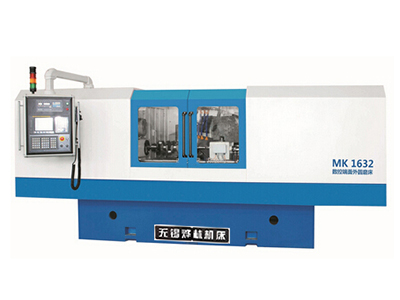
cylindrical grinding machine holds the workpiece between a headstock and a tailstock (between centers) or in a chuck. The grinding wheel — usually a straight or slightly tapered wheel running at 30–45 m/s — traverses along the part while it rotates slowly between centers. The dresser restores the wheel profile between passes.
Two motions drive material removal:
Wheel rotation is the cutting speed, almost always faster than the workpiece.
Workpiece rotation is set so that surface speed on the part stays in the 20–60 m/min range for roughing, dropping to single-digit m/min for finish passes.
Two feed modes dominate:
Traverse (plunge-and-traverse) grinding — the wheel is plunged to depth, then traversed along the part. Used for long shafts and rolls where one plunge pass would be too deep.
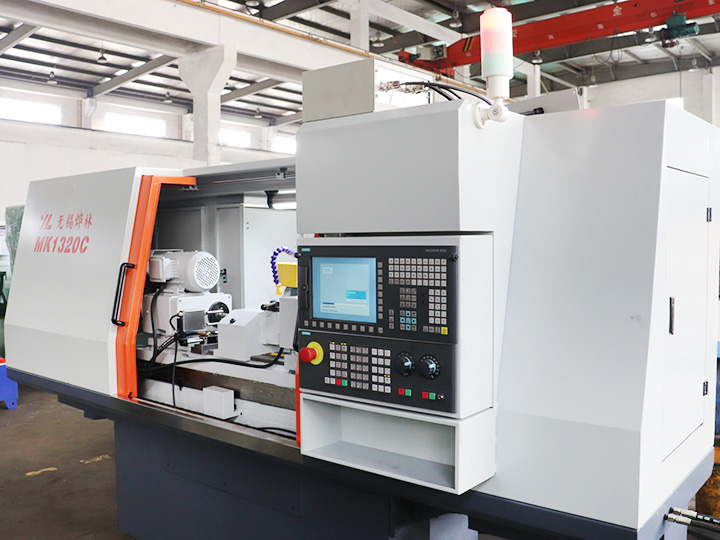
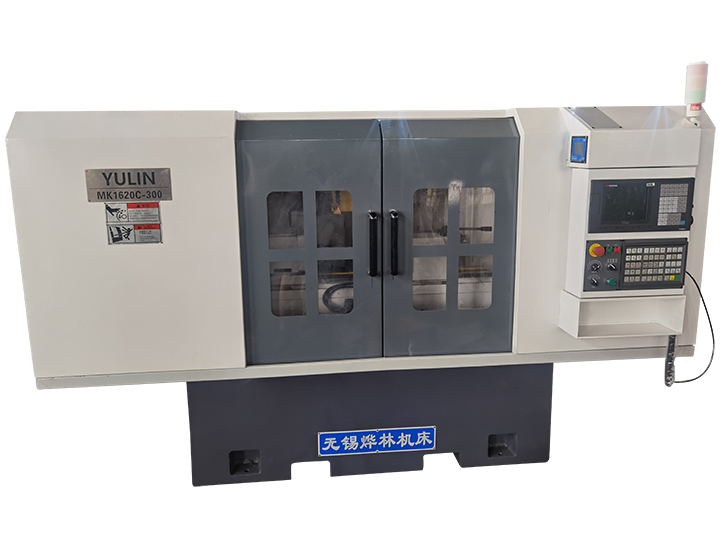
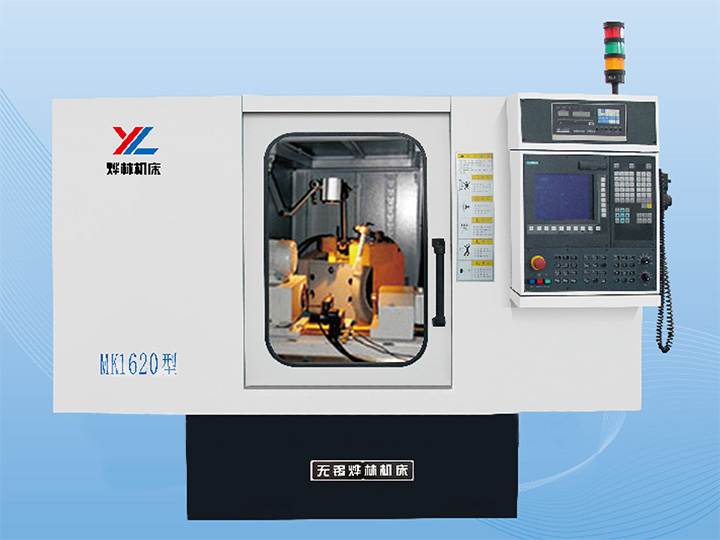
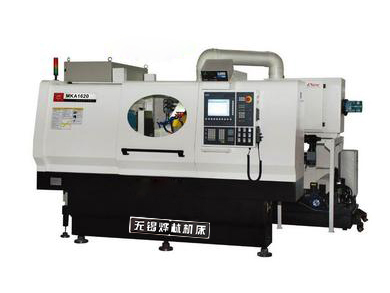
Plunge grinding — the wheel feeds straight in to a shoulder. Used for short journals, multiple diameters in one setup, and shoulder-to-face work. Yelin's MK1620 CNC Face Cylindrical Grinding Machine is built around this mode for face-and-OD work on shaft parts.
Typical achievable numbers on a well-set cylindrical grinder:
Roundness: 0.002–0.003 mm
Cylindricity: 0.005 mm over 300 mm
Surface finish: Ra 0.2–0.8 μm
Concentricity to center holes: 0.002 mm
How Centerless Grinding Works
A centerless grinding machine has no headstock or tailstock. The workpiece rides between two wheels sitting on a workrest blade:
Grinding wheel — large, hard, fast. Does the cutting.
Regulating wheel — slower, rubber- or resin-bonded. Spins the workpiece and pushes it through.
Workrest blade — supports the part at the correct angle (commonly 30° above horizontal). Sets the centerline height above or below the line between the two wheels; that height is the single biggest control on roundness.
There are three feed modes:
Through-feed — the part slides straight through between the wheels. Best for straight cylindrical parts with no shoulders. Highest throughput.
In-feed (plunge) grinding — the part stops against an end stop while the grinding wheel plunges. Used for stepped or shouldered features.
End-feed — part stops against a work-rest stop, the regulating wheel swings in, and the wheel traverses across the face. For tapered or formed features.
The centerless process removes clamping error from the equation. There is no chuck or center hole to introduce runout. Roundness comes from the geometry of the two wheels and the blade, not from how accurately the operator clamped the part.
Typical numbers on a production centerless grinder such as Yelin's MT1040A Centerless Grinding Machine:
Roundness: 0.001–0.002 mm
Cylindricity: 0.003 mm over the workrest length
Surface finish: Ra 0.1–0.4 μm
Cycle time per part: 5–20 seconds for through-feed on small pins and rollers
Side-by-Side Comparison
The table below is the quick reference most buyers want. The numbers are typical for production-class machines in the 100–300 mm workpiece diameter range.
|
Dimension |
Cylindrical grinding |
Centerless grinding |
|
Workpiece holding |
Between centers or in a chuck |
Resting on workrest blade between two wheels |
|
Requires center holes |
Yes (for between-centers work) |
No |
|
Best for batch size |
Low to medium (1–500/mo typical) |
High (1,000+/mo typical) |
|
Best for part shape |
Shafts, rolls, spindles with shoulders, steps, keyways, tapers |
Straight cylinders, pins, rollers, bushings, sleeves |
|
Achievable roundness |
0.002–0.003 mm |
0.001–0.002 mm |
|
Achievable cylindricity |
0.005 mm over 300 mm |
0.003 mm over workrest length |
|
Achievable surface finish |
Ra 0.2–0.8 μm |
Ra 0.1–0.4 μm |
|
Cycle time per part |
30 s to several minutes |
5–20 s (through-feed) |
|
Setup time |
5–30 minutes |
2–10 minutes per setup, then steady-state |
|
Operator skill |
High — setup, dressing, in-process gauging |
Medium — once the blade height is set, it runs |
|
Common defects to watch |
Taper burn at end of traverse, concentricity drift as wheel wears |
Diametral drift if wheel wears unevenly, lobing from wrong blade angle |
|
Tooling cost per part |
Higher (chucks, fixtures, steady rests) |
Lower (just the blade) |
|
Capital cost (similar capacity) |
Moderate |
Slightly higher for the machine, but amortizes faster in production |
When Cylindrical Grinding Wins
Pick cylindrical when any of these are true:
The part has features that need to share the same axis. Shoulders, steps, keyways, threads, splines — all of these are turned or milled relative to the center holes. If you take the center off (by going centerless), you lose concentricity to those features. Cylindrical grinding keeps the centerline locked to the existing datum.
The part is long and slender. A shaft with a length-to-diameter ratio above about 8:1 will deflect under its own weight on a workrest blade. A cylindrical grinder, with a steady rest supporting the middle, can hold geometry that centerless cannot.
The drawing calls out concentricity to a center hole or datum. Bearings, gears, and couplings almost always reference back to a center hole or an internal feature. Cylindrical is the only way to honor that datum.
The batch is small or the mix is wide. Toolroom work, repair jobs, prototype runs — anything under a few hundred parts — is faster to run on a cylindrical grinder with a few fixturing changes than to re-set a centerless setup.
The operator needs to grind a taper or a form. Cylindrical universal machines (such as Yelin's MW1420C Universal Cylindrical Grinding Machine) swivel the workhead and add an internal spindle, so they handle tapers, faces, and small bores in one clamping.
When Centerless Grinding Wins
Pick centerless when any of these are true:
The part is a simple straight cylinder. Pins, rollers, sleeves, bushings, hydraulic shafts — anything without a shoulder or step in the ground zone. Through-feed centerless is the fastest way to grind it.
The batch is large. Above about 1,000 identical parts per month, centerless pays back. A through-feed setup runs unattended for long stretches once the wheel is dressed and the blade is set. Manual loading is fine; a simple magazine or vibratory feeder pushes it into full production.
The part does not have — and should not get — center holes. Small-diameter parts where drilling center holes would eat too much stock, or hardened parts where drilling is impractical. Centerless sidesteps the problem entirely.
Roundness needs to be tight and repeatable across a run. With no chuck and no centers, every part sees the same geometry. Variation from clamping is gone. For bearing rollers, fuel-injector needles, and similar high-precision cylindrical parts, this is the decisive factor.
Five Questions to Pick the Right Method
Run through these in order. The first one with a "yes" usually decides the method.
Does the part have shoulders, steps, keyways, threads, or splines in the ground zone? → Yes → Cylindrical.
Is the length-to-diameter ratio above 8:1? → Yes → Cylindrical.
Does the print call out concentricity to a center hole or an internal feature? → Yes → Cylindrical.
Is the batch under a few hundred parts per month, or does the mix change every run? → Yes → Cylindrical.
Is the part a straight cylinder, rigid enough to ride on a blade, in batches above a few hundred per month? → Yes → Centerless.
If you answered "no" to 1–4 and "yes" to 5, centerless is the right answer. If you answered "yes" to any of 1–4, cylindrical is almost certainly the right answer.
Common Pitfalls Buyers Run Into
These show up again and again in real shops. None of them are technical surprises; they are decisions made in a hurry and never revisited.
Specifying centerless to avoid drilling center holes, even though the print calls out concentricity to one. The part passes roundness but fails concentricity at final inspection. The line gets blamed; the machine choice was the problem.
Running low-volume parts on centerless to "save setup time." Through-feed centerless is fast only when you have a long run. For 20 parts, the setup cost per part is higher than on a flexible cylindrical grinder.
Setting the workrest blade too low or too high. Centerless roundness is mostly blade height. A 0.05 mm error in blade height can show up as 0.005 mm of lobing on the part. Calibrate with a test bar, not by feel.
Under-spec'ing wheel spindle power on cylindrical grinders. Traverse grinding on a long shaft with a 3 kW spindle takes three passes where a 7.5 kW spindle would do it in one. Cheap up front, slow for years.
Forgetting automation cost in the centerless math. Through-feed centerless justifies itself on labor savings, but only if you actually automate loading. A human standing in front of a through-feed grinder loading parts by hand is not cheaper than a CNC cylindrical cell.
What the Spec Sheet Actually Means
When you compare a cylindrical grinder and a centerless grinder, the numbers on the brochure are not directly comparable. Here is how to read them.
Workpiece diameter range is more meaningful on centerless because the workrest blade sets the geometry. On cylindrical, the headstock height and the steady-rest option matter more than the published swing-over-bed diameter.
Wheel peripheral speed (m/s) should be 35–50 m/s for both. Numbers above 60 m/s usually mean a CBN or vitrified bond. Anything below 25 m/s on a production spec is a red flag.
Positioning accuracy (X and Z) matters mostly for CNC cylindrical grinders. Centerless grinders are not usually positioned in X or Z in the same way — the part position is set by the workrest geometry.
Spindle power (kW) drives stock removal. For cylindrical grinding above 200 mm workpiece diameter, look for 7.5 kW minimum. For centerless in production, 11–15 kW is typical.
For deeper reading on cylindrical spec interpretation, see CNC Cylindrical Grinding Machine: Repeatability You Can Program. For centerless reading, see Centerless Grinding Machines Manufacturer: Premium Precision Grinding Solutions.
How to Migrate Between the Two
Most shops do not stay with one method forever. A job that was a 50-piece prototype last year is now a 5,000-piece production run. A new print calls for a tighter concentricity than your centerless cell can hold. At that point:
From cylindrical to centerless: The change usually requires a different operator skill set, a different blade, and possibly a different wheel specification. Through-feed automation pays back quickly above 1,000 parts/mo. Plan a one-week setup window and expect to scrap the first 200 parts while you trim parameters.
From centerless to cylindrical: Add a steady rest for slender parts, and accept that cycle time per part will roughly triple. Use the change to add features (shoulders, tapers) that centerless could not hold.
If you are sizing a new machine for a mix of both worlds, a CNC cylindrical grinder with through-feed centerless capability is the wrong compromise. Buy the right machine for the dominant job and contract or outsource the rest until volume justifies a second cell.
FAQ
Q: Which is more accurate, cylindrical or centerless grinding?
A: For pure roundness on a simple cylinder, centerless typically wins by a small margin (0.001 mm vs 0.002 mm) because there is no chuck to introduce error. For cylindricity on a long shaft, cylindrical wins because a steady rest supports the part along its length. For concentricity to existing features, cylindrical wins — centerless has no fixed datum.
Q: Is centerless grinding cheaper per part than cylindrical?
A: In high-volume runs above 1,000 identical parts per month, yes — usually 30–60% lower per-part cost, mostly because cycle time is much shorter and operator touch time is near zero. In low-volume or high-mix work, no — the fixturing cost per part is higher on centerless because every part must match the same blade geometry.
Q: Can a cylindrical grinder do centerless work?
A: No. The kinematics are different. A cylindrical grinder holds the part on an axis; a centerless grinder defines the axis from two wheels and a blade. Fixturing a centerless-style operation on a cylindrical grinder would defeat the accuracy benefits of both.
Q: Can a centerless grinder grind a part with a shoulder or a step?
A: Yes, with in-feed (plunge) centerless grinding. The part stops against an end stop, the grinding wheel plunges straight in, and the shoulder forms against the stop face. Through-feed centerless cannot handle shoulders, but in-feed centerless can — at lower throughput.
Q: What industries use centerless grinding the most?
A: Bearing (rollers and rings), automotive (fuel injector needles, valve stems, transmission shafts), hydraulics (piston rods, cylinder liners), and fasteners (pins and dowels). Anything in high volume with a simple cylindrical OD ends up on a centerless cell eventually.
Q: What tolerances can cylindrical grinding hold?
A: On a rigid CNC cylindrical grinder, roundness 0.002 mm, cylindricity 0.005 mm over 300 mm, surface finish Ra 0.2–0.8 μm, concentricity to center holes 0.002 mm. Manual machines can hit similar numbers but require a skilled operator.
Q: Do I need coolant on a cylindrical or centerless grinder?
A: Yes, on both, for almost every application. Coolant controls heat, washes away swarf, and stabilizes the surface finish. Dry grinding is limited to light toolroom work with resin-bond wheels.
Q: Which method is better for a small job shop?
A: Cylindrical, almost always. A small job shop runs prototype, repair, and high-mix work. Centerless pays back only with long runs of identical parts. A universal cylindrical grinder (such as an NC external cylindrical grinder) gives the broadest flexibility for a small shop.
Bottom Line
There is no universal "better" between cylindrical and centerless grinding. The right method is the one that matches the part geometry, the batch size, and the datums on the drawing. Cylindrical is the default for flexible, low-volume work with features that need a fixed centerline. Centerless is the right answer for high-volume, simple cylindrical parts where roundness and throughput dominate the decision.
For most shops, the question is not "which one wins" — it is "which one wins for this part." Run the part through the five-question checklist above and the answer usually appears by question three.
If you are still unsure, send us your part print and batch size and our engineers will recommend a configuration. Yelin Machine builds cylindrical grinders from 320 mm to 1000 mm swing, universal cylindrical grinders for flexible job shops, and centerless grinders from 40 mm to 100 mm through-feed capacity — see the full product line at cylindrical grinders, CNC cylindrical grinders, face cylindrical grinders, and centerless grinders.
 English