Why Wheel Selection Matters
The grinding wheel is the cutting tool. Everything that happens at the contact zone — chip formation, heat, surface finish, wheel wear — is decided by the wheel. Choose the wrong wheel and you burn the part, lose tolerance, or burn through wheels faster than you grind parts.
Choosing the right wheel is not mystical. It is a logic problem with four variables: abrasive, grit, grade, and bond. Once you understand how they interact, you can walk into a wheel catalog and pull the right spec without guesswork.
This guide covers the four variables and the matching logic for cylindrical grinding on steel, hardened steel, cast iron, and non-ferrous metals. For related cylindrical grinding topics, see Cylindrical vs Centerless Grinding and Grinding Burn and Thermal Damage.
The Four Variables, in Order of Impact
Wheel manufacturers describe wheels with a standard marking system: Abrasive — Grit — Grade — Structure — Bond. For example, a wheel spec A60L5V means aluminum oxide abrasive, 60 grit, L grade, structure 5, vitrified bond. Each variable controls a different aspect of wheel behavior:
Abrasive type controls what material the wheel can cut.
Grit size controls surface finish and stock removal rate.
Grade (hardness) controls how easily the wheel breaks down to expose fresh abrasive.
Bond controls how the abrasive is held together and how heat is dissipated.
Structure (the porosity or density of the wheel) is a fifth variable, but for
cylindrical grinding it is usually set by the bond and the manufacturer, not chosen by the buyer. Structure matters most for form grinding and for soft materials where chip clearance is critical.
Variable 1: Abrasive Type
Pick the abrasive that cuts your material. The wrong abrasive wears out fast, generates burn, and never hits the tolerance.
Aluminum oxide (A). The general-purpose abrasive for steel. Works on carbon steel, alloy steel, tool steel, and most stainless. Cheap, widely available, versatile. Use as the default unless you have a reason to switch.
Silicon carbide (C). Harder and sharper than aluminum oxide, but brittle. Use for carbide, ceramic, glass, and stone. Also use for non-ferrous metals (aluminum, copper, brass) where aluminum oxide tends to load.
Cubic boron nitride (CBN). The hardest abrasive used in grinding. Use for hardened steels above 50 HRC. Holds shape, runs cool, lasts 50–100× longer than aluminum oxide on hardened steel. Expensive per wheel, cheap per part. Use on high-volume production or when aluminum oxide cannot hold the tolerance.
Diamond. Hardest abrasive. Use for carbide, ceramic, and glass. Do not use on steel — diamond reacts with iron at grinding temperatures and wears out fast.
Quick rules:
Soft steel (below 30 HRC): aluminum oxide (A)
Hardened steel (above 50 HRC): CBN
Carbide, ceramic, glass: diamond
Aluminum, brass, copper: silicon carbide (C)
Cast iron: silicon carbide (C) or aluminum oxide (A) — either works
Variable 2: Grit Size
Grit size is the size of the abrasive particles, measured by mesh. Smaller mesh number = larger particles. The grit size controls two things at once: stock removal rate (coarse cuts faster) and surface finish (fine cuts smoother).
Coarse (36–46 grit): Aggressive stock removal, low heat per grit (because each grit cuts a thick chip). Surface finish: Ra 0.8–1.6 μm. Use for roughing.
Medium (60–80 grit): Balanced. Surface finish: Ra 0.4–0.8 μm. Use for general grinding and semi-finish.
Fine (100–120 grit): Slower stock removal, more heat per grit. Surface finish: Ra 0.2–0.4 μm. Use for finishing.
Very fine (150+ grit): Polishing-grade. Surface finish: Ra 0.05–0.2 μm. Use only on rigid machines with stiff spindles. Burns easily.
For cylindrical grinding, the common range is 46–120 grit. Outside that range, you are in form grinding or polishing territory.
Variable 3: Grade (Wheel Hardness)
Grade is the most counterintuitive variable. A hard grade wheel holds its abrasive tightly; a soft grade wheel releases abrasive grains as they dull. The hard grade sounds better, but it is not.
On a hard wheel, dull abrasive grains stay in place and rub against the part, generating heat and burning the surface. The wheel glazes over and stops working.
On a soft wheel, dull grains break out, fresh sharp grains take over, and the wheel self-sharpens. The part stays cool, the cut stays sharp, and the wheel wears predictably.
Therefore:
Hard material (above 50 HRC) → softer grade (J–L). The abrasive dulls fast on hard material, so the wheel needs to release dull grains quickly.
Soft material (below 30 HRC) → harder grade (M–P). The abrasive stays sharp longer on soft material, but the wheel tends to wear unevenly if it is too soft.
Medium material (30-50 HRC) → medium grade (K–N).
Grade letters run A (softest) to Z (hardest). For cylindrical grinding, the useful range is roughly D to P.
Variable 4: Bond
The bond holds the abrasive together and decides how heat is dissipated. Three bonds matter for cylindrical grinding:
Vitrified (V). Glass or ceramic bond. Rigid, porous, heat-resistant. The standard for cylindrical grinding. Holds shape well, dresses easily, runs cool. Use as default.
Resin (B or R). Phenolic resin bond. Tougher than vitrified, less porous, more flexible. Use for high-stock-roughing, for thin wheels that need strength, and for cut-off wheels. Generates more heat than vitrified.
Rubber (R). Very flexible, very dense. Used for thin cut-off wheels and for regulating wheels on centerless grinders. Not used for grinding wheels in cylindrical grinding.
Metal (M). Sintered metal bond. Used for CBN and diamond wheels in specific applications. Rigid, long-lasting, expensive.
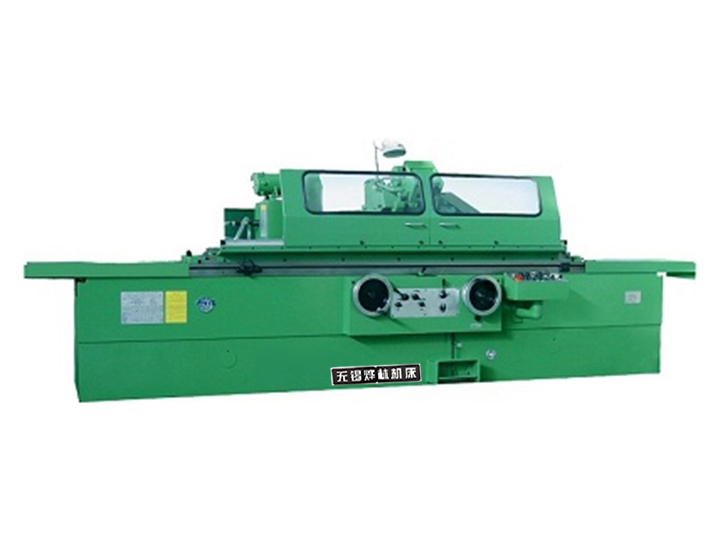
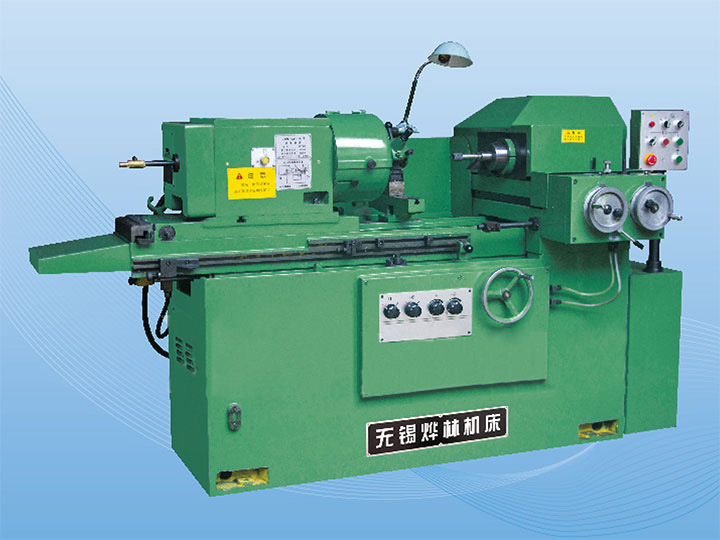
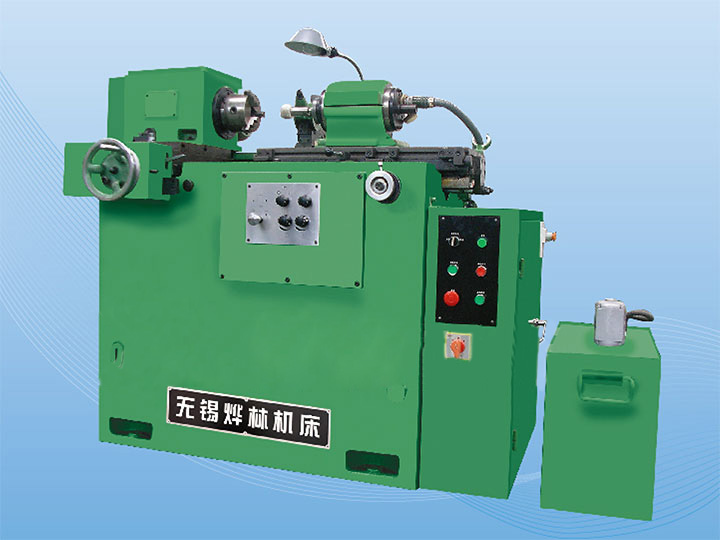
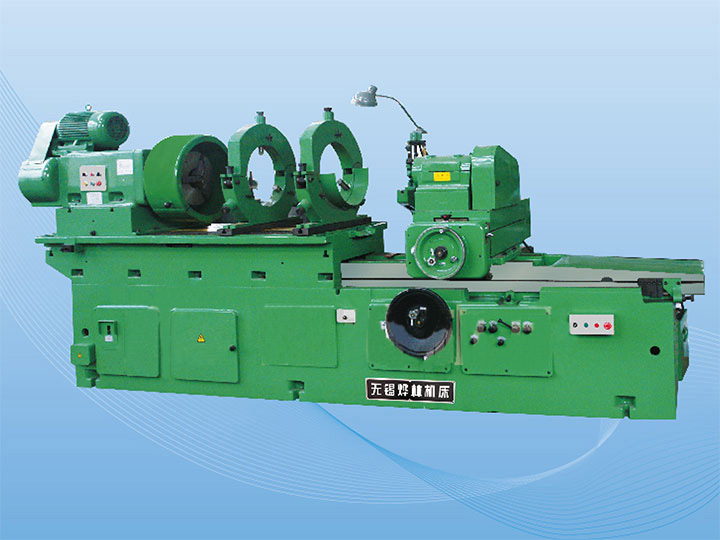
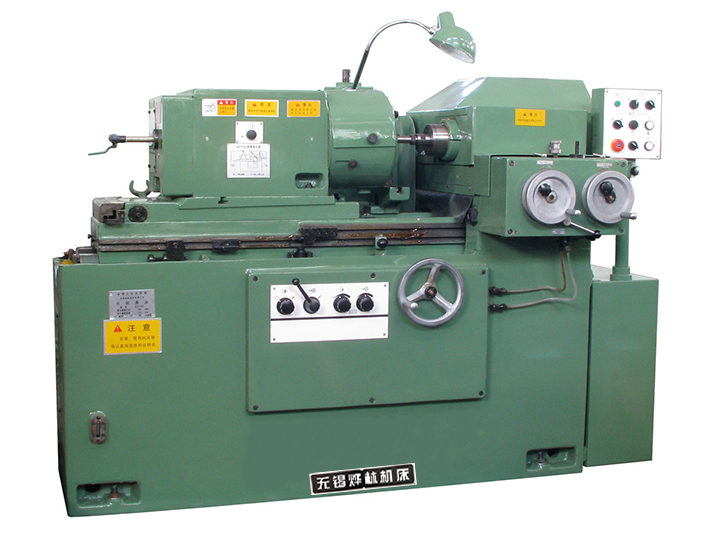
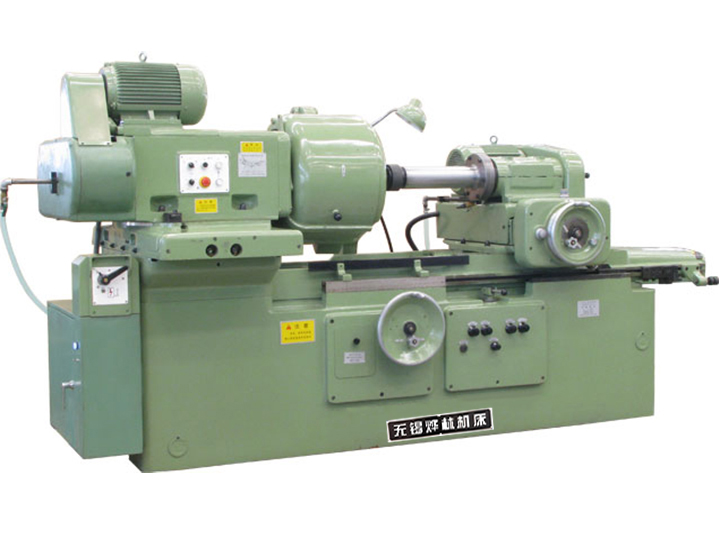
For cylindrical grinding on a Yelin-class machine, vitrified is the default unless you have a specific reason to switch.
Reading a Wheel Specification
Putting it together: a wheel marked A 60 L 5 V is aluminum oxide, 60 grit, L grade (medium-soft), structure 5 (medium), vitrified bond. That is a good general-purpose wheel for rough-to-semi-finish cylindrical grinding on medium-hardness steel (30–50 HRC).
Another example: CBN 120 N 4 V is cubic boron nitride, 120 grit, N grade (medium-hard), structure 4 (open), vitrified bond. That is a finishing wheel for hardened steel above 55 HRC. It will last ten times as long as the equivalent aluminum oxide wheel and produce a finer finish, but it costs 10× as much per wheel.
Wheel catalogs list these specs as a single string. Once you can read it, you can shop any catalog.
Wheel Selection by Application
Below are the starting specs for common applications. Adjust by test cut.
|
Application |
Abrasive |
Grit |
Grade |
Bond |
|
Rough cylindrical on mild steel |
A |
46–60 |
K–M |
V |
|
Finish cylindrical on mild steel |
A |
60–80 |
K–M |
V |
|
Rough cylindrical on alloy steel (40 HRC) |
A |
46–60 |
J–L |
V |
|
Finish cylindrical on alloy steel (40 HRC) |
A |
80–100 |
J–L |
V |
|
Rough cylindrical on hardened steel (60 HRC) |
CBN or A |
60–80 |
H–J (CBN) / I–K (A) |
V |
|
Finish cylindrical on hardened steel (60 HRC) |
CBN |
100–120 |
J–L |
V |
|
Rough cylindrical on cast iron |
C or A |
46–60 |
K–M |
V |
|
Finish cylindrical on cast iron |
C |
80–100 |
J–L |
V |
|
Cylindrical on stainless steel |
A |
60–80 |
H–K |
V |
|
Cylindrical on aluminum |
C |
60–80 |
H–J |
V |
|
Cylindrical on brass / bronze |
C |
60–80 |
G–J |
V |
|
Carbide cylindrical |
Diamond |
100–150 |
K–N |
V or M |
Dressing: The Often-Skipped Step
A new wheel is sharp but not true. Dressing exposes fresh abrasive, restores the wheel profile, and removes glazed abrasive from previous cuts. Skipping dressing is the single most common cause of burn and surface-finish problems.
Two types of dresser:
Single-point diamond dresser. A diamond tool traversed across the wheel face. Use for cylindrical grinding where the wheel profile is straight. Standard on cylindrical grinders.
Multi-point diamond dresser. Several diamonds on a holder, producing a finer surface. Use for finishing.
Rotary diamond dresser. A diamond-impregnated roll spun against the wheel. Use for form grinding and for high-quality finish.
Dress parameters that matter:
Dress depth: 0.01–0.02 mm per pass for roughing, 0.005 mm for finishing.
Dress feed (table traverse): 0.1–0.5 mm/rev of the wheel. Faster = rougher wheel face = coarser cut.
Dress frequency: After every N parts, where N depends on stock removal. On a CNC grinder with auto-dress, N is set in the program.
After dressing, run a spark-out pass with no infeed to settle the wheel face. Skipping spark-out is a common cause of inconsistent size on the first parts after a dress.
Wheel Storage and Handling
Wheels are consumables but they are also precision tools. Treat them accordingly:
Store in a dry environment at 10–30°C. Resin bonds absorb moisture in humid storage and need to be dried before use.
Inspect for damage on receipt. Ring test vitrified wheels: a clear ringing sound = good, a dull thud = cracked, do not mount.
Mount with the correct blotters and flanges. Tighten the spindle nut to the manufacturer-specified torque.
Run a no-load test at operating speed for 1–2 minutes before the first cut. Stand aside during the test.
Keep wheels on the machine that match the wheel's rated maximum operating speed. A wheel rated 3,500 m/s will fly apart at 4,000 m/s.
Common Wheel Problems and Fixes
|
Problem |
Likely cause |
Fix |
|
Burn on the part |
Wheel too hard, dressing insufficient, coolant flow too low |
Switch to softer grade; dress more often; increase coolant flow |
|
Rough surface finish |
Grit too coarse; dress too rough; wheel loading |
Use finer grit (80–120); use finer dress; dress more often |
|
Wheel wears fast |
Wheel too soft; grit too fine for material; abrasive wrong type |
Switch to harder grade; use coarser grit; check abrasive type matches material |
|
Wheel loads (glazes) |
Material too soft for wheel; bond too hard; insufficient coolant |
Switch to softer grade; use coarser grit; increase coolant flow |
|
Chatter marks |
Wheel too hard; grit too fine; machine rigidity insufficient |
Switch to softer grade; use coarser grit; check spindle bearings |
|
Wheel breaks apart |
Excessive speed; damaged wheel; wrong mounting |
Check rated speed; inspect wheel; verify mounting torque
|
When to Upgrade to CBN
CBN wheels cost 10× as much as aluminum oxide wheels and last 50–100× longer on hardened steel. The math:
Aluminum oxide wheel: $50, lasts 200 parts. $0.25/part.
CBN wheel: $500, lasts 10,000 parts. $0.05/part.
CBN wins on cost per part above ~500 parts per wheel life. Below that, aluminum oxide is cheaper per part. The break-even for converting a cylindrical grinder from aluminum oxide to CBN is usually around 5,000–10,000 parts per year of hardened steel. Below that, stay with aluminum oxide.
CBN also wins on:
Tolerance stability (CBN holds profile across the wheel life; aluminum oxide drifts)
Surface finish (CBN finishes at Ra 0.1–0.2 μm with no burn)
Cycle time (CBN cuts faster without burn risk)
Heat (CBN runs cooler; aluminum oxide can grind hotter)
CBN does not win on:
Soft steel (below 30 HRC) — CBN does not bond well; aluminum oxide is better.
One-off parts — the wheel cost never amortizes.
Low-volume shops — same reason.
Working with a Wheel Supplier
Most wheel suppliers will test-cut your part for free if you send a print and a sample. Use this. A 30-minute test cut with three wheel candidates saves weeks of trial-and-error on the shop floor.
Tell the supplier:
Material and hardness (or expected alloy if unknown)
Stock removal per pass
Required surface finish (Ra)
Required tolerance (size and roundness)
Machine make and model (so they pick a wheel compatible with the spindle speed)
Coolant type and flow rate
The supplier's recommendation is usually right. Push back only if the test cut does not hit the spec.
FAQ
Q: What does "A60L5V" mean on a grinding wheel?
A: A = aluminum oxide abrasive, 60 = grit size, L = grade (medium-soft in the standard A–Z scale), 5 = structure (medium-dense), V = vitrified bond. That spec is a typical general-purpose cylindrical grinding wheel for rough-to-semi-finish on medium-hardness steel.
Q: How do I know if my wheel is too hard or too soft?
A: Too hard = the wheel glazes (the face looks shiny and smooth), the part burns, and the wheel does not seem to cut. Too soft = the wheel wears down quickly, the part gets the right size but the wheel has to be replaced often. Both problems are fixed by switching grade one or two letters toward the other extreme.
Q: What is the difference between aluminum oxide and CBN wheels?
A: Aluminum oxide is the standard abrasive, works on most steels, and is cheap. CBN (cubic boron nitride) is harder and lasts 50–100× longer on hardened steel above 50 HRC. CBN wheels cost 10× as much but produce a better finish and run cooler.
Q: Can I use the same wheel for roughing and finishing?
A: Yes, with a medium-grit wheel (60–80 grit), but you will compromise on either roughing rate or finish quality. For production, two wheels are better: a coarse 46-grit wheel for roughing and a fine 100-grit wheel for finishing. Most CNC cylindrical grinders support two-wheel automatic changeover.
Q: How often should I dress a grinding wheel?
A: On a manual machine, dress whenever the part shows burn or the surface finish drifts. On a CNC machine with auto-dress, set the program to dress every 5–20 parts depending on stock removal. For high-stock-removal cuts, dress every part.
Q: What grit should I use for Ra 0.4 μm surface finish?
A: Typically 80–100 grit aluminum oxide, dressed finely. For Ra 0.2 μm, use 100–120 grit. For Ra 0.1 μm, switch to 120–150 grit or to a CBN wheel.
Q: Why does my wheel load up on aluminum?
A: Aluminum is soft and gummy. Aluminum oxide wheels tend to load (the aluminum fills the pores between abrasive grains). Switch to a silicon carbide wheel, use a coarser grit, and increase coolant flow. Some shops use a wax stick to keep the pores clear.
Q: How long does a grinding wheel last?
A: An aluminum oxide wheel on mild steel: 100–500 parts depending on stock removal. A CBN wheel on hardened steel: 5,000–20,000 parts. Diamond wheel on carbide: 1,000–10,000 parts. The wheel life is more about the bond and the dressing discipline than about the abrasive.
Bottom Line
Grinding wheel selection is a logic problem with four variables: abrasive, grit, height, and bond. Match the abrasive to the material, the grit to the surface finish, the grade to the material hardness, and the bond to the operation. Most cylindrical grinding wheels on Yelin-class machines are vitrified aluminum oxide in the 46–120 grit range, grade J–M.
If you are running high-volume hardened steel above 50 HRC, the upgrade to CBN pays back inside 12 months. If you are running one-off toolroom work, stay with aluminum oxide and focus on dressing discipline.
For deeper reading on the failure modes that bad wheel selection causes, see Grinding Burn and Thermal Damage and Chatter in Cylindrical Grinding. For machine selection, see the full Yelin cylindrical grinder line or send us your print and batch size.
Need a wheel recommendation for your part? Send us the material and hardness, stock removal, surface finish target,
 English