Why Internal Grinding Is Its Own Discipline
External cylindrical grinding is a comparatively forgiving process. The grinding wheel is large, the contact zone is open, and you can see everything that is happening. Internal cylindrical grinding is the opposite. The wheel is small (typically 6–80 mm diameter), the spindle is long and slender, the contact zone is hidden inside a bore, and any deflection of the spindle shows up directly in the part.
Done well, internal grinding hits roundness of 0.001–0.002 mm and surface finish of Ra 0.1–0.4 μm on bores from 10 mm to 500 mm diameter. Done badly, the same machine produces lobing, taper, and chatter marks that no amount of dressing fixes. The difference is almost always machine rigidity — the stiffness of the spindle, the workhead, and the slides.
This guide explains how the process works, the configurations available, and what to check when buying or specifying an internal grinding machine. For an overview of all grinder types, see Grinding Machine Types: A Practical Guide to Choosing the Right One.
How Internal Cylindrical Grinding Works
The workpiece is clamped in a chuck or on a faceplate. The grinding wheel is mounted on a slender spindle that reaches inside the bore. The spindle rotates at high speed (typically 10,000–40,000 rpm for small diameters, dropping to 6,000–15,000 rpm for larger bores), traverses along the bore, and feeds radially outward in microns per pass.
Three motions drive material removal:
Wheel rotation — the cutting speed.
Internal grinding runs at much higher RPM than external because the wheel is smaller and needs the same peripheral surface speed (typically 30–45 m/s).
Workpiece rotation — set so that surface speed on the bore wall is in the 20–60 m/min range for roughing and lower for finishing.
Radial infeed — the wheel moves outward in 0.001–0.005 mm increments per pass. Internal grinding cuts on a much finer radial increment than external grinding.
Two feed modes are common:
Traverse grinding — the wheel feeds radially to depth, then traverses along the bore. Used for long straight bores.
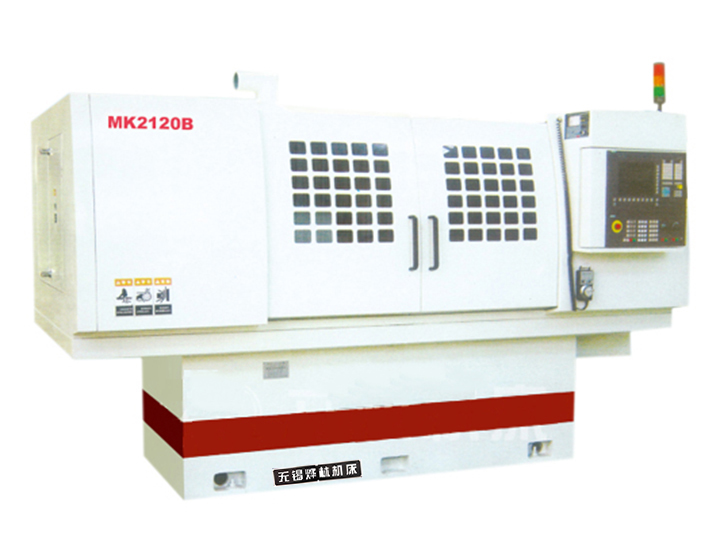
Plunge grinding — the wheel feeds straight in to a shoulder. Yelin's MK2110MK210B CNC Internal Cylindrical Grinder uses this mode for stepped bores and form grinding inside the bore.
Spindle Rigidity: The Make-or-Break Factor
Internal grinding spindle rigidity is the single biggest determinant of achievable tolerance. The rule of thumb: spindle overhang should not exceed 4× its diameter for finish grinding, 8× for roughing. A 10 mm diameter spindle can overhang 40 mm for finish work; a 40 mm spindle can overhang 160 mm.
When the overhang grows, deflection grows linearly, and the bore becomes:
Lobed — a 3-lobe or 5-lobe pattern on the bore wall, from the spindle's natural frequency exciting the grinding cycle.
Tapered — the bore gets larger as the wheel deflects away from the cut, especially at the entrance and exit of the bore.
Chatter-marked — regular vibrations show as a wave pattern on the bore surface.
Three things fix it — shorter overhang, larger spindle diameter, or higher static stiffness in the spindle bearings. The Yelin MK-series and M-series internal grinders use wider spindle bearings (typically 40–60 mm bore) to push the natural frequency of the spindle above the grinding cycle's excitation frequency.
Types of Internal Grinding Machines
Three configurations cover most production needs:
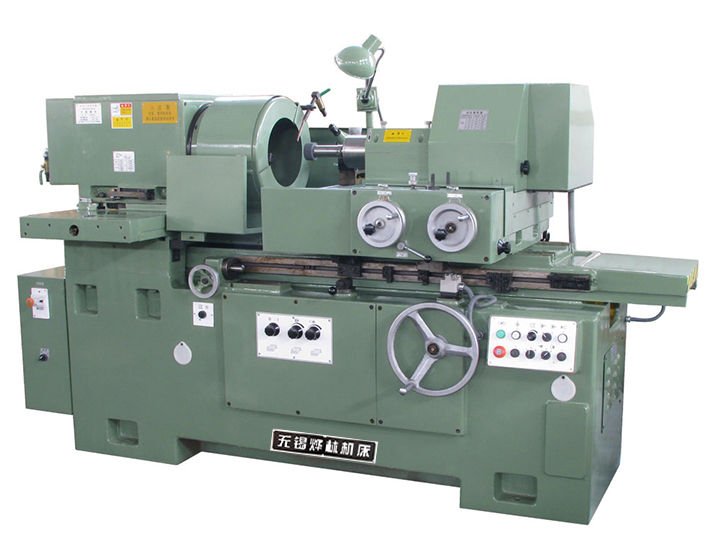
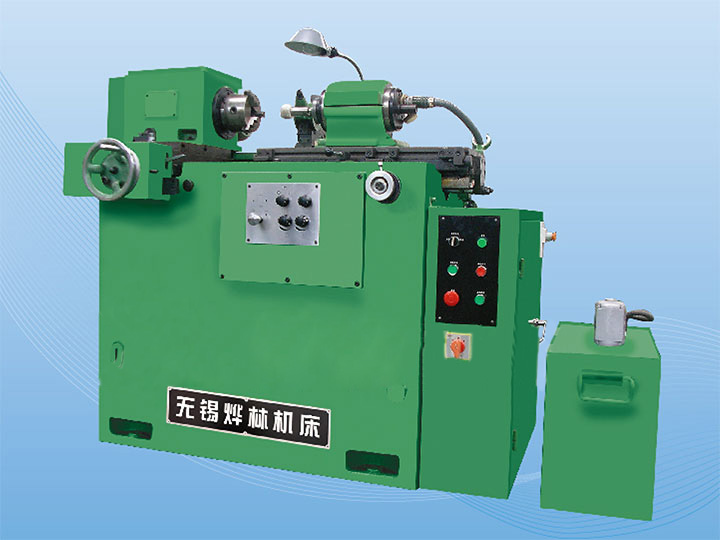
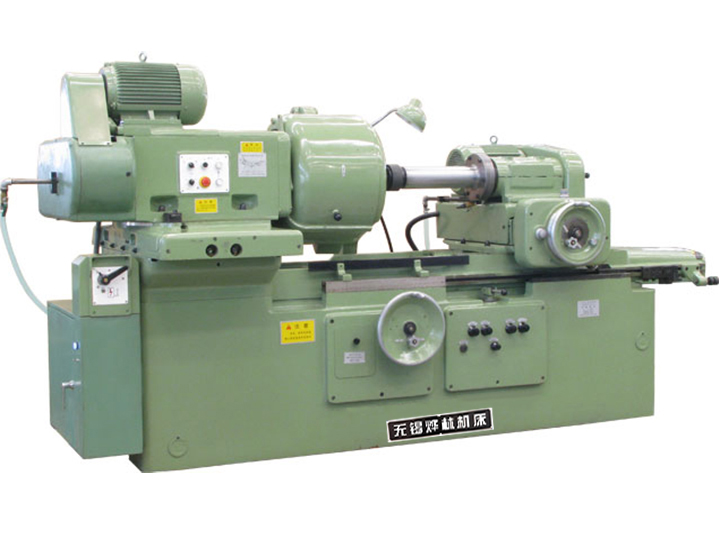
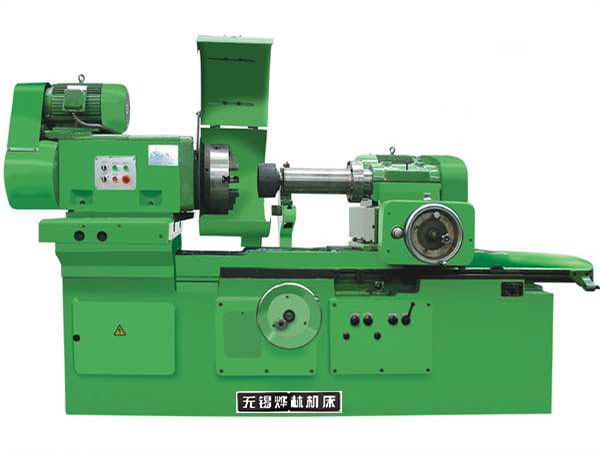
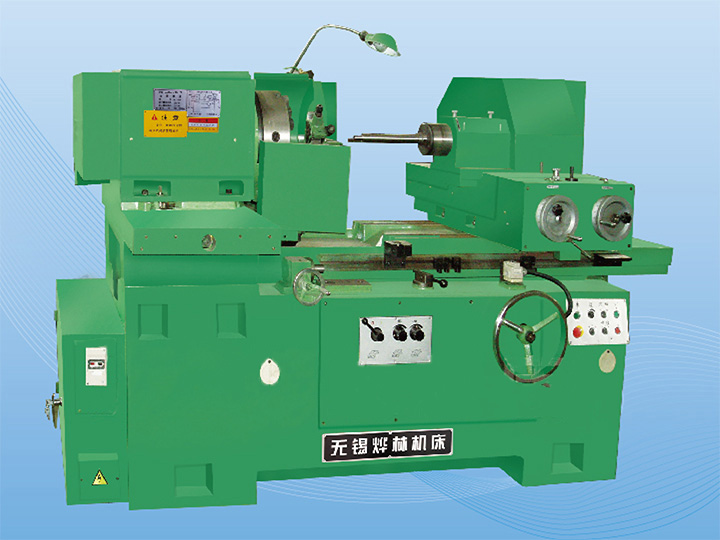
Plain internal grinder. Single-purpose machine for straight bores. Wheel spindle horizontal, workpiece held in a chuck or faceplate. Simple, rigid, cheap. Examples: Yelin M2110C and MD2110C.
Universal internal grinder. Adds a swiveling workhead, an external grinding spindle, and sometimes a facing attachment. One machine handles bore, face, taper, and external diameters on small parts. More expensive but flexible for toolroom and small-batch work. Examples: MW1420C Universal Cylindrical Grinding Machine for combined ID/OD work.
CNC internal grinder. Servo-driven axes, automatic dressing, in-process gauging, optional loading. The right answer for production runs above a few hundred parts. Examples: Yelin MK2110, MK210B, MK215.
A fourth, less common category is the deep-hole internal grinder — a specialized machine with a long-reach spindle for rifle barrels, hydraulic cylinders, and similar deep bores. Yelin's MS-009A Deep Hole Internal Grinding Machine sits in this category.
What Parts Internal Grinding Solves
Internal grinding is the right process when boring, honing, or turning cannot meet the spec. Common applications:
Bearing inner rings — roundness below 0.002 mm, surface finish Ra 0.2 μm, on hardened 100Cr6 or similar. Honing cannot hold roundness on a thin ring; internal grinding can.
Gear bores — tight concentricity to the gear teeth, especially on ring gear and sun gear bores.
Hydraulic valve spools and sleeves — matched grinding of spool and sleeve so the clearance is held to within microns.
Fuel injector bodies — micron-level bore roundness on small-diameter hardened parts.
Tool and die bushings — precision press-fit bores for punches and guide pins.
Compressor crankshaft pin bearings — ID grinding to size with concentricity to the journal OD.
If the part calls for bore roundness under 0.005 mm, surface finish under Ra 0.4 μm, or a tapered/form internal geometry, internal grinding is almost always the right answer. For looser tolerances, honing is faster and cheaper.
Internal vs Honing: When to Use Which
Honing is the closest competitor to internal grinding. They overlap, but the boundary is real.
|
Dimension |
Internal grinding |
Honing |
|
Achievable roundness |
0.001–0.002 mm |
0.003–0.005 mm |
|
Achievable cylindricity |
0.003 mm over bore length |
0.005 mm over bore length |
|
Surface finish |
Ra 0.1–0.4 μm |
Ra 0.2–0.8 μm |
|
Stock removal per pass |
0.001–0.005 mm |
0.005–0.02 mm |
|
Best for hardened parts |
Yes |
Yes (with abrasive stones) |
|
Best for soft parts |
Limited (wheel can load) |
Excellent |
|
Best for tapered bores |
Yes (with swiveling workhead) |
Difficult |
|
Cycle time per part |
15–120 seconds |
30–300 seconds |
|
Cost per part |
Lower on tight tolerances |
Lower on loose tolerances |
Use internal grinding when the bore is hardened, the tolerance is tight, or the geometry is non-round. Use honing when the part is soft, the tolerance is moderate (above 0.005 mm), and you need a controlled cross-hatch surface finish (e.g., for hydraulic cylinders).
Internal Grinding Specifications Buyers Should Check
Spec sheets for internal grinders list several numbers that matter more than the headline swing-over-bed figure:
Maximum bore diameter. Set by the wheel-head reach. Be conservative — if your largest bore is 250 mm, do not buy a 250 mm-max machine; you need margin for fixturing.
Minimum bore diameter. Set by the smallest spindle diameter the machine accepts. Typical floor is 10 mm.
Spindle speed range (RPM). For finish grinding below 20 mm bore, you want 30,000+ RPM available. Below 5,000 RPM on a small bore, you cannot keep cutting speed.
Spindle power (kW). Small internal grinding spindles run 1.5–5 kW. Anything below 1.5 kW on a production machine is a red flag.
Workhead swivel range (degrees). Determines whether you can grind tapers without a special fixture.
Coolant filtration. Internal grinding is sensitive to coolant cleanliness. Look for magnetic separator + paper filter, sub-25 μm.
Common Defects and How to Prevent Them
Internal grinding fails in predictable ways. Knowing what each defect looks like speeds up diagnosis:
Lobing (3 or 5 lobes). Cause: spindle natural frequency too close to workpiece rotation frequency. Fix: change RPM to move the excitation off resonance, or stiffen the spindle bearing preload.
Taper from entrance to exit. Cause: spindle deflection increasing as the wheel reaches further inside the bore. Fix: shorten overhang (smaller wheel), use a larger-diameter spindle, or grind in two passes from both ends.
Chatter marks. Cause: wheel grit too coarse for the material, or infeed too aggressive. Fix: switch to finer grit (60–80 grit for rough, 100–120 for finish), reduce infeed, or use a softer-grade wheel.
Bore growth on thin-wall parts. Cause: residual stress release as material is removed. Fix: rough grind, stress relieve, then finish grind. Common on bearing rings and thin-wall sleeves.
Surface burn (temper colors). Cause: wheel loading or insufficient coolant flow. Fix: dress more often, open coolant nozzle, switch to softer-grade wheel.
Wheel Selection for Internal Grinding
Internal grinding wheels are smaller (typically 6–80 mm diameter) and run at higher RPM. The bond is usually vitrified or resin. A common starting spec:
Grit: 46–60 for roughing on steel, 80–120 for finishing.
Grade: J–L for soft steels, M–P for hardened steels above 60 HRC.
Bond: Vitrified for general use, resin for high-stock-roughing and for harder contact situations.
Structure: 5–8 (open) for soft materials, 8–12 (denser) for hard materials.
Dress the wheel frequently on small internal grinding spindles — the contact zone is small, and a glazed wheel will burn the part faster than on external grinding. For deep reading on wheel selection, see Grinding Wheel Selection for Cylindrical Grinding: A Practical Guide.
Workholding for Internal Grinding
The chuck or faceplate that holds the workpiece must be:
Round. Runout under 0.003 mm at the bore wall. A sloppy chuck transfers its runout into the part.
Rigid. Thin-wall parts deflect under chuck pressure. Use a soft-jaw chuck that matches the part, or a magnetic chuck for ferromagnetic parts.
Clean. Chips under the part show up as bore defects after one pass.
For high-volume production, consider a hydraulic expanding mandrel or a vacuum chuck for non-magnetic parts. Both reduce setup time and improve concentricity over a standard 3-jaw chuck.
Coolant Strategy
Internal grinding generates heat in a confined space. Coolant strategy is non-optional:
Flow rate: 15–25 L/min minimum through the spindle for a small internal grinder.
Nozzle position: Aim coolant at the contact zone, not at the wheel. Internal grinding coolant nozzles are typically built into the spindle housing.
Filtration: Magnetic separator plus 25 μm bag filter. Anything coarser lets swarf back into the contact zone and burn the part.
Concentration: 5–8% emulsion for steel, 3–5% for cast iron. Check pH daily.
FAQ
Q: What is the difference between internal cylindrical grinding and boring?
A: Boring uses a single-point cutting tool on a rotating spindle. Internal grinding uses an abrasive wheel. Boring is faster for soft materials and rough cuts; internal grinding is the only practical way to hold micron-level tolerances on hardened bores.
Q: What is the smallest bore that can be ground?
A: With a specialized micro-spindle, internal grinding works on bores down to about 1 mm diameter. Standard internal grinding machines handle 10 mm and up. Below 5 mm bore, the process is technically doable but rarely economical.
Q: Can internal grinding hold tighter tolerances than external grinding?
A: In absolute terms, yes — internal grinding routinely hits 0.001 mm roundness on bearing bores. The reason is that the wheel contact zone is small and the wheel grinds itself true faster. The trade-off is spindle rigidity, which limits you on long, slender bores.
Q: Does internal grinding need coolant?
A: Yes, on essentially every application. Coolant controls heat (the contact zone is small and the heat input is concentrated), washes swarf out of the bore, and stabilizes the surface finish. Dry internal grinding is restricted to light toolroom work on non-ferrous metals.
Q: What is the cycle time for internal grinding a bearing bore?
A: On a CNC internal grinder with auto-dress, a 30 mm bearing bore in 100Cr6 hardened to 60 HRC typically takes 30–90 seconds for rough and finish combined. Manual machines are 2–3× longer.
Q: Is CNC internal grinding worth it for low-volume work?
A: Usually no. The programming overhead eats the throughput gain on runs under 100 parts. For toolroom and prototype work, a manual or universal internal grinder is faster and cheaper. For production runs above a few hundred parts, the CNC pays back inside 24 months.
Q: What is the most common defect in internal grinding?
A: Lobing — a 3-lobe or 5-lobe pattern on the bore wall from spindle resonance. The fix is to change RPM to move the excitation off the spindle's natural frequency, or to use a larger-diameter spindle with shorter overhang.
Q: Can one internal grinding machine grind different bore diameters?
A: Yes, within the machine's rated range, by swapping the grinding wheel and adjusting spindle speed. A 100 mm-max machine can grind bores from 10 mm to 100 mm. The changeover takes 5–15 minutes on a manual machine, 1–3 minutes on a CNC with a wheel-changing rack.
Bottom Line
Internal cylindrical grinding is the right process for tight-tolerance bores on hardened parts. The hardware is similar in concept to external cylindrical grinding, but the constraints are tighter — spindle rigidity decides the achievable tolerance, and coolant strategy decides whether you can hold that tolerance on a production run.
For most buyers in 2026, the decision tree is short: if the bore roundness spec is under 0.005 mm, the part is hardened, or the geometry is non-round, you need internal grinding. The choice of plain, universal, or CNC depends on batch size and flexibility needs. Yelin offers internal grinders from 200 mm to 1000 mm bore diameter and 320 mm to 1500 mm workpiece length, including the CNC internal cylindrical grinder line for production and the plain M2110C / MD2110C for toolroom. See the full product line or send us your part print for a configuration recommendation.
 English