The Ultimate Guide to Thread Grinding Machines: A Comprehensive Analysis of Principles, Types, and Applications
Release time:2026-02-02 Visits:771
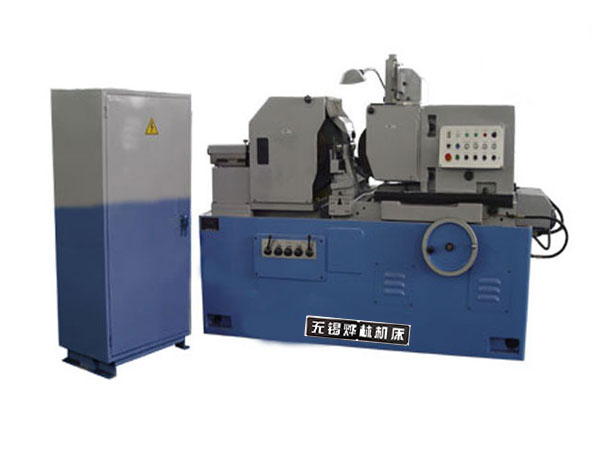
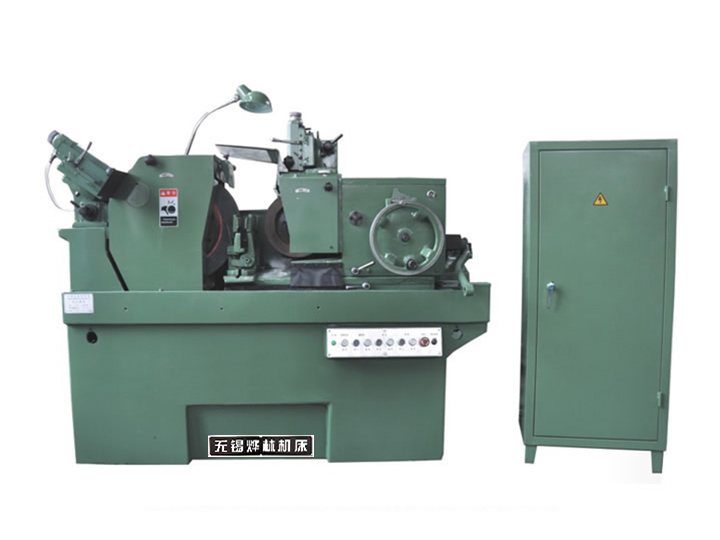
A thread grinding machine is a high-precision machine tool specifically designed for finishing heat-treated (e.g., quenched) threaded workpieces to achieve precise thread form, pitch, and mid-diameter. It is an indispensable key equipment for producing high-precision, high-hardness threads, widely used in precision manufacturing, automotive industry, aerospace, and other fields.
Core Definition and Core Purpose
Thread grinding machines perform precision grinding of thread surfaces using a formed grinding wheel. Their core purpose is to machine threaded components requiring extremely high precision and hardness, which are typically heat-treated after turning or thread rolling to significantly increase hardness (up to HRC50 or higher) and can only be finally finished through grinding processes.
Main Technical Features
1. Ultra-high Precision: Capable of stably machining threads with accuracy class 1 or higher, with cumulative pitch error controlled within an extremely small range.
2. High-hardness Material Machining Capacity: Specifically designed to handle difficult-to-machine materials such as hardened steel and cemented carbide.
3. Excellent Surface Quality: The grinding process achieves extremely low surface roughness (minimum Ra value).
4. Adaptability to Complex Thread Forms: Through precise dressing of the grinding wheel, various complex thread forms can be machined, such as metric/inch triangular, trapezoidal, zigzag, and arc threads of ball screws.
Detailed Explanation of Main Types
Thread
grinding machines are mainly classified into the following types based on their structure and function:
1. Universal Thread Grinding Machine
This is the most comprehensive and versatile type. It is usually equipped with internal thread grinding attachments, wheel dressers, and pitch correction mechanisms, suitable for single-piece or small-batch production, capable of grinding internal, external, and even tapered threads.
2. CNC Thread Grinding Machine
The mainstream choice in modern manufacturing. It precisely controls the rotation of the workpiece, the feed of the grinding wheel, and the movement of multiple axes such as dressing compensation through the CNC system, featuring high automation, stable machining precision, and excellent production efficiency, especially suitable for mass production of high-precision and complex-shaped threaded parts.
3. Lead Screw Grinding Machine
Specifically used for grinding precision lead screws with a large length-to-diameter ratio (such as ball screws for machine tools). It has a long bed and is equipped with mechanisms to eliminate lead screw deflection deformation and high-precision pitch error compensation functions.
4. Internal Thread Grinding Machine
Specially designed for grinding threads inside workpieces. It has a compact structure, with a small but rigid grinding wheel spindle, used for machining nuts, internal thread gauges, and other parts.
5. Centerless Thread Grinding Machine
Adopting the centerless grinding principle, the workpiece does not require special tooling clamping but is supported and driven to rotate by a guide wheel and a support plate. This design enables extremely high efficiency in mass production of small threaded parts (such as taps, small screws).
Core Working Principle
The operation of a thread grinding machine is based on a combination of the generating method and the form copying method:
Synchronous Movement: The rotational movement of the workpiece (C-axis) and the longitudinal feed movement of the wheel head (Z-axis) maintain strict synchronization through a precise mechanical transmission chain or CNC system. For each full rotation of the workpiece, the wheel head must move exactly one pitch (or lead).
Form Grinding: The grinding wheel is pre-dressed into an exact shape that perfectly matches the thread groove of the workpiece.
Feed Movement: The grinding wheel feeds radially (X-axis) to a predetermined depth until the final thread dimensions are achieved.
Key Application Fields
As the "mother machine" of high-end manufacturing, thread grinding machines are used to machine core basic components in numerous industries:
Precision Tool Manufacturing: Such as thread gauges (plug gauges, ring gauges), taps, thread milling cutters.
Key Component Machining: Such as the core transmission components of CNC machine tools - ball screw pairs, precision worms, high-precision lead screws.
Automotive Industry: Used for machining precision parts such as steering worms and fuel injectors.
Aerospace: Special threaded parts of engines and high-reliability connectors rely on their machining.
Petrochemical Industry: Precision valves, pump screws, etc.
Summary
Thread grinding machines are the technical cornerstone of the precision manufacturing field, directly determining the performance and precision level of high-end equipment and precision instruments. With the development of CNC technology and intelligentization, modern thread grinding machines are continuously evolving towards higher precision, higher efficiency, and greater intelligence, continuously driving the progress of manufacturing industry.
 English