Why the CNC vs Manual Choice Matters in 2026
The argument used to be simple: CNC grinders cost more, manual grinders cost less, and a skilled operator on a manual machine could match CNC accuracy on a single part. That argument is no longer quite right.
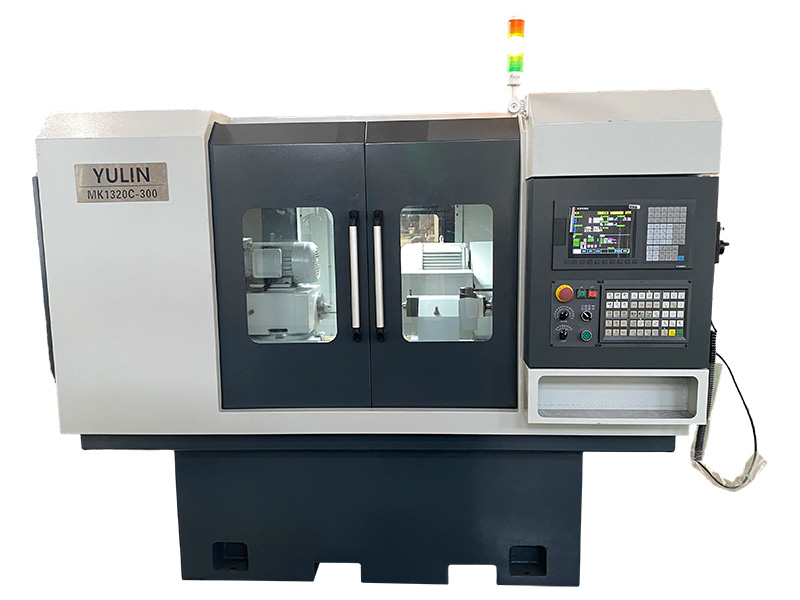
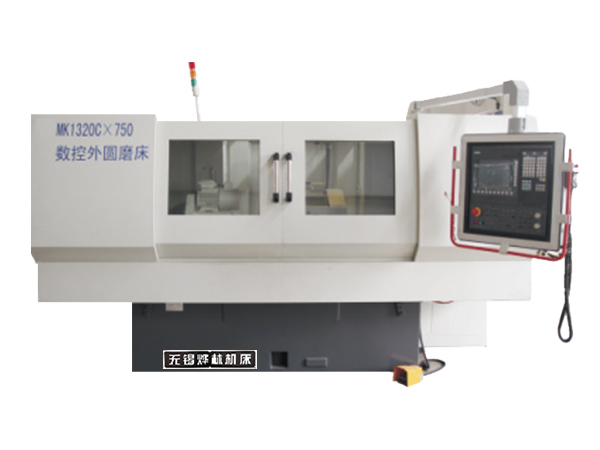
Three things have changed since 2020. First, the cost gap between a manual cylindrical grinder and an equivalent CNC model has narrowed — a Yelin MK1320C-500 CNC cylindrical grinder typically lands 30–50% above the manual M13-series, not the 2× premium it used to carry. Second, the operator pool has thinned: production cylindrical-grinder operators with five years of bench time are hard to hire in most regions, and CNC removes the bench time from the critical path. Third, the cost of a bad part — in warranty, scrap, and rework — has gone up because tighter tolerances are now standard on more parts.
This guide helps you decide which side of the line your shop sits on. It is written for first-time buyers and for shops replacing a 15–25-year-old manual machine. If you are choosing between cylindrical and centerless in the first place, start with Cylindrical vs Centerless Grinding.
What "CNC" and "Manual" Actually Mean on a Cylindrical Grinder
The
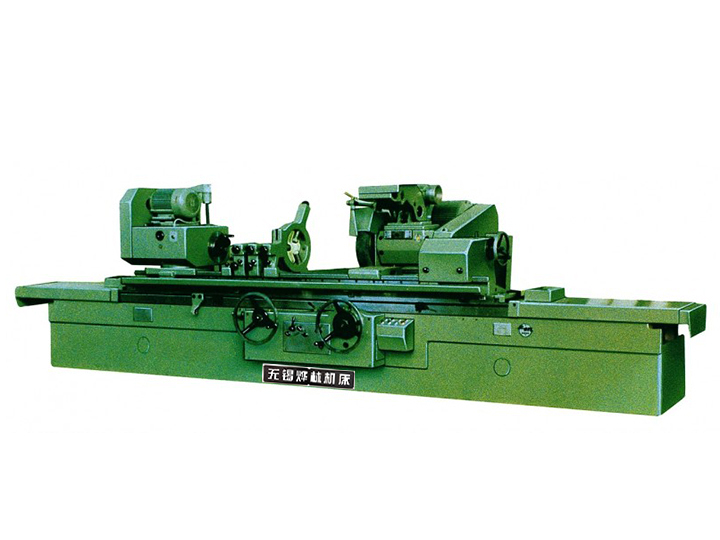
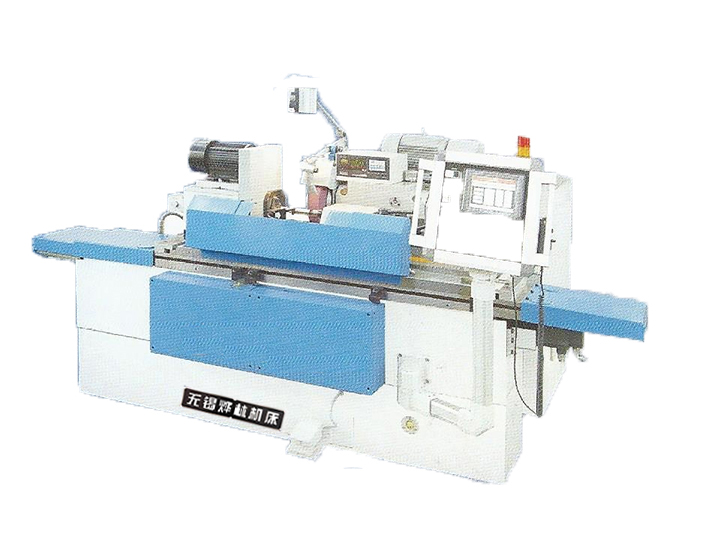
cylinder grinder's job is to traverse the wheel along a rotating workpiece at a controlled depth. On a manual machine, the operator hand-wheels the table, dials in the infeed, and watches a micrometer or a dial indicator to know when to spark out. Every parameter — feed rate, spark-out time, wheel dress depth — lives in the operator's hands.
On a CNC machine, the same parameters are encoded as a program. The operator loads the program, presses cycle-start, and the controller runs the table, infeed, and dresser through the same sequence every time. The CNC controller also handles wheel-dress compensation, taper correction, and — on closed-loop machines — in-process gauging with automatic size feedback.
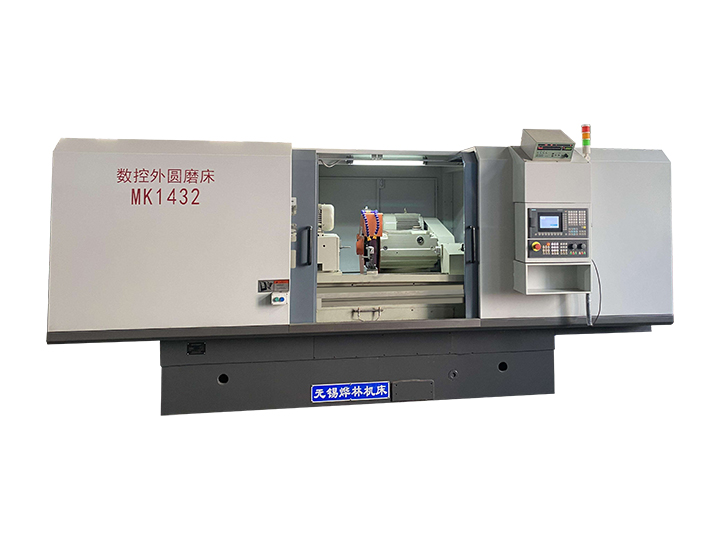
Both machines have a headstock, tailstock, worktable, wheelhead, and dresser. The mechanical hardware on a modern CNC cylindrical grinder is not radically different from a manual one. The difference is in the drives: servo-driven ball screws replace handwheels, linear scales replace dial indicators, and an HMI replaces the operator's notebook. The Yelin NC external cylindrical grinder line is built around this idea — a conventional mechanical platform with NC positioning.
Accuracy, Repeatability, and What Each One Actually Buys You
The accuracy gap on a single part is small. A skilled operator on a rigid manual grinder can hit 0.002 mm roundness on a 50 mm shaft. A CNC machine on the same part will hit the same number. The repeatability gap, however, is large.
Consider a production run of 500 shaft parts. The manual operator's average roundness will be 0.002–0.004 mm with occasional excursions to 0.006 mm when the wheel wears or the operator's attention drifts. The CNC machine will sit at 0.002–0.0025 mm across all 500 parts. That is not a five-percent improvement; it is a CpK improvement from "marginal" to "comfortably capable."
What CNC adds that manual cannot match:
Programmed multi-step cycles. Rough, semi-finish, finish, spark-out, and dress-and-compensate — all stored, all replayed. No operator judgment required to decide when to switch.
Taper grinding by interpolation. The X axis feeds slightly faster than the Z axis across the traverse, producing a controlled taper to within microns. On a manual machine, taper accuracy depends on the operator's hand.
Automatic wheel dressing with compensation. The dresser runs on schedule; the controller adds back the dress depth; the size holds. Manual machines rely on the operator to remember to dress and to add back the depth.
In-process measurement. A Marposs or similar gauge touches the part between passes and tells the controller to stop or to take another pass. Manual machines use an operator with a micrometer.
None of this matters on a one-off part. It matters the moment you run the same setup more than once a week.
When CNC Wins
Pick CNC when any of these are true for your shop:
You run the same part more than 10 times a week. The first setup is the expensive one on either machine. Every repeat setup on CNC is essentially free.
You have a CpK or SPC requirement. If your customer audits process capability, CNC's repeatability buys you headroom you cannot buy on a manual machine with a better operator.
Your operator pool is thin. CNC removes the bench-time skill requirement. A two-week training cycle replaces a five-year apprenticeship.
You want to run unattended shifts. Lights-out grinding on a manual machine is impossible. On CNC, with auto-dress and in-process gauging, it is routine for runs of 50+ parts.
Your prints call out tight concentricity or taper. Concentricity under 0.005 mm or taper accuracy under 0.002 mm/100 mm is hard to hold manually on a long run. On CNC, it is a program parameter.
When Manual Still Wins
Pick manual when any of these are true:
You run prototype, repair, and one-off work. Every part is a different setup. The CNC programming time becomes overhead with no offsetting throughput gain.
The mix changes every day. Job shops and toolrooms win on flexibility. A manual machine can re-set in 5–10 minutes; a CNC machine needs 20–40 minutes including program setup.
The parts are unusually large or unusually small. Manual grinders handle oddball geometries (e.g., a 2 m shaft) more flexibly than CNC, because the operator can ride the handwheels and react to what the part does. CNC follows a program; if the part is off, the program is off.
Capital is tight and the part mix does not justify automation. A manual cylindrical grinder at Yelin typically lists 35–50% of the equivalent CNC machine. If the work does not repeat enough to amortize the gap, the manual wins on ROI.
Cost Comparison: Manual vs CNC in 2026
Numbers below are indicative for a 320 mm swing cylindrical grinder with a 1000 mm between-centers length. Real quotes vary with configuration, automation, and shipping.
|
Item |
Manual cylindrical grinder |
CNC cylindrical grinder |
|
Machine price (FOB Wuxi) |
US $20,000–$45,000 |
US $60,000–$140,000 |
|
Wheel dresser |
Manual table-mounted dresser |
Automatic dresser with compensation |
|
In-process gauging |
Not standard |
Marposs or equivalent, add $4,000–$9,000 |
|
Operator skill required |
5+ years bench time |
2–4 weeks training |
|
Typical hourly labor cost |
Higher (skilled operator) |
Lower (machine minder) |
|
Setup time per part |
5–15 min |
15–40 min for first part, then near-zero |
|
Throughput on repeat parts |
1.0× baseline |
1.4–2.0× baseline |
|
Wheels per shift |
Higher (operator skill-dependent) |
Lower (controlled dress, less waste) |
|
Break-even vs labor savings |
n/a |
Typically 18–30 months |
The Five-Year Cost of Ownership Math
Capital cost is the visible number. The hidden cost is what happens over the life of the machine. Run this calculation for your shop:
Annual labor on grinder. A manual operator might cost $25/hour loaded; a CNC operator might cost $18/hour loaded. Over 4,000 hours/year, that is a $28,000/year difference.
Annual throughput delta. If CNC runs 1.5× the throughput, your revenue per shift rises accordingly. A $20 part at 200 parts/day on manual vs 300 parts/day on CNC is $60,000/year of additional revenue per shift.
Scrap reduction. Manual CpK of 1.0 vs CNC CpK of 1.5 typically drops scrap from 2–3% to under 0.5%. On $1M of annual throughput, that is $15,000–$25,000/year saved.
Energy, coolant, maintenance. Roughly equal between the two. CNC uses slightly more for the servos, manual uses slightly more for the hydraulic table drives.
Add (1) + (3), compare to (2) — the financing cost of the CNC premium, and you have a defensible five-year TCO. Most production shops land on 18–30-month payback for CNC. Toolrooms never close the gap because labor is not the bottleneck — setup is.
Spec Sheet Differences Worth Caring About
Brochures list the same headline numbers on both manual and CNC machines. The differences that matter:
Positioning accuracy. CNC machines list X and Z axis positioning in microns (typically 0.005 mm). Manual machines list "by dial indicator" with no number. Always ask for a written accuracy spec on a manual machine quote.
Repeatability. CNC machines list bidirectional repeatability (typically 0.003 mm). Manual machines have no spec. If your prints require repeatability, this is the line.
Spindle power. Both manual and CNC grinders in the same class typically use the same motor. Don't pay a CNC premium for power you don't need.
Controller. On Yelin CNC cylindrical grinders, the controller is typically Siemens 828D or Fanuc 0i-TF. Stick to one of these two unless your plant has an existing Siemens/Fanuc standard.
Wheel dresser. Auto-dresser is standard on CNC. On manual, it is an option. Without it, you give back most of the CNC throughput gain.
Common Mistakes When Choosing
Buying CNC to "future-proof the shop" without enough repeat work to justify it. A CNC machine sitting idle between setups is more expensive than a manual machine sitting idle between setups.
Buying manual because "we have a great operator." That operator will retire. The machine will outlive them.
Under-buying CNC axes. A 2-axis machine (X, Z) cannot grind a taper by interpolation; you need a 3-axis (X, Z, and a servo-swiveled workhead) for that. Most universal cylindrical work wants 3 axes minimum.
Skipping the in-process gauge. Without in-process gauging, the CNC is doing the same job the manual machine can do, just with motors.
Forgetting the operator UI. A controller that your operators cannot read in their language is a daily training cost. Confirm the HMI language at quote time.
Decision Tree in Five Questions
Does the same part repeat more than 10 times a week? → Yes → CNC.
Do your prints call for concentricity, taper, or CpK that is hard on manual? → Yes → CNC.
Will you run lights-out or unattended shifts? → Yes → CNC.
Is your operator pool shrinking or aging? → Yes → CNC.
Is every part a different setup? → Yes → Manual.
If you answered "yes" to two or more of 1–4, the answer is CNC. If you answered "yes" only to 5, manual is the right answer. The "1 yes" cases are judgment calls; talk to us with a sample print.
FAQ
Q: How much more does a CNC cylindrical grinder cost than a manual one?
A: In 2026, on a comparable 320 mm swing / 1000 mm length machine, CNC typically runs 30–50% above manual at the spindle. With auto-dresser, in-process gauging, and a 3-axis controller, the gap widens to 2× to 2.5×. Shipping, install, and training are similar on both.
Q: Can a CNC grinder run manual-style one-offs?
A: Yes, but the programming overhead makes single parts slower on CNC than on manual. If 80% of your work is one-offs, CNC is the wrong tool. If 20% is one-offs and 80% is repeat, CNC handles both — the one-offs just take longer per part.
Q: Does CNC cylindrical grinding always give better accuracy than manual?
A: On a single part, no. A skilled manual operator can hit the same number. Across 100+ parts, yes — CNC's repeatability is the difference. If your spec is "the part must measure 0.002 mm," both can do it. If your spec is "every part in the lot must measure 0.002 mm," only CNC reliably does.
Q: Which controller is best for a cylindrical grinder — Siemens, Fanuc, or others?
A: Siemens 828D and Fanuc 0i are the two industry standards for cylindrical grinders in 2026. Both have well-tested grinding cycles. Pick the one your existing maintenance team already knows; otherwise default to Fanuc for Fanuc-heavy plants, Siemens for Siemens-heavy plants.
Q: How long does it take to train a CNC cylindrical grinder operator?
A: For an operator who already knows how to grind (even on a different brand), 2–4 weeks to basic productivity on a CNC cylindrical grinder. For an operator who is new to grinding, 3–6 months. Compare to 5+ years for full productivity on a manual machine.
Q: Can you retrofit a manual cylindrical grinder with CNC?
A: Sometimes, but rarely cost-effective. The mechanical hardware on most pre-2010 manual grinders is not rigid or precise enough to justify the retrofit cost. For machines under 15 years old with minimal spindle damage, retrofit kits are available; for older machines, a replacement is usually cheaper.
Q: What is the smallest batch size where CNC wins?
A: Roughly 10 identical parts per week. Below that, the programming and setup overhead eats the throughput gain. Above 50 parts per week, CNC wins decisively.
Q: Is CNC cylindrical grinding more expensive to maintain?
A: Slightly. Servo drives and scales add a small annual maintenance cost (typically 5–10% above manual). The bigger hidden cost is software — controller upgrades every 7–10 years. Plan for it.
Bottom Line
The CNC vs manual decision is no longer a philosophical one. It is a math problem. If you run repeat parts, tight tolerances, or thin operator pools, CNC pays back. If you run one-offs, prototypes, or wide-mix toolroom work, manual still wins.
For most production shops in 2026, the right answer is CNC. For toolrooms and job shops, the right answer is still manual, with a possible second CNC machine added as repeat volume grows.
If you are sizing a CNC cylindrical grinder for a production line, the Yelin MK-series CNC external cylindrical grinder line and MW-series universal cylindrical grinder line cover most configurations from 320 mm to 1000 mm swing. See the full cylindrical grinder line or CNC cylindrical grinder line, or send us your print and production volume for a recommended configuration.
 English