Internal Grinding Machine: Grinding Bores That Turned Boring Couldn't
Release time:2026-10-26 Visits:0
An internal grinding machine finishes the inside diameters of workpieces — bores, tapers, and internal faces — to tolerances that boring bars cannot hold. Bearing bores, bushings, sleeves, gear bores, and valve seats all pass through one.
Internal grinding looks like the mirror image of
cylindrical grinding, but it is harder in every practical way. The wheel is small, the spindle is long, and everything deflects. This guide explains why, and what separates a machine that holds roundness from one that fights you all shift.
Why ID Grinding Is Difficult
Three physics problems make internal grinding the hardest discipline in precision grinding:
1. Small wheel, high speed. To keep cutting speed near 30 m/s, a 20 mm wheel must spin around 30,000 rpm. High-speed spindles add cost and demand better bearings.
2. Long spindle, low stiffness. The spindle must reach into the bore, so it is long and thin. Deflection under load is unavoidable — machine rigidity decides how much of it reaches the workpiece.
3. Small contact area, slow removal. The wheel touches only a sliver of the bore, so stock removal is slow. Internal grinding is a finishing process; leave the stock removal to turning or boring.
How the Machine Is Built
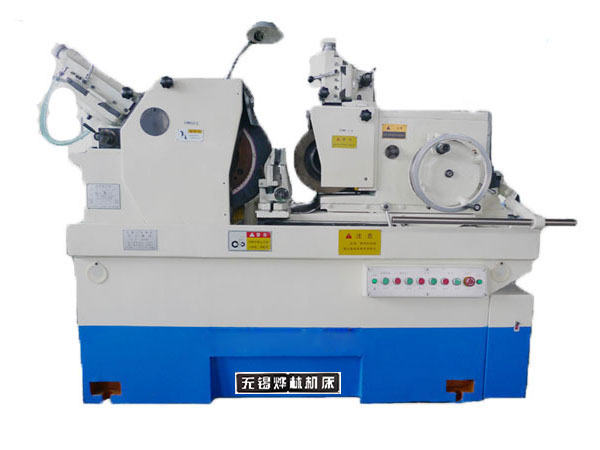
A typical internal grinder has:
- Workhead — holds and rotates the workpiece; often swiveling so tapers can be ground.
- Grinding spindle — the high-speed spindle carrying the small wheel; exchangeable for different bore sizes.
- Table — reciprocates the workpiece past the wheel for traverse grinding of longer bores.
- Feed system — radial feed for plunge grinding, or automatic oscillation with in-process sizing.
The machine bed must be massively rigid because the workhead and spindle are both cantilevered. This is why internal grinders are heavy relative to their size, and why a light, cheap machine produces out-of-round bores no matter how good the wheel is.
Grinding Strategies That Work
- Plunge grinding for short bores. The wheel feeds radially and spark-outs. Fast, accurate, and the standard method for bearing-type bores with length-to-diameter ratio under about 2:1.
- Traverse grinding for long bores. The workpiece reciprocates past the wheel with small feeds. Handles sleeves and gear bores where the wheel would otherwise leave a barrel shape.
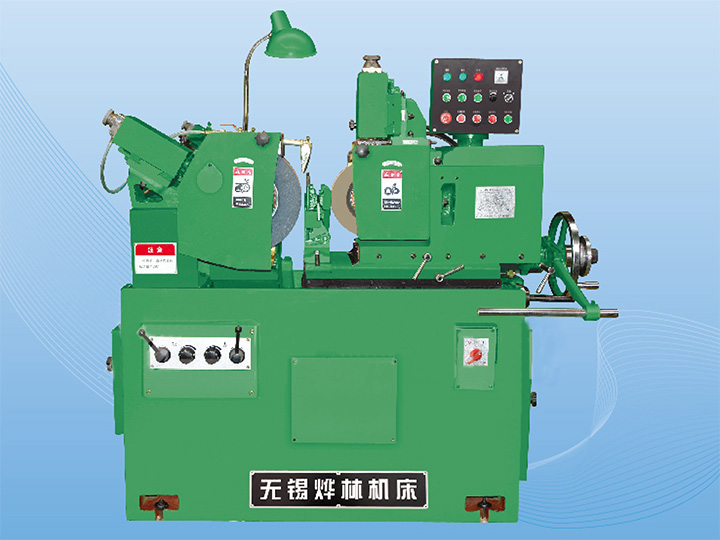
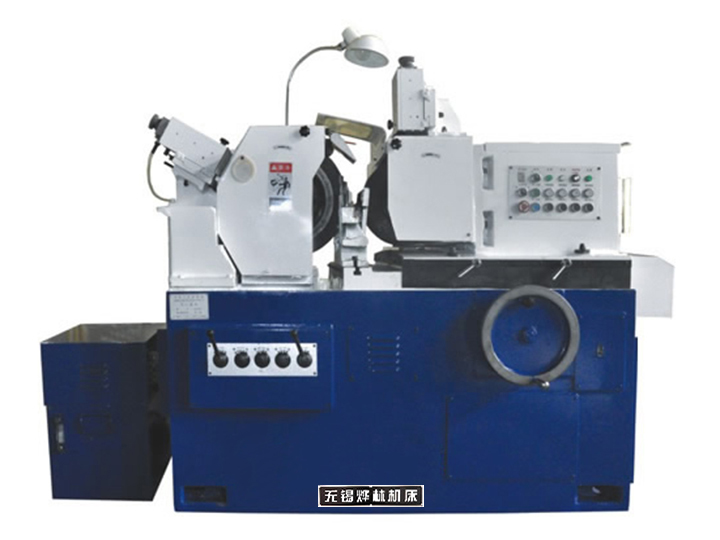
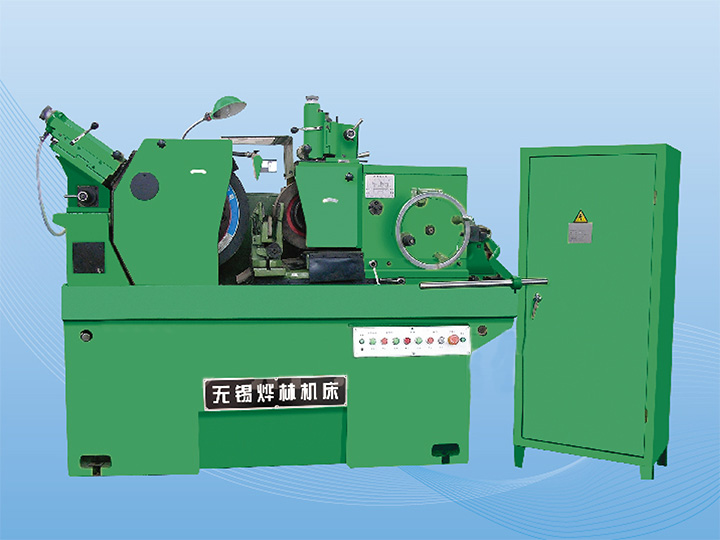
- Two-wheel approach. Rough with a coarse wheel, finish with a fine wheel in the same cycle. The semi-automatic internal grinder at Yelin Machine, for example, switches feed rate, grinding speed, and dressing speed automatically through the cycle — set it once, run it all shift.
Accuracy You Can Expect
With a rigid machine and a balanced high-speed spindle:
- Roundness — 0.002–0.003 mm for bores up to about 100 mm diameter.
- Cylindricity — 0.003 mm over the bore length with traverse grinding.
- Surface finish — Ra 0.2–0.4 μm in production, better with fine wheels.
- Size control — ±0.005 mm with gauging; in-process sizing holds ±0.002 mm on the best machines.
Small bores below 10 mm push every number toward the worse end, because the wheel diameter shrinks and spindle speed cannot keep up. If your production is full of sub-10 mm bores, budget for a dedicated small-bore machine rather than adapting a general-purpose one.
Buying Checklist
|
Specification |
Why it matters |
|
Max bore diameter and depth |
Match your largest and deepest bore — depth is usually the binding limit |
|
Grinding spindle speed range |
Needs to reach 30,000+ rpm for small wheels |
|
Workhead swivel |
Needed for internal tapers |
|
Table traverse length |
Decides longest bore you can grind by traverse |
|
Feed resolution and gauging |
In-process sizing pays for itself on batch work |
|
Machine rigidity (weight) |
The single best predictor of roundness |
Common Questions
Q: What is the difference between internal grinding and honing?
A: Grinding uses a rigid bonded wheel and can correct geometry — roundness, taper, bore position. Honing uses a flexible tool and mainly improves surface finish and straightness. Grind first, hone if the finish requirement is extreme.
Q: Can a universal cylindrical grinder do internal grinding?
A: Yes — a universal machine like the MW1432B has a swiveling workhead and an internal spindle, so it grinds OD, face, and ID on one setup. That flexibility suits toolrooms and mixed production.
Q: Why does my internal grind burn the bore?
A: Almost always one of three things: wheel speed too low for the wheel size, feed too aggressive, or insufficient coolant reaching the bore. Fix the coolant first — it is the cheapest correction and the most common cause.
 English