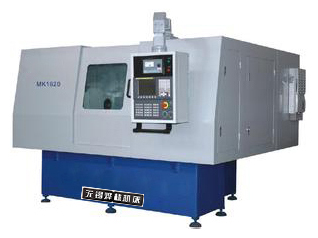
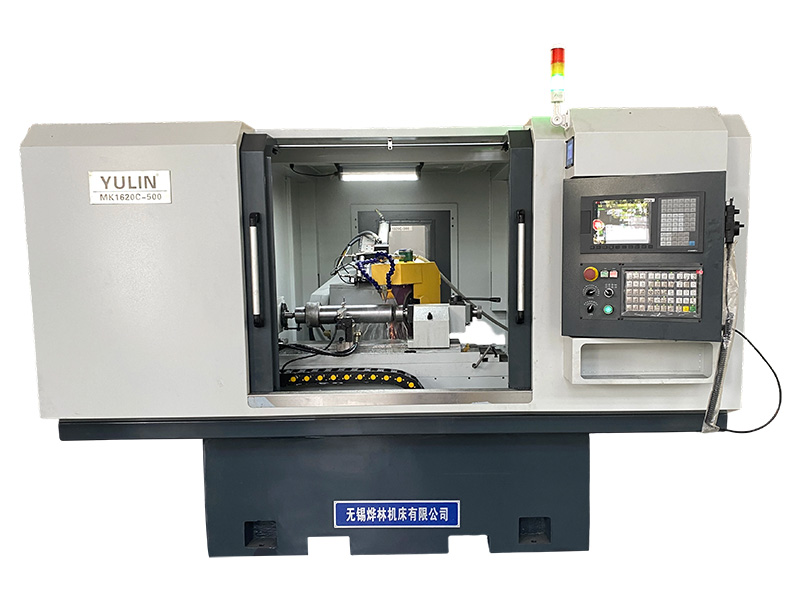
Superfinishing Machines: Ultra-Precision for Mirror-Like Surface Excellence
Release time:2026-07-13 Visits:506
1. Introduction
In high-end manufacturing, components such as automotive transmission shafts, aerospace turbine blades, and precision bearings require ultra-smooth surfaces and strict geometric accuracy to reduce friction, enhance wear resistance, and extend service life. Superfinishing machines differ from conventional grinders, honing machines, and lapping machines by adopting a gentle, low-pressure machining method that avoids thermal deformation and surface metamorphic layers. They can achieve surface roughness as low as Ra ≤ 0.01 μm, making them indispensable for the final finishing of high-precision components and a key support for high-end manufacturing upgrading.
2. Structure and Working Principle
2.1 Core Components
- Machine Base: High-rigidity cast iron or epoxy granite structure with advanced vibration-damping design, minimizing external vibrations and ensuring stable machining accuracy during high-frequency oscillation.
- Superfinishing Head: Equipped with film-backed abrasives or superfinishing stones (CBN/diamond), matched with a high-frequency oscillation mechanism (40–50 Hz for pneumatic drives, up to 25 Hz for electromechanical drives) to realize uniform micro-cutting.
- Spindle System: High-precision direct-drive spindle with minimal runout, driving the workpiece to rotate stably at adjustable speeds to coordinate with the oscillating superfinishing head.
- Clamping & Positioning Mechanism: Precision fixtures (including center clamping and centerless support) to firmly fix workpieces without deformation, ensuring alignment with the superfinishing head for consistent processing.
- Control & Auxiliary System: Advanced CNC control system (Siemens Sinumerik One, Grind Master Nano Finish Control) with in-process monitoring and remote diagnostics, plus a specialized lubrication/cooling system (kerosene is commonly used) to reduce heat and flush debris.
2.2 Working Principle
Superfinishing consists of three key stages: first, the superfinishing stone or abrasive tape contacts the high-speed rotating workpiece under low pressure (0.1–0.3 MPa) to form surface contact; second, the superfinishing head performs high-frequency axial oscillation, generating micro-cutting to remove the thin amorphous surface layer left by previous machining; finally, the abrasive self-dresses and conforms to the workpiece contour automatically, correcting geometric errors and improving surface smoothness. The entire process is gentle, with low relative speed between abrasive and workpiece, avoiding thermal deformation and preserving the base material properties.
3. Classification and Key Characteristics
3.1 Classification
- By Processing Method: Through-feed superfinishing (for cylindrical parts like pins and rollers), plunge-cut superfinishing (for shafts, gears, and camshafts), and wheel-type superfinishing (for flat, convex, and concave surfaces).
- By Structure: Horizontal (for small to medium-sized parts) and vertical (for long shafts and large heavy components), with multi-spindle models for simultaneous processing of multiple workpieces.
- By Control: Manual (small-batch repair), semi-automatic, and full-CNC (mainstream for mass production), with Industry 4.0-enabled models supporting automatic loading/unloading and parameter optimization.
3.2 Core Characteristics
- Ultra-Smooth Surface: Achieves mirror-like surfaces with Ra ≤ 0.01 μm, reducing friction by over 30% and enhancing lubrication retention for components like bearings.
- No Metamorphic Layer: Low-pressure machining avoids material lattice distortion, reducing residual stress by 60%–80% compared to traditional processes and preserving base material performance.
- Precise Geometry Correction: Automatically corrects waviness and roundness errors, controlling cylindrical part roundness within 0.5 μm and improving generatrix straightness by over 40%.
- High Adaptability: Compatible with various materials (alloy steel, cast iron, ceramics) and part sizes (max diameter up to 4500 mm for large models), with modular design for customization.
4. Key Parameters and Selection
4.1 Core Parameters
Core parameters include processing capacity (max workpiece length 500–1000 mm for standard models, up to 2450 mm for large platforms; max weight 10–5000 kg), surface precision (Ra ≤ 0.01 μm, roundness ≤ 0.5 μm), oscillation frequency (25–50 Hz), spindle speed (adjustable), and axis configuration (up to 4 axes for complex parts).
4.2 Selection Principles
Select processing method based on workpiece shape (through-feed for cylindrical parts, plunge-cut for shafts), structure by workpiece size (vertical for large heavy parts, horizontal for small parts), and control mode by production scale. Choose abrasive type (CBN/diamond) based on workpiece hardness, and opt for modular models for easy customization and quick tooling change.
5. Industrial Applications
Widely used in automotive manufacturing (crankshafts, camshafts, piston pins, transmission yokes, steering rack bars), aerospace (turbine blades, landing gear components), bearing industry (bearing raceways, cylindrical rollers), and precision machinery (gear pump shafts, armature shafts). They are also applied in rotogravure cylinder polishing and internal superfinishing of hydraulic components, playing a key role in improving component reliability and service life.
6. Operation and Troubleshooting
6.1 Operation Tips
- Adjust oscillation frequency, pressure, and spindle speed according to workpiece material and surface requirements; ensure proper lubrication to avoid abrasive wear.
- Calibrate clamping and positioning accuracy before operation; use centerless support for long shafts to prevent bending deformation.
- Regularly check and replace worn abrasives/stones; monitor lubricant concentration and level to maintain processing stability.
6.2 Common Troubleshooting
Common faults and solutions: Uneven surface finish is caused by inconsistent oscillation pressure or abrasive wear, resolved by adjusting pressure and replacing abrasives; geometric errors result from misalignment or spindle runout, fixed by re-calibrating the positioning mechanism and spindle; surface scratches are caused by debris in lubricant, solved by filtering or replacing lubricant.
7. Development Trends
Developing towards intelligence (AI-based real-time parameter optimization and in-process monitoring), automation (unmanned production with automatic loading/unloading systems), higher precision (Ra ≤ 0.005 μm), and multi-functional integration (combining superfinishing with deburring and final gauging to realize closed-loop machining).
8. Conclusion
As core ultra-precision finishing equipment,
superfinishing machines are crucial for improving component surface quality, geometric accuracy, and service life. Their unique gentle machining method and mirror-like surface finishing capability make them irreplaceable in high-end manufacturing, supporting the development of automotive, aerospace, and precision machinery industries.
 English