1. Introduction
In modern precision manufacturing, flat surface grinding is a key finishing process, directly determining the flatness, dimensional accuracy, and surface roughness of mechanical components, which in turn affects the assembly accuracy, service life, and overall performance of the final product. Traditional surface grinding equipment has limitations in batch processing efficiency, grinding accuracy consistency, and adaptability to complex workpieces, making it difficult to meet the high standards of modern industrial production.
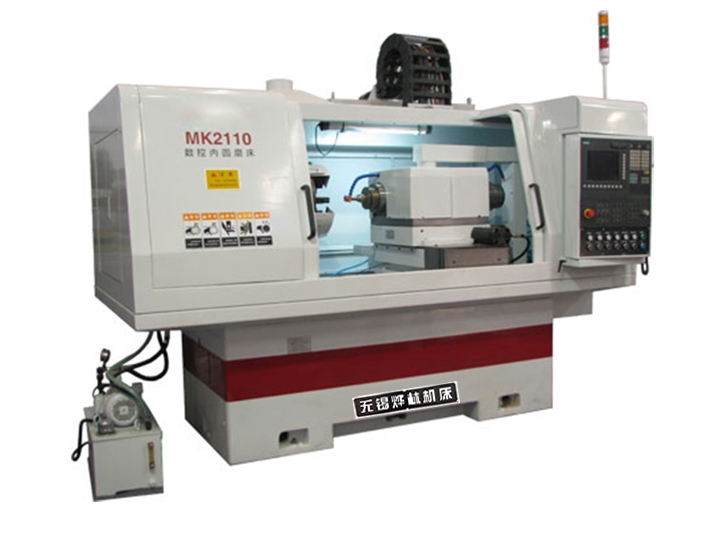
Rotary table grinders, with their integrated design of rotary worktable and high-precision grinding system, effectively solve the pain points of traditional flat grinding equipment. The rotary worktable enables continuous and uniform feeding of workpieces, realizing efficient batch processing while ensuring consistent grinding accuracy; the matching high-precision grinding mechanism and motion control system can achieve ultra-high flatness and surface quality of workpieces. Unlike vertical or horizontal surface grinders, rotary table grinders are particularly suitable for batch processing of small and medium-sized flat parts, such as bearing rings, valve seats, precision washers, and semiconductor components, with the advantages of high efficiency, high precision, and good stability.
Against the background of global manufacturing upgrading and intelligent transformation, mastering the high-precision surface grinding technology of rotary table grinders, clarifying their application scenarios, and mastering scientific selection methods are of great practical significance for reducing production costs, improving product competitiveness, and promoting the development of precision manufacturing. This guide takes rotary table grinders as the core, systematically combs the technical principles, application scenarios, and selection strategies, providing a comprehensive and professional reference for relevant practitioners to apply and select rotary table grinders.
2. Core High-Precision Surface Grinding Technology of Rotary Table Grinders
The high-precision performance of rotary table grinders is supported by advanced surface grinding technology, which integrates mechanical design, motion control, grinding process, and material science. The core technology mainly includes the working principle of grinding, key technical characteristics, and process optimization methods, which together determine the grinding accuracy, efficiency, and surface quality of the equipment.
2.1 Working Principle of High-Precision Surface Grinding
The core working principle of rotary table grinders is to use a high-speed rotating grinding wheel to remove excess material on the surface of the workpiece, so as to achieve the required flatness, dimensional accuracy, and surface roughness. The key difference from traditional surface grinders lies in the feeding method of the workpiece: the workpiece is clamped on the rotary worktable, and the worktable rotates at a uniform speed to drive the workpiece to perform continuous circular feeding, while the grinding wheel moves linearly (vertical or horizontal) to complete the grinding of the workpiece surface.
The high-precision grinding process of rotary table grinders is mainly divided into three stages: rough grinding, semi-finish grinding, and finish grinding. Rough grinding is mainly used to remove most of the excess material, improving processing efficiency; semi-finish grinding is used to correct the dimensional error and shape error generated in rough grinding, laying the foundation for finish grinding; finish grinding is the key stage to ensure high precision, by optimizing grinding parameters and using high-precision grinding wheels, the flatness and surface roughness of the workpiece are controlled to the required range.
The high-precision grinding of rotary table grinders relies on the precise coordination of three core components: the rotary worktable (ensuring uniform feeding of workpieces), the grinding wheel spindle (ensuring stable high-speed rotation), and the feed system (ensuring precise movement of the grinding wheel). The mutual matching of these components realizes the continuous, high-precision, and efficient grinding of workpiece surfaces.
2.2 Key Technical Characteristics of High-Precision Grinding
Rotary table grinders have unique technical characteristics that support high-precision surface grinding, which are the core advantages distinguishing them from other grinding equipment:
2.2.1 High-Precision Rotary Worktable
The rotary worktable is the core component of rotary table grinders, and its rotation accuracy directly determines the uniformity and flatness of workpiece grinding. High-precision rotary worktables usually adopt hydrostatic bearing or air bearing support, which has the advantages of low friction, high rotation accuracy, and good stability. The rotation accuracy (radial runout and axial runout) can reach 0.001mm, ensuring that the workpiece maintains a uniform feeding speed and position during rotation, avoiding grinding errors caused by worktable jitter.
In addition, the rotary worktable is usually equipped with a high-precision indexing mechanism, which can realize accurate positioning of the workpiece, suitable for grinding workpieces with special shape requirements or multi-station grinding.
2.2.2 High-Stability Grinding Wheel Spindle
The grinding wheel spindle is responsible for driving the grinding wheel to rotate at high speed, and its stability and rotation accuracy directly affect the surface quality of the workpiece. High-precision rotary table grinders usually adopt a rigid spindle structure, supported by high-precision angular contact ball bearings or hydrostatic bearings, which can effectively reduce spindle runout and vibration. The spindle speed can be steplessly adjusted according to the workpiece material, grinding wheel type, and grinding requirements, ensuring the rationality of the grinding speed and improving the grinding efficiency and surface quality.
2.2.3 Precision Motion Control System
Rotary table grinders are equipped with a high-performance numerical control (CNC) motion control system, which can realize precise control of the rotary worktable speed, grinding wheel feed speed, and grinding depth. The closed-loop control mode is adopted to real-time feedback the position, speed, and pressure signals during the grinding process, and adjust the motion parameters in time to avoid grinding errors caused by external interference. The positioning accuracy of the feed system can reach 0.0005mm, ensuring the precise control of the grinding depth and improving the dimensional accuracy of the workpiece.
2.2.4 Advanced Grinding Wheel Technology
The selection and use of grinding wheels are crucial to the high-precision grinding effect of rotary table grinders. High-precision grinding usually adopts super-abrasive grinding wheels (such as diamond grinding wheels, cubic boron nitride (CBN) grinding wheels), which have the advantages of high hardness, good wear resistance, and high grinding efficiency. The grain size, hardness, and bonding agent of the grinding wheel are selected according to the workpiece material (such as steel, aluminum alloy, ceramic, semiconductor) and grinding requirements, ensuring that the grinding wheel can maintain good sharpness and shape during the grinding process, and reducing the surface roughness of the workpiece.
2.3 Process Optimization for High-Precision Grinding
To further improve the grinding accuracy and surface quality of rotary table grinders, process optimization is essential. The key optimization directions include grinding parameter adjustment, grinding wheel dressing, and workpiece clamping:
2.3.1 Grinding Parameter Optimization
The main grinding parameters include grinding wheel speed, rotary worktable speed, grinding depth, and feed speed. These parameters directly affect the grinding efficiency, grinding accuracy, and surface quality:
- Grinding wheel speed: Increasing the grinding wheel speed can improve the grinding efficiency and surface quality, but excessive speed will increase the spindle load and vibration; the optimal speed is determined according to the grinding wheel type and workpiece material.
- Rotary worktable speed: The worktable speed should be matched with the grinding wheel speed to ensure uniform grinding of the workpiece surface; too high speed will lead to insufficient grinding, while too low speed will reduce processing efficiency.
- Grinding depth: The grinding depth of rough grinding is usually 0.05-0.2mm, and the grinding depth of finish grinding is 0.005-0.02mm; excessive finish grinding depth will lead to workpiece deformation and surface burns, while too small depth will affect processing efficiency.
- Feed speed: The feed speed of the grinding wheel should be adjusted according to the grinding depth and workpiece material; slow feed speed can improve surface quality, but will reduce processing efficiency.
2.3.2 Grinding Wheel Dressing
During the grinding process, the grinding wheel will wear and passivate, leading to reduced grinding efficiency and surface quality. Regular dressing of the grinding wheel is necessary to restore its shape and sharpness. High-precision rotary table grinders usually adopt automatic dressing systems, using diamond dressing pens or diamond dressing wheels to dress the grinding wheel. The dressing parameters (such as dressing speed, dressing depth) are optimized according to the grinding wheel type and grinding requirements, ensuring that the dressed grinding wheel has a precise shape and sharp cutting edge.
2.3.3 Workpiece Clamping Optimization
The clamping method and clamping force of the workpiece directly affect the grinding accuracy. For high-precision flat grinding, the workpiece should be clamped firmly to avoid displacement during grinding, while avoiding deformation caused by excessive clamping force. Common clamping methods include magnetic chuck clamping, vacuum chuck clamping, and mechanical clamping:
- Magnetic chuck clamping: Suitable for ferromagnetic workpieces (such as steel, cast iron), with the advantages of fast clamping, uniform force, and no damage to the workpiece surface.
- Vacuum chuck clamping: Suitable for non-ferromagnetic workpieces (such as aluminum alloy, ceramic, semiconductor), with the advantages of uniform clamping force and high clamping accuracy.
- Mechanical clamping: Suitable for workpieces with special shapes, ensuring firm clamping, but need to pay attention to avoiding clamping marks on the workpiece surface.
3. Core Application Scenarios of Rotary Table Grinders
Rotary table grinders, with their advantages of high precision, high efficiency, and good batch processing performance, are widely used in various precision manufacturing fields, especially suitable for the high-precision flat grinding of small and medium-sized parts. The following is a detailed analysis of their core application scenarios in various industries.
3.1 Automotive Manufacturing Industry
The automotive industry has strict requirements on the precision and consistency of key components, and rotary table grinders are widely used in the grinding of automotive precision parts:
- Bearing Components: Bearing rings, bearing washers, and other bearing components need high-precision flat grinding to ensure their flatness and dimensional accuracy, which is the key to ensuring the rotation accuracy and service life of bearings. Rotary table grinders can realize batch grinding of bearing components, with a flatness of up to 0.001mm and a surface roughness of Ra 0.01μm.
- Valve Components: Automotive valves, valve seats, and other components need high-precision flat grinding to ensure the sealing performance of the engine. Rotary table grinders can realize the high-precision grinding of the valve end surface, ensuring the flatness and surface quality of the sealing surface.
- Transmission Components: Precision gears, shafts, and other transmission components need high-precision flat grinding of their end surfaces to ensure the assembly accuracy and transmission stability. Rotary table grinders can achieve consistent grinding accuracy of batch parts, improving production efficiency.
3.2 Aerospace Industry
The aerospace industry has extremely high requirements on the precision and reliability of components, and rotary table grinders play an important role in the grinding of aerospace precision parts:
- Aerospace Fasteners: Precision bolts, nuts, and other fasteners used in aerospace equipment need high-precision flat grinding to ensure their dimensional accuracy and assembly performance. Rotary table grinders can realize the high-precision grinding of the end surfaces of fasteners, with a dimensional accuracy of ±0.001mm.
- Instrument Components: Precision instrument components (such as gyroscopes, accelerometers) need ultra-high-precision flat grinding to ensure their measurement accuracy. Ultra-high-precision rotary table grinders can achieve a flatness of up to 0.0005mm and a surface roughness of Ra 0.005μm, meeting the requirements of aerospace instruments.
- Aerospace Structural Parts: Small and medium-sized structural parts of aircraft (such as connecting plates, brackets) need high-precision flat grinding to ensure their assembly accuracy. Rotary table grinders can realize efficient batch grinding of these parts, ensuring consistent precision.
3.3 Precision Mold Industry
The precision of the mold directly determines the quality of the processed products, and rotary table grinders are widely used in the grinding of precision mold components:
- Mold Cavity and Core: The flat surfaces of mold cavities and cores (such as plastic mold cores, stamping mold punches) need high-precision grinding to ensure the surface quality and dimensional accuracy of the mold. Rotary table grinders can realize the high-precision grinding of the flat surfaces of mold components, with a surface roughness of up to Ra 0.01μm.
- Mold Guide Components: Mold guide pillars, guide sleeves, and other guide components need high-precision flat grinding to ensure their guiding accuracy and assembly performance. Rotary table grinders can achieve consistent grinding accuracy of batch guide components, improving the service life of the mold.
3.4 Semiconductor and Electronic Equipment Industry
The semiconductor and electronic equipment industry requires ultra-high-precision grinding of components, and rotary table grinders are essential equipment in this field:
- Semiconductor Wafers: Silicon wafers, gallium arsenide wafers, and other semiconductor wafers need ultra-high-precision flat grinding to ensure their flatness and surface quality, which is the basis for subsequent chip manufacturing. Ultra-high-precision rotary table grinders can achieve a flatness of up to 0.0005mm and a surface roughness of Ra 0.005μm, meeting the requirements of semiconductor manufacturing.
- Precision Electronic Components: Precision connectors, electronic chip substrates, and other components need high-precision flat grinding to ensure their dimensional accuracy and contact performance. Rotary table grinders can realize batch grinding of these small-sized components, ensuring consistent precision and surface quality.
3.5 Instrumentation and Medical Equipment Industry
Instrumentation and medical equipment require high-precision components to ensure their performance and reliability, and rotary table grinders are widely used in the grinding of these components:
- Instrument Components: Precision dials, instrument panels, and other components need high-precision flat grinding to ensure their flatness and surface quality, which is the key to ensuring the measurement accuracy of the instrument.
- Medical Equipment Components: Surgical instruments, medical implants (such as artificial joints, dental implants), and other components need high-precision flat grinding to ensure their biocompatibility and service life. Rotary table grinders can realize the high-precision grinding of these small and complex components, meeting the strict requirements of the medical industry.
4. Comprehensive Selection Guide for Rotary Table Grinders
The rational selection of rotary table grinders is the key to ensuring grinding quality, improving production efficiency, and reducing production costs. The selection process needs to comprehensively consider factors such as grinding requirements, workpiece characteristics, equipment performance, and economic benefits. This section provides a detailed selection guide, covering key selection indicators, equipment types, and practical selection strategies.
4.1 Key Selection Indicators
When selecting rotary table grinders, the following key indicators should be focused on, which directly determine whether the equipment can meet the actual grinding requirements:
4.1.1 Grinding Accuracy
Grinding accuracy is the core indicator of rotary table grinders, mainly including flatness, dimensional accuracy, and surface roughness:
- Flatness: The maximum allowable flatness of the workpiece determines the required flatness of the equipment; for general precision grinding, the flatness of the equipment should be ≤0.001mm; for ultra-high-precision grinding, the flatness should be ≤0.0005mm.
- Dimensional accuracy: The dimensional tolerance of the workpiece determines the positioning accuracy and dimensional control accuracy of the equipment; the positioning accuracy of the equipment should be ≤0.0005mm, and the dimensional control accuracy should be ±0.001mm.
- Surface roughness: The surface roughness requirement of the workpiece determines the grinding wheel type and equipment performance; the surface roughness of the workpiece processed by the equipment should be ≤Ra 0.01μm for general precision grinding, and ≤Ra 0.005μm for ultra-high-precision grinding.
4.1.2 Processing Capacity
Processing capacity mainly includes the maximum workpiece size, maximum workpiece weight, and processing efficiency:
- Maximum workpiece size: According to the diameter and thickness of the workpiece, select the appropriate rotary worktable size; the diameter of the rotary worktable should be larger than the maximum diameter of the workpiece, and the maximum thickness of the workpiece should be within the vertical stroke range of the grinding wheel.
- Maximum workpiece weight: The bearing capacity of the rotary worktable should be greater than the maximum weight of the workpiece, ensuring the stability of the worktable during rotation.
- Processing efficiency: According to the batch size of the workpiece, select the equipment with appropriate processing efficiency; high-efficiency rotary table grinders are usually equipped with automatic loading and unloading devices, automatic dressing systems, and other functions to improve batch processing efficiency.
4.1.3 Equipment Stability and Reliability
Equipment stability and reliability are crucial for long-term batch production. Key considerations include the rigidity of the equipment, the quality of key components (such as spindle, rotary worktable), and the service life of the equipment. It is recommended to select equipment with mature technology, reliable quality, and perfect after-sales service.
4.1.4 Automation Level
The automation level of the equipment affects processing efficiency and labor intensity. For large-batch production, it is recommended to select equipment with automatic loading and unloading, automatic dressing, automatic measurement, and other functions, which can reduce manual intervention, improve production efficiency, and ensure consistent grinding quality.
4.1.5 Cost-Effectiveness
Cost-effectiveness is an important factor in equipment selection. It is necessary to balance equipment performance and cost, select equipment that meets the grinding requirements and has reasonable prices, and avoid blind pursuit of high performance leading to unnecessary cost waste. At the same time, factors such as equipment maintenance cost, consumable cost (such as grinding wheels), and energy consumption should be considered.
4.2 Common Types of Rotary Table Grinders and Their Selection
Rotary table grinders can be divided into different types according to the structure, precision level, and automation level. The selection should be based on the actual grinding requirements and workpiece characteristics:
4.2.1 According to Precision Level
- General Precision Rotary Table Grinders: Flatness ≤0.001mm, surface roughness ≤Ra 0.01μm, suitable for general precision flat grinding scenarios (such as ordinary bearing components, automotive parts). The price is relatively low, suitable for small and medium-sized enterprises with general precision requirements.
- High-Precision Rotary Table Grinders: Flatness ≤0.0005mm, surface roughness ≤Ra 0.005μm, suitable for high-precision grinding scenarios (such as aerospace components, semiconductor wafers). The equipment is equipped with high-precision spindle, rotary worktable, and motion control system, with high stability and reliability, and the price is relatively high.
4.2.2 According to Automation Level
- Manual Rotary Table Grinders: The grinding parameters and feeding are manually operated, suitable for small-batch, multi-variety grinding scenarios. The price is low, but the labor intensity is high, and the grinding accuracy consistency is poor.
- Semi-Automatic Rotary Table Grinders: Equipped with automatic grinding and automatic dressing functions, but the workpiece loading and unloading is manual, suitable for medium-batch grinding scenarios. It balances processing efficiency and cost, and is widely used in various enterprises.
- Full-Automatic Rotary Table Grinders: Equipped with automatic loading and unloading, automatic grinding, automatic dressing, automatic measurement, and other functions, suitable for large-batch, high-precision grinding scenarios. The processing efficiency is high, the labor intensity is low, and the grinding accuracy consistency is good, but the price is high.
4.2.3 According to Worktable Structure
- Horizontal Rotary Table Grinders: The rotary worktable is horizontal, suitable for flat grinding of small and medium-sized workpieces, with the advantages of simple structure and easy operation, widely used in various industries.
- Vertical Rotary Table Grinders: The rotary worktable is vertical, suitable for grinding the end surfaces of cylindrical workpieces or special-shaped workpieces, with the advantages of good rigidity and high grinding accuracy, suitable for high-precision grinding scenarios.
4.3 Practical Selection Strategies
Combined with the key selection indicators and equipment types, the following practical selection strategies are proposed to help relevant practitioners select the most suitable rotary table grinders:
1. Clarify Grinding Requirements: First, clarify the flatness, dimensional accuracy, surface roughness, and batch size of the workpiece, which are the basis for selecting equipment. For example, if the workpiece requires ultra-high precision (flatness ≤0.0005mm), a high-precision rotary table grinder should be selected; if the batch size is large, a full-automatic or semi-automatic equipment should be selected.
2. Match Workpiece Characteristics: According to the size, weight, and material of the workpiece, select the equipment with appropriate worktable size, bearing capacity, and grinding wheel type. For example, for non-ferromagnetic workpieces (such as aluminum alloy), a rotary table grinder with a vacuum chuck should be selected; for large-weight workpieces, a equipment with a high-bearing rotary worktable should be selected.
3. Balance Performance and Cost: According to the enterprise's production needs and budget, select equipment with appropriate performance and price. Avoid selecting high-performance equipment when the grinding requirements are general, and avoid selecting low-performance equipment that cannot meet the grinding requirements.
4. Consider After-Sales Service: Select manufacturers with mature technology, perfect after-sales service, and sufficient spare parts supply, which can ensure the normal operation of the equipment and timely solve the problems encountered in the use process.
5. Test and Verify: Before purchasing, it is recommended to conduct on-site tests of the equipment, grind the sample workpiece, and verify whether the equipment can meet the grinding requirements, ensuring the rationality of the selection.
5. Common Problems and Solutions in the Use of Rotary Table Grinders
In the process of using rotary table grinders, due to factors such as improper operation, parameter setting, and equipment wear, some common problems may occur, which affect the grinding quality and efficiency. The following are common problems and corresponding solutions:
5.1 Problem 1: Insufficient Flatness of Workpieces
Causes: Uneven rotation of the rotary worktable, improper grinding parameters, wear of the grinding wheel, or deformation of the workpiece due to excessive clamping force.
Solutions: Check and adjust the rotary worktable to ensure uniform rotation and no jitter; optimize the grinding parameters (reduce grinding depth, adjust worktable speed); dress the grinding wheel in time to restore its shape and sharpness; adjust the clamping force to avoid workpiece deformation.
5.2 Problem 2: Surface Roughness Exceeding the Standard
Causes: Passivation of the grinding wheel, improper grinding parameters (too high feed speed, too large grinding depth), or unclean workpiece surface.
Solutions: Dress the grinding wheel in time to ensure its sharpness; optimize the grinding parameters (reduce feed speed, reduce finish grinding depth); clean the workpiece and grinding wheel before grinding to avoid impurities affecting the surface quality.
5.3 Problem 3: Dimensional Error of Workpieces
Causes: Inaccurate positioning of the feed system, improper grinding depth setting, or thermal deformation of the equipment.
Solutions: Calibrate the feed system to ensure precise positioning; accurately set the grinding depth and use automatic measurement to monitor the dimensional accuracy in real time; optimize the cooling system to reduce thermal deformation of the equipment.
5.4 Problem 4: Equipment Vibration
Causes: Unstable foundation of the equipment, loose components, or improper grinding parameters.
Solutions: Reinforce the equipment foundation to ensure stability; check and tighten the loose components (such as spindle, worktable); optimize the grinding parameters to reduce cutting force and vibration.
6. Development Trends of Rotary Table Grinder Technology
With the continuous advancement of precision manufacturing technology, intelligent manufacturing technology, and material science, rotary table grinder technology is developing in the direction of ultra-high precision, intelligence, high efficiency, and greenization. The main development trends are as follows:
- Ultra-High Precision Development: With the increasing demand for ultra-high precision components in aerospace, semiconductor, and other fields, rotary table grinders are developing towards ultra-high precision. The rotation accuracy of the rotary worktable, the stability of the spindle, and the control accuracy of the feed system will be further improved, and the flatness of the processed workpiece will be controlled within 0.0003mm, meeting the ultra-high precision grinding requirements.
- Intelligent Development: The integration of artificial intelligence (AI), Internet of Things (IoT), and big data technology into rotary table grinders will realize intelligent functions such as automatic parameter optimization, fault early warning, predictive maintenance, and online monitoring. The equipment can automatically adjust the grinding parameters according to the workpiece material and grinding status, real-time monitor the equipment operation status, and avoid sudden faults.
- High Efficiency Development: By optimizing the structural design, improving the grinding speed, and integrating automatic loading and unloading, automatic dressing, and other functions, the processing efficiency of rotary table grinders will be further improved. The development of high-speed grinding technology and super-abrasive grinding wheels will also greatly improve the grinding efficiency and reduce the processing cycle.
- Green Development: By optimizing the grinding process, using environmentally friendly grinding fluid, and improving the energy efficiency of the equipment, the environmental impact of rotary table grinders will be reduced. The development of dry grinding technology and semi-dry grinding technology will avoid the pollution caused by grinding fluid, conforming to the concept of green manufacturing.
- Integration Development: Rotary table grinders will be integrated with other machining equipment (such as CNC lathes, CNC milling machines) to form a flexible manufacturing system, realizing multi-process continuous machining of workpieces, reducing workpiece clamping times, and improving processing efficiency and accuracy.
7. Conclusion
Rotary table grinders, as key equipment for high-precision flat surface grinding, play an irreplaceable role in modern precision manufacturing. Their high-precision surface grinding technology, efficient batch processing capabilities, and wide application scenarios make them an important guarantee for improving product quality, enhancing production efficiency, and promoting the upgrading of manufacturing industry.
This guide systematically elaborates on the core high-precision surface grinding technology of rotary table grinders, including working principles, key technical characteristics, and process optimization methods; details their core application scenarios in automotive, aerospace, precision mold, semiconductor, and other industries; and provides a comprehensive selection guide, covering key selection indicators, equipment types, and practical selection strategies. At the same time, common problems and solutions in the use process are summarized, and the development trends of rotary table grinder technology are prospected.
It is hoped that this guide can help relevant practitioners fully grasp the core knowledge of rotary table grinders, rationally select equipment, optimize grinding processes, and solve common technical problems in the use process. With the continuous advancement of technology, rotary table grinders will continue to develop towards ultra-high precision, intelligence, high efficiency, and greenization, making greater contributions to the development of modern precision manufacturing industry.
 English