1. Introduction
In modern manufacturing, high-precision machining is the core competitiveness of enterprises, and grinding technology, as a key finishing process, directly determines the dimensional accuracy, surface quality, and service life of mechanical components. With the continuous improvement of industrial automation and intelligent manufacturing levels, traditional grinding equipment has been difficult to meet the high-precision, high-efficiency, and high-stability requirements of modern parts machining. Under this background, CNC vertical grinders have emerged and developed rapidly, becoming an indispensable core equipment in high-precision machining fields.
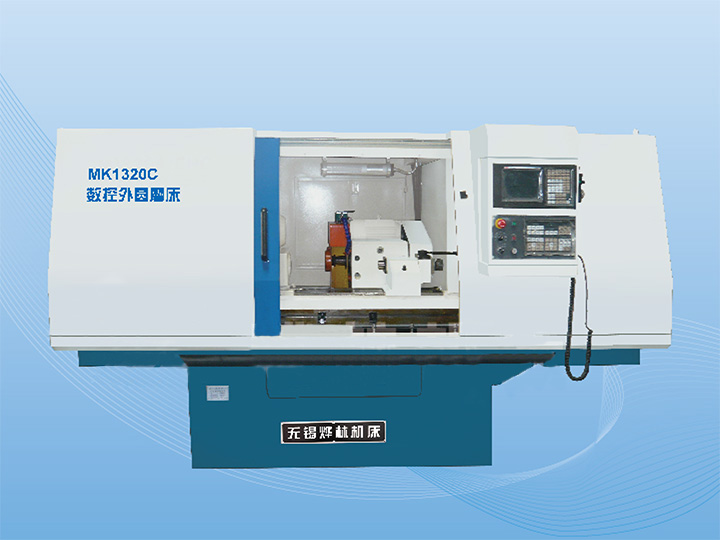
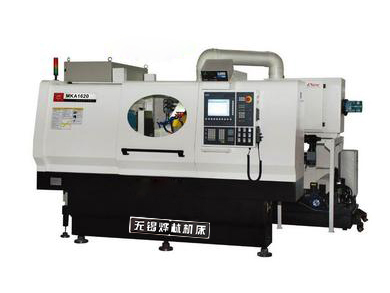
CNC vertical grinders integrate numerical control technology, precision mechanical design, hydraulic transmission, and servo control technology, with the characteristics of high positioning accuracy, stable machining performance, strong adaptability, and easy automation integration. Compared with horizontal grinders, the vertical layout of CNC vertical grinders makes the workpiece bear force vertically, avoiding the deformation caused by the horizontal gravity of the workpiece, which is particularly suitable for the high-precision grinding of large and heavy workpieces such as engine blocks, large gears, and precision molds. In addition, CNC vertical grinders can realize multi-process integration machining, reduce workpiece clamping times, avoid clamping errors, and further improve machining accuracy and efficiency.
Against the background of the global manufacturing industry moving towards high-end, intelligent, and precise development, in-depth research on the core technology, performance characteristics, and application scenarios of CNC vertical grinders is of great practical significance for promoting the upgrading of high-precision machining technology, improving the level of modern manufacturing, and enhancing the core competitiveness of related industries. This paper takes CNC vertical grinders as the research object, systematically sorts out their core structure and working principle, analyzes their application scenarios in various high-end fields, and puts forward targeted technical suggestions, providing professional technical support for the selection, use, and maintenance of CNC vertical grinders. It is expected to help relevant practitioners avoid common misunderstandings, give full play to the performance advantages of CNC vertical grinders, and promote the high-quality development of high-precision manufacturing.
2. Core Structure and Working Principle of CNC Vertical Grinders
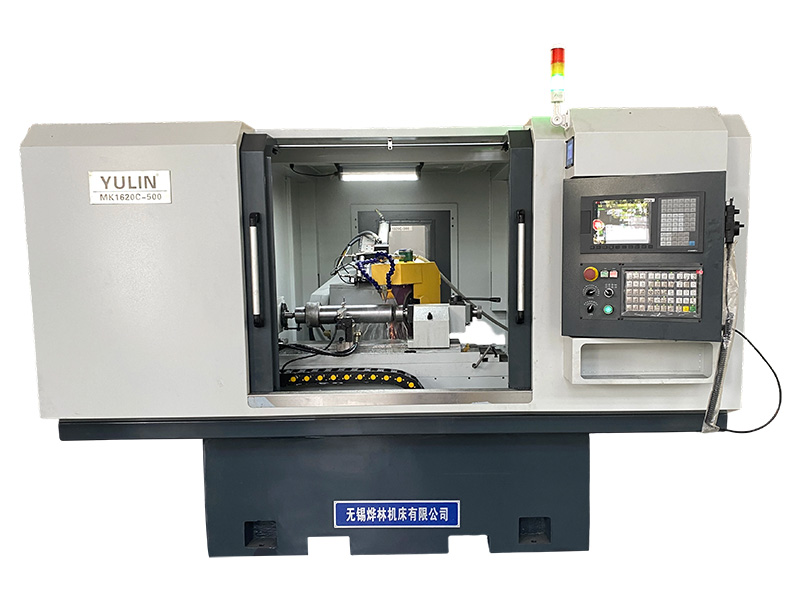
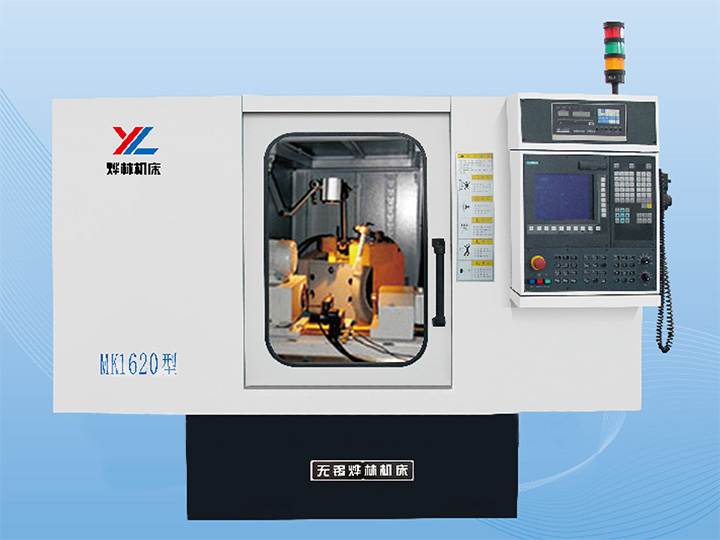
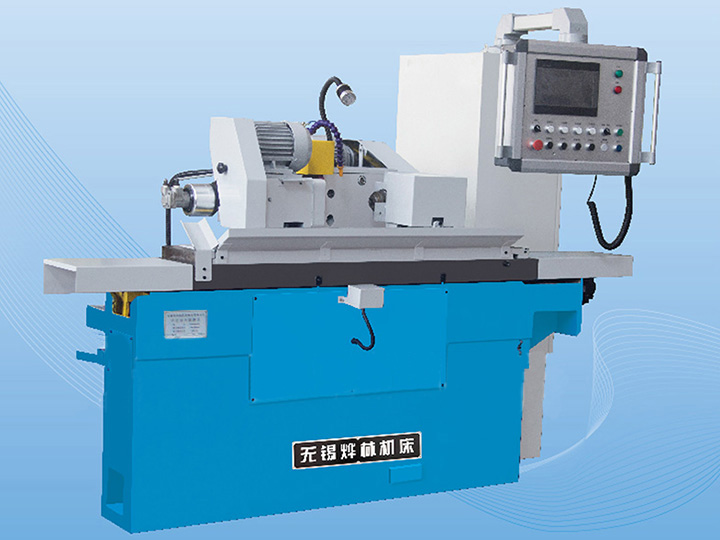
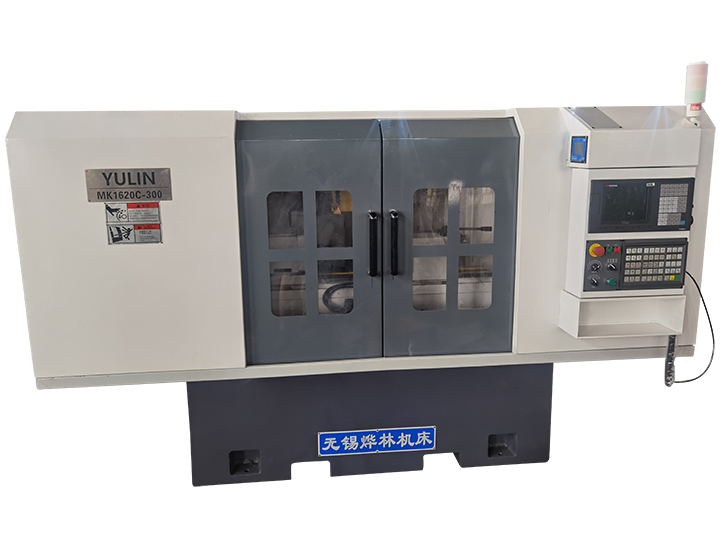
The high-precision performance of CNC vertical grinders is based on their reasonable structural design and advanced working principle. The core structure of CNC vertical grinders mainly includes the bed, vertical spindle system, worktable system, feed system, grinding wheel dressing system, and numerical control system. Each component cooperates closely to realize high-precision grinding of workpieces. The following is a detailed elaboration of the core structure and working principle.
2.1 Core Structure
The core structure of CNC vertical grinders is designed to meet the requirements of high precision, high stability, and high efficiency, and each component has strict design standards and processing requirements:
2.1.1 Bed
The bed is the foundation of CNC vertical grinders, bearing the weight of all components (such as spindle, worktable, and feed system) and the cutting force during machining. To ensure the stability and rigidity of the equipment, the bed is usually made of high-strength cast iron or granite with good vibration damping performance and thermal stability. The cast iron bed is经过 aging treatment to eliminate internal stress, reduce deformation during use; the granite bed has better thermal stability and vibration damping performance, which can effectively reduce the impact of external vibration and temperature changes on machining accuracy, suitable for ultra-high-precision CNC vertical grinders.
2.1.2 Vertical Spindle System
The vertical spindle system is the core component that drives the grinding wheel to rotate, and its rotation accuracy directly determines the surface quality and dimensional accuracy of the workpiece. The vertical spindle is usually supported by high-precision angular contact ball bearings or hydrostatic bearings: angular contact ball bearings have high rigidity and rotation accuracy, suitable for medium and high-speed CNC vertical grinders; hydrostatic bearings have good lubrication performance and vibration damping effect, can avoid friction and wear between the spindle and bearing, and achieve ultra-high rotation accuracy (up to 0.001mm), suitable for ultra-high-precision grinding scenarios.
The spindle motor of CNC vertical grinders usually adopts a variable frequency speed-regulating motor or a servo motor, which can realize stepless speed regulation according to the material of the workpiece and the type of grinding wheel, ensuring the rationality of the grinding speed and improving the grinding efficiency and surface quality.
2.1.3 Worktable System
The worktable of CNC vertical grinders is installed horizontally, used to place and clamp the workpiece, and realizes the feed motion and indexing motion of the workpiece. The worktable is usually driven by a high-precision servo motor and a ball screw pair, which can realize precise linear feed and rotary motion. For large and heavy workpieces, the worktable is designed with a large bearing capacity and good stability, and is equipped with a T-slot or a clamping device to ensure the firm clamping of the workpiece and avoid displacement during machining.
Some high-end CNC vertical grinders are equipped with a rotary worktable with high indexing accuracy, which can realize the grinding of complex curved surfaces and asymmetric parts, expanding the application scope of the equipment.
2.1.4 Feed System
The feed system of CNC vertical grinders is responsible for realizing the precise feed motion of the grinding wheel and the worktable, including the vertical feed (Z-axis) of the spindle, the horizontal feed (X-axis, Y-axis) of the worktable, and the indexing feed of the rotary worktable. The feed system adopts a high-precision ball screw pair and a linear guide rail, which has the advantages of high transmission accuracy, low friction, and good stability. The servo motor of the feed system is connected with the ball screw pair through a coupling, and the motion is controlled by the numerical control system, which can realize precise positioning and feed with a positioning accuracy of up to 0.0005mm.
2.1.5 Grinding Wheel Dressing System
The grinding wheel dressing system is an important component to ensure the grinding accuracy and surface quality of the workpiece. During the grinding process, the grinding wheel will wear and lose its original shape, which will affect the machining accuracy. The grinding wheel dressing system can dress the grinding wheel to restore its shape and sharpness. Common grinding wheel dressing tools include diamond dressing pens, diamond dressing wheels, and roller dressers. The dressing process is controlled by the numerical control system, which can realize automatic dressing, improve dressing accuracy and efficiency, and ensure the consistency of grinding quality.
2.1.6 Numerical Control System
The numerical control system is the ""brain"" of CNC vertical grinders, responsible for receiving and processing machining instructions, controlling the motion of each component, and realizing automatic grinding. The numerical control system of high-precision CNC vertical grinders usually adopts a high-performance CNC system (such as Siemens 840D, Fanuc 31i), which has the advantages of high control accuracy, fast response speed, and rich functions. It can realize complex machining programs, automatic tool compensation, error correction, and real-time monitoring of machining status, ensuring the stability and reliability of high-precision machining.
2.2 Working Principle
The working principle of CNC vertical grinders is to use the high-speed rotating grinding wheel to remove the excess material on the surface of the workpiece, so as to achieve the required dimensional accuracy, surface roughness, and shape accuracy. The specific working process is as follows:
1. Workpiece Clamping: Place the workpiece on the worktable, and use the clamping device to fix the workpiece firmly to ensure that the workpiece does not move or deform during machining. The clamping position and force should be reasonably adjusted to avoid clamping errors.
2. Program Setting: Input the machining program into the numerical control system according to the machining requirements of the workpiece (such as dimensional accuracy, surface roughness, and shape). The machining program includes the feed path, grinding speed, feed rate, and dressing parameters of the grinding wheel.
3. Grinding Wheel Dressing: Before grinding, use the grinding wheel dressing system to dress the grinding wheel to ensure that the grinding wheel has the required shape and sharpness. The dressing parameters are set according to the type of grinding wheel and the machining requirements.
4. Automatic Grinding: Start the CNC vertical grinder, the numerical control system controls the spindle to drive the grinding wheel to rotate at high speed, and controls the worktable and spindle to move according to the machining program. The grinding wheel contacts the surface of the workpiece, and the excess material on the surface of the workpiece is removed through the cutting action of the grinding wheel. During the grinding process, the numerical control system real-time monitors the machining status, and automatically adjusts the feed rate and grinding speed according to the feedback signal to ensure the machining accuracy.
5. Machining Inspection: After the grinding is completed, take down the workpiece and inspect its dimensional accuracy, surface roughness, and shape accuracy. If the inspection results do not meet the requirements, adjust the machining parameters and re-grind until the requirements are met.
2.3 Key Performance Indicators
The performance of CNC vertical grinders is mainly evaluated by the following key indicators, which directly determine the machining quality and efficiency of the equipment:
- Positioning Accuracy: The accuracy of the feed system to position the grinding wheel and the worktable, including the positioning accuracy of the X-axis, Y-axis, Z-axis, and the indexing accuracy of the rotary worktable. The higher the positioning accuracy, the better the machining accuracy of the workpiece. The positioning accuracy of high-precision CNC vertical grinders can reach 0.0005mm.
- Repeat Positioning Accuracy: The consistency of the position when the feed system moves to the same position multiple times. The good repeat positioning accuracy ensures the consistency of batch machining, which is particularly important for mass production.
- Spindle Rotation Accuracy: The accuracy of the spindle's rotation, including radial runout and axial runout. The high spindle rotation accuracy can ensure the uniform wear of the grinding wheel and the smooth surface of the workpiece.
- Surface Roughness of Machined Workpieces: The surface roughness of the workpiece after grinding is an important indicator of surface quality. The surface roughness of workpieces processed by CNC vertical grinders can reach Ra 0.01μm, which meets the requirements of high-precision components.
- Machining Efficiency: The number of workpieces processed per unit time, which is related to the grinding speed, feed rate, and automation level of the equipment. High-efficiency CNC vertical grinders can realize continuous automatic grinding, improving production efficiency.
- Stability: The stability of the equipment during long-term operation, including the stability of the spindle rotation, the stability of the feed system, and the stability of the numerical control system. Good stability ensures the reliability of long-term high-precision machining.
3. Core Application Scenarios of CNC Vertical Grinders
Due to their high precision, high stability, and strong adaptability, CNC vertical grinders are widely used in high-end manufacturing fields that require high-precision machining of parts. They are especially suitable for the grinding of large, heavy, and complex parts, and have become the core equipment in aerospace, automotive manufacturing, precision mold, and other industries. The following is a detailed analysis of the core application scenarios.
3.1 Aerospace Industry
The aerospace industry has extremely strict requirements on the dimensional accuracy, surface quality, and reliability of components. The key components of aircraft (such as engine turbine blades, aircraft landing gear, and aerospace structural parts) need high-precision grinding to ensure their performance and safety. CNC vertical grinders play an important role in the machining of these components:
- Engine Turbine Blades: Turbine blades are the core components of aircraft engines, which work in high-temperature, high-pressure, and high-speed environments. The surface of turbine blades needs to be ground with high precision to ensure their aerodynamic performance and fatigue life. CNC vertical grinders can realize the high-precision grinding of the curved surface and edge of turbine blades, with a surface roughness of up to Ra 0.01μm and a dimensional accuracy of ±0.001mm.
- Aircraft Landing Gear: The landing gear is an important component to ensure the safe take-off and landing of aircraft, which bears large impact force during use. The key parts of the landing gear (such as the landing gear shaft, sleeve) need high-precision grinding to ensure their strength and dimensional accuracy. CNC vertical grinders can realize the high-precision grinding of large and heavy landing gear parts, avoiding the deformation caused by workpiece weight, and ensuring the machining accuracy.
- Aerospace Structural Parts: Aerospace structural parts (such as aircraft fuselage parts, wing structural parts) are usually large and complex, requiring high-precision grinding of their surfaces and holes. CNC vertical grinders with rotary worktables can realize the multi-angle and multi-position grinding of structural parts, improving machining efficiency and accuracy.
3.2 Automotive Manufacturing Industry
With the development of the automotive industry towards high performance, energy conservation, and intelligence, the requirements for the precision of key automotive components are increasingly stringent. CNC vertical grinders are widely used in the machining of automotive engine components, transmission components, and brake components:
- Engine Components: Key engine components such as engine blocks, crankshafts, and camshafts need high-precision grinding to ensure the sealing performance and working efficiency of the engine. CNC vertical grinders can realize the high-precision grinding of the cylinder hole, crankshaft journal, and camshaft contour of the engine block, with a dimensional accuracy of ±0.002mm and a surface roughness of Ra 0.02μm.
- Transmission Components: Transmission components such as gears, shafts, and sleeves in automotive transmissions need high-precision grinding to ensure the smoothness and reliability of power transmission. CNC vertical grinders can realize the high-precision grinding of the gear tooth surface and shaft diameter, improving the transmission efficiency and service life of the transmission.
- Brake Components: Brake discs, brake drums, and other brake components need high-precision grinding to ensure the braking performance and safety of the automobile. CNC vertical grinders can realize the high-precision grinding of the surface of brake components, ensuring the flatness and surface roughness of the braking surface.
3.3 Precision Mold Industry
The precision of the mold directly determines the quality of the plastic products, stamping parts, and other products processed by the mold. CNC vertical grinders are widely used in the machining of precision molds, especially large and complex molds:
- Plastic Molds: The cavity and core of plastic molds need high-precision grinding to ensure the surface quality and dimensional accuracy of plastic products. CNC vertical grinders can realize the high-precision grinding of the complex curved surface of the mold cavity, with a surface roughness of up to Ra 0.01μm, which can meet the requirements of high-gloss plastic products.
- Stamping Molds: The punch and die of stamping molds need high-precision grinding to ensure the dimensional accuracy and service life of stamping parts. CNC vertical grinders can realize the high-precision grinding of the cutting edge and surface of the punch and die, improving the stamping quality and efficiency.
- Large Molds: Large molds (such as automobile interior molds, household appliance molds) are usually heavy and complex, requiring high-precision grinding. CNC vertical grinders with large worktables can realize the integral grinding of large molds, avoiding the error caused by splitting grinding, and improving the machining accuracy and efficiency.
3.4 Semiconductor and Electronic Equipment Industry
The semiconductor and electronic equipment industry requires high-precision machining of components such as semiconductor wafers, electronic device shells, and precision connectors. CNC vertical grinders are used in the precision grinding of these components to ensure their dimensional accuracy and surface quality:
- Semiconductor Wafers: Semiconductor wafers (such as silicon wafers) need ultra-high-precision grinding to ensure their flatness and surface roughness, which is the basis for the subsequent chip manufacturing. Ultra-high-precision CNC vertical grinders can realize the grinding of semiconductor wafers with a flatness of up to 0.001mm and a surface roughness of Ra 0.005μm.
- Precision Electronic Connectors: Precision electronic connectors (such as connectors for mobile phones, computers) need high-precision grinding of their pins and sockets to ensure the contact performance and reliability of the connectors. CNC vertical grinders can realize the high-precision grinding of the small-sized and high-precision parts of the connectors.
3.5 Other High-Precision Machining Fields
In addition to the above fields, CNC vertical grinders are also used in other high-precision machining fields, such as:
- Medical Equipment Industry: High-precision components of medical equipment (such as surgical instruments, medical implants) need high-precision grinding to ensure their biocompatibility and service life. CNC vertical grinders can realize the high-precision grinding of these small and complex components.
- Metallurgical Equipment Industry: Key components of metallurgical equipment (such as rolls, bearings) need high-precision grinding to ensure their wear resistance and service life. CNC vertical grinders can realize the high-precision grinding of large rolls and bearings.
- Optical Equipment Industry: Optical components (such as lenses, prisms) need ultra-high-precision grinding to ensure their optical performance. Ultra-high-precision CNC vertical grinders can realize the grinding of optical components with high surface quality and shape accuracy.
4. Key Technologies for High-Precision Control of CNC Vertical Grinders
The high-precision machining performance of CNC vertical grinders is supported by a series of key technologies, including precision motion control technology, error compensation technology, vibration control technology, and thermal stability control technology. These technologies work together to ensure the machining accuracy and stability of the equipment. The following is a detailed elaboration of the key technologies.
4.1 Precision Motion Control Technology
Precision motion control technology is the core of CNC vertical grinders to realize high-precision positioning and feed. It mainly includes servo control technology, ball screw transmission technology, and linear guide rail technology:
- Servo Control Technology: The servo system of CNC vertical grinders adopts a high-performance servo motor and a servo driver, which can realize precise speed control and position control. The closed-loop control mode is adopted to real-time feedback the position and speed signals of the feed system, and adjust the output of the servo motor in time to ensure the positioning accuracy and feed stability.
- Ball Screw Transmission Technology: The ball screw pair is the core component of the feed system, which has the advantages of high transmission accuracy, low friction, and high efficiency. The high-precision ball screw pair is processed by precision grinding, and the lead error is controlled within a small range, ensuring the precise transmission of the feed system.
- Linear Guide Rail Technology: The linear guide rail is used to support and guide the feed motion of the worktable and spindle, which has the advantages of high rigidity, low friction, and good stability. The high-precision linear guide rail can ensure the smoothness of the feed motion and reduce the impact of friction on machining accuracy.
4.2 Error Compensation Technology
During the operation of CNC vertical grinders, various errors (such as geometric errors, thermal errors, and load errors) will occur, which will affect the machining accuracy. Error compensation technology is used to detect and compensate these errors, improving the machining accuracy of the equipment:
- Geometric Error Compensation: Geometric errors are caused by the manufacturing and installation errors of the equipment components (such as the parallelism error of the guide rail, the perpendicularity error of the spindle). Through the geometric error detection of the equipment, the error model is established, and the numerical control system is used to compensate the geometric errors in real time.
- Thermal Error Compensation: Thermal errors are caused by the temperature rise of the equipment components (such as spindle, bed) during operation, which leads to the deformation of the components. Through the temperature detection of the key components, the thermal error model is established, and the numerical control system is used to compensate the thermal errors, reducing the impact of temperature changes on machining accuracy.
- Load Error Compensation: Load errors are caused by the cutting force during machining, which leads to the deformation of the spindle and worktable. Through the load detection, the load error model is established, and the feed system is adjusted in real time to compensate the load errors.
4.3 Vibration Control Technology
Vibration during the operation of CNC vertical grinders will affect the machining accuracy and surface quality of the workpiece. Vibration control technology is used to reduce the vibration of the equipment, ensuring the stability of high-precision machining:
- Vibration Damping Design: The bed and other components of the equipment are made of materials with good vibration damping performance (such as cast iron, granite), and the structural design is optimized to reduce the resonance of the equipment.
- Active Vibration Control: Some high-end CNC vertical grinders are equipped with active vibration control systems, which use sensors to detect the vibration signals of the equipment, and use actuators to generate reverse vibration to offset the original vibration, reducing the vibration amplitude.
- Grinding Parameter Optimization: By optimizing the grinding speed, feed rate, and grinding depth, the cutting force during grinding is reduced, and the vibration of the equipment is reduced.
4.4 Thermal Stability Control Technology
Thermal stability is an important factor affecting the machining accuracy of CNC vertical grinders. The temperature rise of the equipment during operation will lead to the deformation of the components, affecting the positioning accuracy and machining accuracy. Thermal stability control technology is used to control the temperature of the equipment, ensuring the thermal stability of the equipment:
- Thermal Insulation Design: The key components (such as spindle, motor) of the equipment are equipped with thermal insulation layers to reduce the heat transfer to other components.
- Cooling System: The equipment is equipped with a high-efficiency cooling system, which cools the spindle, motor, and other components in real time to control the temperature rise within a reasonable range.
- Temperature Control Environment: The workshop where the CNC vertical grinder is located is equipped with a constant temperature system to control the ambient temperature, reducing the impact of ambient temperature changes on the equipment.
5. Common Technical Challenges and Solution Strategies
In the process of using CNC vertical grinders for high-precision machining, due to the complexity of the equipment and the harshness of the machining environment, many technical challenges are often encountered. The following are common technical challenges and corresponding solution strategies:
5.1 Challenge 1: Insufficient Machining Accuracy
Causes: Geometric errors of the equipment, thermal errors, load errors, improper grinding parameters, or wear of the grinding wheel, leading to insufficient machining accuracy of the workpiece.
Solution Strategies: Conduct regular geometric error detection and compensation of the equipment; optimize the cooling system to reduce thermal errors; adjust the grinding parameters (such as grinding speed, feed rate) to reduce load errors; dress the grinding wheel in time to restore its shape and sharpness; check and maintain the feed system and spindle system regularly to ensure their normal operation.
5.2 Challenge 2: Poor Surface Quality of Machined Workpieces
Causes: Wear or passivation of the grinding wheel, improper grinding parameters, vibration of the equipment, or unclean surface of the workpiece, leading to poor surface quality of the workpiece (such as scratches, roughness exceeding the standard).
Solution Strategies: Dress the grinding wheel in time to ensure its sharpness; optimize the grinding parameters to reduce the cutting force and avoid scratches on the workpiece surface; strengthen the vibration control of the equipment to reduce vibration; clean the workpiece and the grinding wheel before grinding to avoid impurities affecting the surface quality.
5.3 Challenge 3: Low Machining Efficiency
Causes: Improper grinding parameters, low automation level of the equipment, long dressing time of the grinding wheel, or unreasonable clamping method, leading to low machining efficiency.
Solution Strategies: Optimize the grinding parameters to improve the grinding speed and feed rate; improve the automation level of the equipment (such as adding automatic loading and unloading devices) to reduce manual operation time; optimize the grinding wheel dressing process to shorten the dressing time; adopt a reasonable clamping method to reduce the clamping time.
5.4 Challenge 4: High Equipment Maintenance Cost
Causes: Improper maintenance of the equipment, wear of key components (such as spindle, ball screw), or use of unqualified accessories, leading to high maintenance cost of the equipment.
Solution Strategies: Formulate a regular maintenance plan, and inspect and maintain the equipment regularly (such as lubricating the feed system, checking the spindle bearing); use qualified accessories and consumables (such as grinding wheels, lubricating oil) to extend the service life of the components; train the equipment operators to ensure that they operate the equipment correctly and avoid equipment damage caused by improper operation.
6. Development Trends of CNC Vertical Grinder Technology
With the continuous advancement of numerical control technology, precision manufacturing technology, and intelligent manufacturing technology, CNC vertical grinder technology is developing in the direction of ultra-high precision, intelligence, high efficiency, and integration. The main development trends are as follows:
- Ultra-High Precision Development: With the increasing demand for high-precision components in aerospace, semiconductor, and other fields, CNC vertical grinders are developing towards ultra-high precision. The positioning accuracy and spindle rotation accuracy of the equipment will be further improved, and the surface roughness of the machined workpiece will be further reduced, which can meet the ultra-high precision machining requirements of components.
- Intelligent Development: The integration of artificial intelligence, Internet of Things, and big data technology into CNC vertical grinders will realize intelligent functions such as automatic parameter adjustment, fault early warning, and predictive maintenance. The equipment can automatically optimize the grinding parameters according to the machining status, and real-time monitor the equipment status to avoid sudden faults.
- High Efficiency Development: By optimizing the structural design, improving the grinding speed, and realizing multi-process integration machining, the machining efficiency of CNC vertical grinders will be further improved. The integration of automatic loading and unloading, automatic dressing, and other functions will realize continuous automatic production, reducing manual intervention and improving production efficiency.
- Integration Development: CNC vertical grinders will be integrated with other machining equipment (such as CNC lathes, CNC milling machines) to form a flexible manufacturing system, realizing multi-process continuous machining of workpieces, reducing workpiece clamping times, and improving machining efficiency and accuracy.
- Green Development: By optimizing the grinding process, using environmentally friendly grinding fluid, and improving the energy efficiency of the equipment, the environmental impact of CNC vertical grinders will be reduced, conforming to the concept of green manufacturing. The recyclability of the equipment and consumables will be improved, reducing resource waste.
7. Conclusion
CNC vertical grinders, as the core equipment for high-precision machining, integrate numerical control technology, precision mechanical design, and servo control technology, with the characteristics of high precision, high stability, and strong adaptability. They play an irreplaceable role in aerospace, automotive manufacturing, precision mold, and other high-end manufacturing fields, providing an important guarantee for improving product quality and promoting the upgrading of manufacturing industry.
The high-precision performance of CNC vertical grinders is based on their reasonable core structure and advanced key technologies, including precision motion control technology, error compensation technology, vibration control technology, and thermal stability control technology. In the process of use, it is necessary to pay attention to solving common technical challenges such as insufficient machining accuracy and poor surface quality, and formulate scientific maintenance plans to ensure the stable operation of the equipment.
With the continuous advancement of technology, CNC vertical grinder technology will develop towards ultra-high precision, intelligence, high efficiency, and integration, and its application scope will be further expanded. It is hoped that this paper can help relevant practitioners fully grasp the core knowledge of CNC vertical grinders, including their core structure, working principle, application scenarios, and key technologies, promote the rational and efficient application of CNC vertical grinders in high-precision machining fields, and make greater contributions to the development of modern manufacturing industry towards high-end, intelligent, and precise direction.
 English