Comprehensive Guide to Surface Grinders: Principles, Types, and Applications
Release time:2026-02-16 Visits:1438
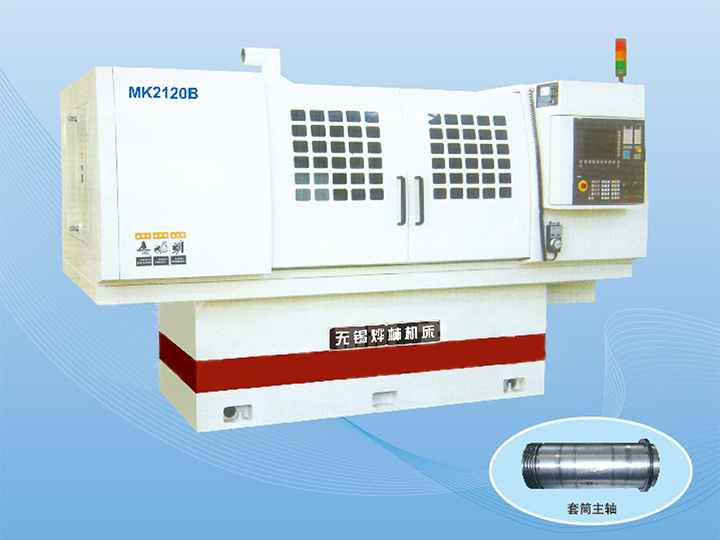
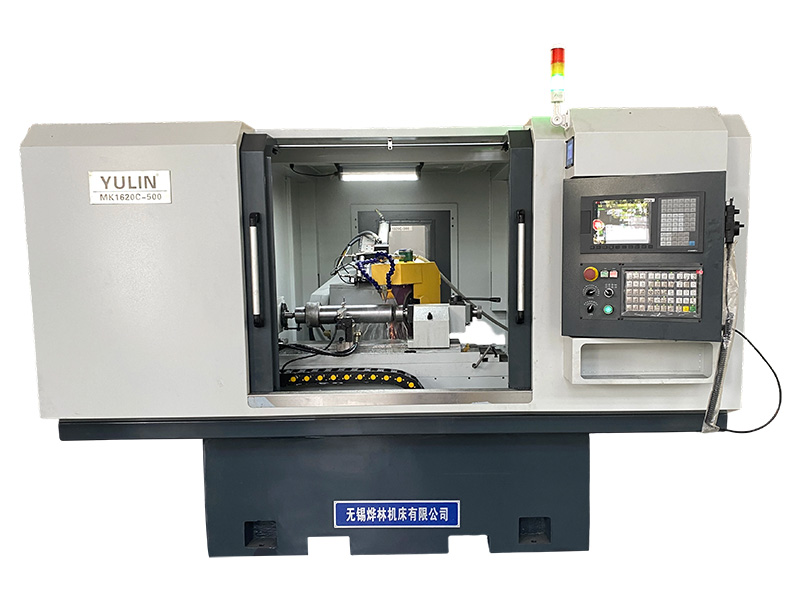
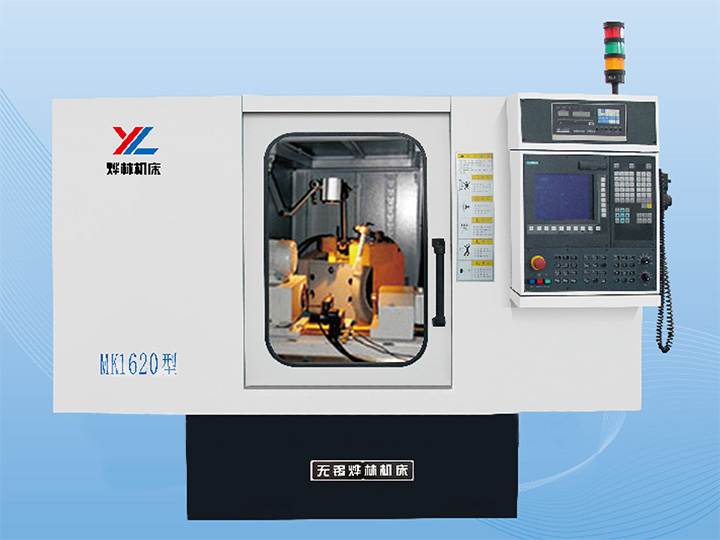
A surface grinder is a key machine tool used for precision grinding of flat or formed surfaces of workpieces, widely applied in mold manufacturing, precision machinery, and automotive industries. It performs micro-cutting on workpieces through a high-speed rotating grinding wheel, achieving extremely high dimensional accuracy and excellent surface finish.
I. Core Working Principle
Surface grinders utilize the combination of high-speed rotational movement of the grinding wheel and precise feed movement of the workpiece to grind the workpiece surface. The workpiece is typically fixed on an electromagnetic worktable or special fixture. Driven by a motor, the grinding wheel rotates, while the worktable drives the workpiece to perform longitudinal or rotational movement. The wheel head executes precise control of transverse and vertical feeds to gradually remove material allowance.
II. Main Types and Characteristics
Based on spindle orientation and worktable form, surface
grinders are mainly classified into the following types:
1. Horizontal Spindle Rectangular Table Surface Grinder: The spindle is horizontally arranged, with a rectangular worktable performing longitudinal reciprocating motion. This type of machine uses the circumferential surface of the grinding wheel for grinding, featuring high grinding accuracy and good heat dissipation. It is suitable for high-precision flat surface processing, such as mold templates and precision measuring tools manufacturing.
2. Vertical Spindle Circular Table Surface Grinder: The spindle is vertically arranged, with a circular worktable rotating continuously. This type uses the end face of the grinding wheel for grinding, with large contact area and high material removal rate. It is suitable for efficient processing of mass workpieces, such as bearing rings and engine components.
In addition, there are types such as horizontal spindle circular table and vertical spindle rectangular table grinders, which can meet the processing needs of annular workpieces or special shapes.
III. Key Components
Surface grinders are mainly composed of the following components:
- Bed: Provides overall rigid support, usually of cast iron structure, ensuring processing stability.
- Worktable: Carries the workpiece and can be equipped with electromagnetic chucks or mechanical fixtures to realize workpiece fixation and movement.
- Wheel Head: Contains the grinding wheel and its driving mechanism, supporting vertical and transverse feed movements.
- Grinding Wheel: Appropriate abrasive and grit size are selected based on workpiece materials (such as hardened steel, cemented carbide, etc.).
- Cooling System: Reduces grinding temperature and flushes chips to ensure processing quality.
IV. Core Advantages and Application Fields
Surface grinders have the following prominent advantages:
- High Precision: Dimensional accuracy can reach IT6-IT7 grade, and surface roughness Ra value can be controlled within 0.2μm.
- Strong Adaptability: Can process high-hardness materials (such as hardened steel, ceramics, etc.), making up for the limitations of milling and turning.
- High Efficiency: Vertical spindle circular table models are suitable for mass production, while horizontal spindle rectangular table models are suitable for single-piece or small-batch processing with high precision requirements.
Its core application fields include:
- Mold Manufacturing Industry: Such as template processing of injection molds and die-casting molds.
- Precision Machinery: Manufacturing of key parts such as gauge blocks, fixtures, and slides.
- Automotive Industry: Precision processing of engine components and transmission system parts.
- Aerospace: Processing of high-precision structural parts and turbine components.
V. Brief Introduction to Operating Procedures
The standard operation of a surface grinder includes:
1. Select and install the grinding wheel, and use a dresser to restore its geometric shape.
2. Clean the worktable and workpiece, and fix the workpiece through a magnetic chuck or fixture.
3. Adjust the grinding wheel position and set grinding parameters (such as cutting depth, feed rate).
4. Start the cooling fluid and automatic grinding cycle, and regularly check the dimensions during the process.
5. After processing, use precision measuring tools to inspect whether the workpiece meets the requirements.
As a core equipment in modern manufacturing, surface grinders endow various industrial parts with high precision and reliability through their precision grinding capabilities, and are indispensable technical equipment for improving product quality and production efficiency.
 English