Internal Cylindrical Grinding Machines: Key Benefits, Applications and Modern Innovations
Release time:2026-07-27 Visits:373
In today’s fast-paced industrial landscape, precision and efficiency are paramount. Internal cylindrical grinding machines have emerged as vital tools in achieving these goals, offering unparalleled accuracy and versatility in various manufacturing sectors. From automotive to aerospace, these machines play a crucial role in producing high-quality components that meet strict industrial tolerance standards. As manufacturing technology continues to evolve, internal cylindrical grinding remains an indispensable precision finishing process for internal workpiece surfaces.
What Is an Internal Cylindrical Grinding Machine?
An internal
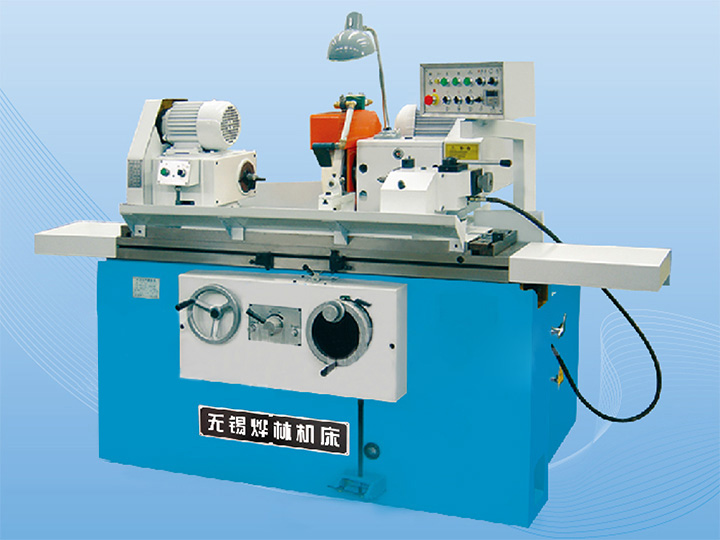
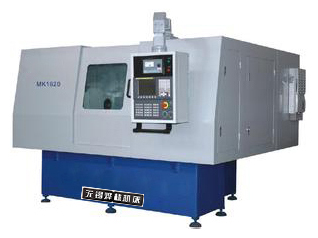
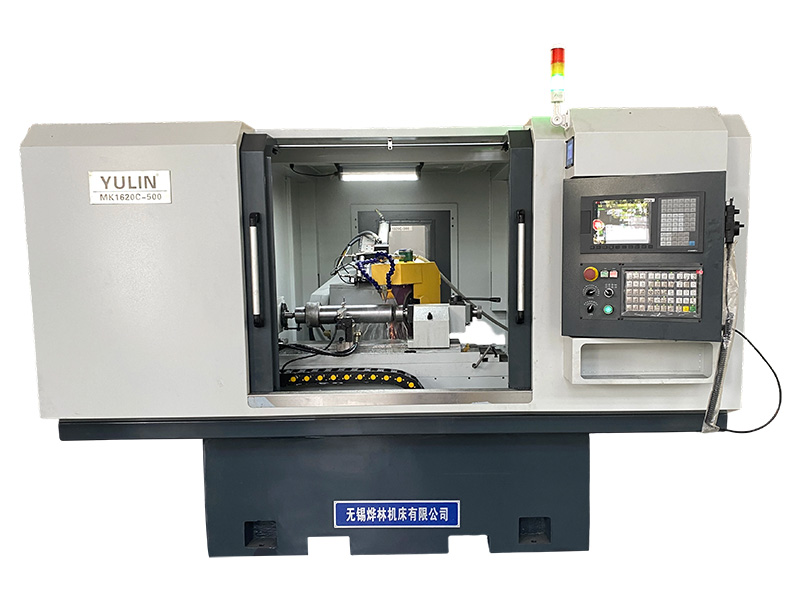
cylindrical grinding machine is a specialized precision machining tool designed to finish internal cylindrical surfaces, including bores, tapers, spherical cavities, and inner radii of workpieces. Unlike external grinding equipment that processes outer workpiece surfaces, this machine focuses on refining internal dimensional accuracy and surface smoothness. Its core working principle relies on the synchronized rotation of the workpiece and a small-diameter grinding wheel, which removes tiny material layers from internal cavities to achieve ultra-fine finishing results.
Modern internal cylindrical grinding machines integrate high-rigidity spindle systems and precise servo control modules. Most advanced models adopt electric spindles or hydrostatic spindle structures, supporting a wide speed range from 6000 to 30000 rpm. This structural design ensures stable grinding wheel operation, effectively avoiding vibration and deformation that affect machining precision, laying a solid foundation for high-precision internal surface processing.
Core Advantages of Modern Internal Cylindrical Grinding Machines
The biggest advantage of internal cylindrical grinding machines lies in their exceptional precision control capability. Professional models can stably achieve roundness tolerance within 0.001 mm TIR and straightness tolerance below 0.002 mm per meter, fully meeting the ultra-precision processing requirements of high-end industrial components. Whether for small-diameter micro bores or large-size deep cavity inner surfaces, the equipment maintains consistent machining accuracy and excellent geometric symmetry.
In addition to superior precision, these grinding machines deliver outstanding production efficiency and operational stability. Equipped with automated clamping and programmable feeding systems, modern CNC internal grinding machines greatly reduce manual intervention. The pneumatic and hydraulic rapid positioning clamps realize fast workpiece fixing and switching, while intelligent parameter adjustment functions adapt to different processing procedures, effectively shortening single-piece processing cycles and improving batch production throughput.
Versatility is another key competitive edge of internal cylindrical grinding machines. The equipment can process diverse materials ranging from conventional hardened steel and alloy steel to high-hardness special materials such as industrial ceramics, cemented carbide, and sapphire. By adjusting grinding wheel speed, feed rate, and grinding paths, it flexibly adapts to complex workpiece geometries, including standard cylindrical holes, tapered holes, stepped bores, and special-shaped inner cavities.
Wide Industrial Applications of Internal Cylindrical Grinding Machines
Internal cylindrical grinding machines are widely applied in high-precision manufacturing fields with strict quality requirements. The automotive industry is one of the largest application scenarios, where the equipment is used for finishing engine cylinder bores, bearing inner races, hydraulic valve holes, and transmission component inner cavities. High-precision grinding ensures the fit accuracy and wear resistance of auto parts, improving the overall stability and service life of vehicle power systems.
In the aerospace industry, internal cylindrical grinding technology undertakes the processing of core precision components. Aerospace parts require extreme dimensional accuracy and surface finish to adapt to high-temperature, high-pressure, and high-speed operating environments. The grinding machine’s ultra-precision processing capability effectively meets the strict tolerance standards of aero-engine precision holes, hydraulic system inner cavities, and turbine component inner surfaces, guaranteeing the safety and reliability of aerospace equipment.
The mold and hydraulic machinery industry also relies heavily on internal cylindrical grinding machines. Precision mold inner holes, mold cavity special-shaped surfaces, and hydraulic cylinder inner walls all need fine grinding to eliminate tool marks and dimensional errors. Processed workpieces feature smooth surfaces and precise matching sizes, effectively improving mold forming quality and hydraulic component sealing performance, and reducing equipment operation failure rates.
Technological Upgrades of CNC Internal Cylindrical Grinding Machines
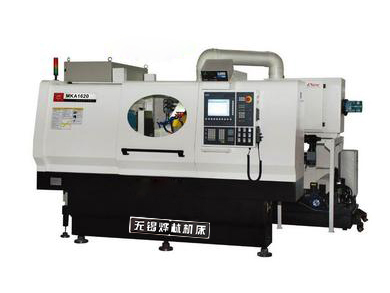
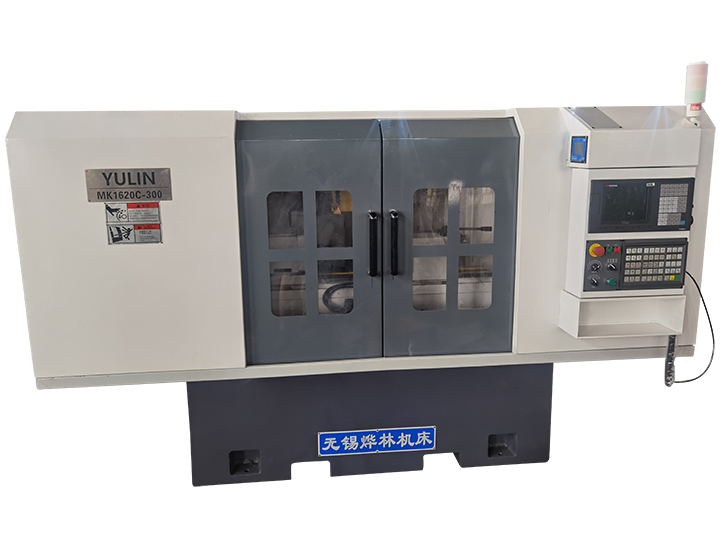
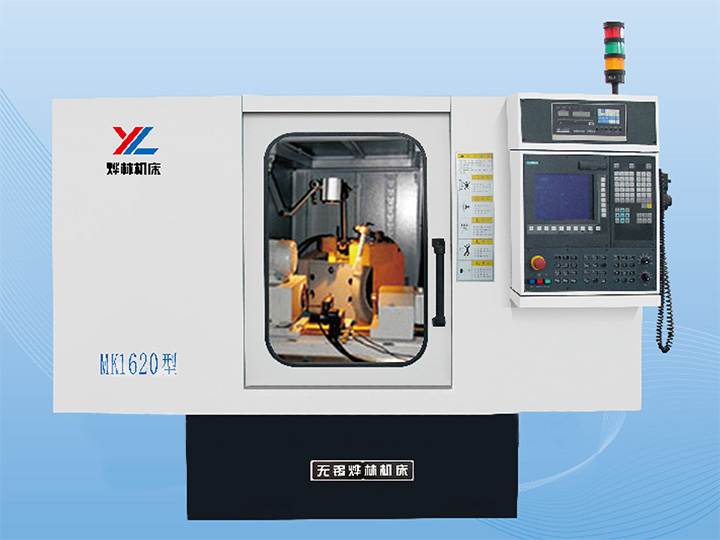
With the popularization of intelligent manufacturing, traditional manual internal grinding machines have been gradually replaced by CNC intelligent models. CNC internal cylindrical grinding machines adopt full-program control, realizing automated whole-process processing from workpiece positioning, grinding feeding to finishing detection. Operators only need to set processing parameters in advance, and the equipment can complete batch processing independently, greatly reducing human error and improving product consistency.
Intelligent detection and compensation technology has further optimized the performance of modern grinding machines. Many high-end models are equipped with real-time dimensional detection and automatic error compensation systems. During the grinding process, the equipment dynamically monitors workpiece dimensional changes and grinding wheel wear, and automatically adjusts processing parameters to ensure continuous and stable machining accuracy, avoiding defective products caused by tool wear or parameter drift.
In terms of structural optimization, modern internal cylindrical grinding machines adopt integral high-rigidity bed structures and shock-absorbing designs. This design effectively resists processing vibration and external environmental interference, ensuring long-term stable operation of the equipment. Meanwhile, the optimized grinding wheel dressing mechanism improves grinding wheel utilization and processing fineness, further upgrading overall processing quality and economic benefits.
Key Factors for Choosing Internal Cylindrical Grinding Machines
Enterprises need to comprehensively consider processing demands and equipment performance when selecting internal cylindrical grinding machines. First, match the equipment’s precision level with production requirements. For ordinary industrial parts, standard precision grinding machines can meet demands, while aerospace, medical equipment, and high-end bearing manufacturing need ultra-precision models with stricter tolerance control.
Second, focus on equipment versatility and scalability. For factories with diverse workpiece types, it is necessary to select grinding machines with adjustable parameters and multi-scenario adaptation capabilities, which can process workpieces of different materials and specifications through simple parameter switching. Some customizable models can also be optimized for special-shaped workpieces and non-standard processing needs.
Finally, equipment stability and after-sales service are crucial selection indicators. High-quality internal cylindrical grinding machines feature low failure rates and long service life, which can maintain stable precision after long-term batch operation. Perfect after-sales maintenance and technical support can ensure timely equipment debugging and maintenance, reducing production downtime and improving enterprise production efficiency.
 English