Guideway Grinders: Precision Core for Machine Tool Accuracy
Release time:2026-07-06 Visits:483
1. Introduction
As the tracks of machine tools, guideways directly determine the motion accuracy, stability, and service life of equipment such as lathes, milling machines, and CNC machining centers. Common guideway types include V-shaped, flat, dovetail, and rectangular guideways, all requiring strict precision in straightness, parallelism, and surface roughness. Guideway grinders specialize in precision grinding of these guideway surfaces, resolving defects from initial machining and achieving ultra-high precision (straightness ≤ 0.001 mm/m, Ra ≤ 0.02 μm), making them indispensable in machine tool manufacturing and maintenance.
2. Structure and Working Principle
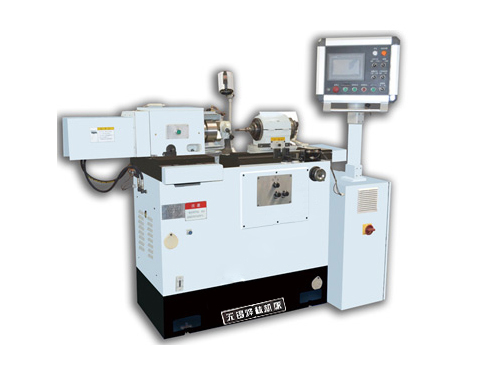
2.1 Core Components
- Machine Base: High-rigidity cast iron or epoxy granite structure with vibration-damping design, minimizing vibrations and thermal deformation to ensure stable grinding accuracy.
- Grinding Head: Equipped with CBN or diamond grinding wheels, matched with a high-precision spindle (runout ≤ 0.0005 mm) to ensure uniform material removal and surface finish.
- Worktable System: Long-stroke precision worktable with high positioning accuracy, supporting reciprocating motion to adapt to grinding long guideway surfaces, often controlled by hydraulic or servo systems.
- Clamping & Positioning Mechanism: Precision fixtures and alignment devices to firmly fix the workpiece (guideway) and ensure alignment with the grinding wheel, avoiding eccentric or uneven grinding.
- Control & Cooling System: Full-CNC control system (Siemens/Fanuc) for precise trajectory programming, and a high-pressure filtered cooling system to reduce grinding temperature and flush debris.
2.2 Working Principle
The workpiece (guideway) is clamped and aligned precisely, and the CNC system controls the grinding head and worktable to move coordinately. The grinding wheel rotates at high speed to generate micro-cutting, while the worktable moves reciprocally along the guideway length to remove material evenly. For complex guideway profiles (such as dovetail guideways), the grinding head adjusts its angle to match the guideway cross-section, ensuring consistent precision across the entire surface. The cooling system works synchronously to prevent thermal deformation and maintain grinding stability.
3. Classification and Key Characteristics
3.1 Classification
- By Structure: Gantry-type (for large, heavy guideways, with grinding head mounted on a gantry frame) and floor-type (for extra-long guideways, with workpiece fixed and grinding head moving).
- By Control: Manual (small-batch repair), semi-automatic, and full-CNC (mainstream for large-batch, high-precision production), with CNC models supporting automatic programming and multi-axis linkage.
- By Guideway Type: Specialized for flat, V-shaped, dovetail, or rectangular guideways, with customized grinding heads for different cross-sections.
3.2 Core Characteristics
- Ultra-High Precision: Straightness ≤ 0.001 mm/m, parallelism ≤ 0.002 mm/m, surface roughness Ra ≤ 0.02 μm, ensuring the motion accuracy of machine tools.
- Strong Rigidity: High-rigidity structure and spindle minimize deflection during grinding, suitable for heavy-duty and large guideway machining.
- High Adaptability: Compatible with various materials (alloy steel, cast iron) and guideway sizes (length 1–10 m, width 50–500 mm), adapting to different machine tool types.
- Stable Reliability: Uniform material removal and automatic error compensation ensure consistent machining quality, supporting long-term continuous operation.
4. Key Parameters and Selection
4.1 Core Parameters
Core parameters include processing capacity (max guideway length 1–10 m, width 50–500 mm, workpiece weight 500–5000 kg), grinding precision (straightness ≤ 0.001 mm/m, Ra ≤ 0.02 μm), spindle speed (1000–6000 rpm), and worktable stroke (1–10 m), with stepless speed regulation for different materials and guideway types.
4.2 Selection Principles
Select structure based on guideway size (gantry-type for large workpieces, floor-type for extra-long guideways), control mode by production scale, and grinding wheel material by workpiece hardness (CBN for hardened steel, diamond for high-precision guideways). For complex cross-section guideways, choose models with adjustable grinding heads.
5. Industrial Applications
Widely used in machine tool manufacturing (
grinding guideways for lathes, milling machines, and machining centers), aerospace (precision guideways for aircraft components), automotive (guideways for automotive processing equipment), and heavy machinery (guideways for wind power and nuclear power equipment). They are also essential for machine tool maintenance and repair to restore guideway precision and extend equipment service life.
6. Operation and Troubleshooting
6.1 Operation Tips
- Calibrate the worktable and grinding head alignment before operation to ensure consistent precision across the guideway surface.
- Adjust spindle speed and feed rate according to guideway material and size; use refrigerated cooling fluid to avoid thermal deformation of the workpiece.
- Regularly dress and balance the grinding wheel, and clean the cooling system to prevent debris from affecting surface quality.
6.2 Common Troubleshooting
Common faults and solutions: Poor straightness/parallelism is caused by worktable misalignment or spindle runout, resolved by re-calibrating the worktable and spindle; surface scratches result from grinding wheel passivation or coolant contamination, fixed by dressing/replacing the grinding wheel and replacing coolant.
7. Development Trends
Developing towards intelligence (AI-based real-time monitoring and parameter optimization), higher precision (straightness ≤ 0.0008 mm/m), automation (integrated with feeding robots for unmanned production), and multi-functional integration (combining grinding and measurement to realize closed-loop machining).
8. Conclusion
As core precision equipment for guideway finishing, guideway grinders are the foundation of machine tool accuracy. Their ultra-high precision and stability ensure the motion accuracy of various mechanical equipment, playing an irreplaceable role in high-end manufacturing, machine tool maintenance, and industrial upgrading.
 English