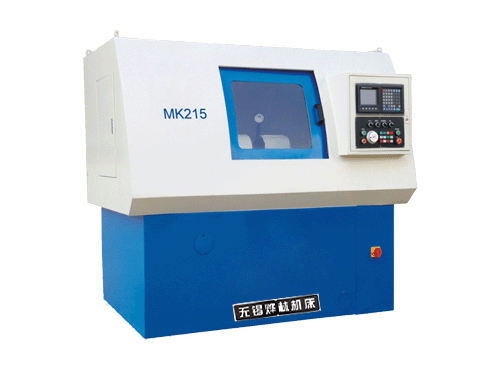
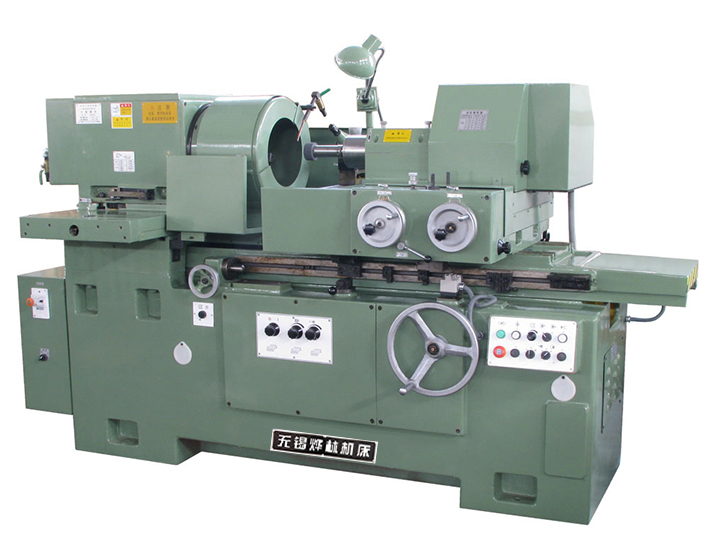
Profile Grinders: Precision Machining for Complex Curved Contours
Release time:2026-06-29 Visits:446
1. Introduction
In modern manufacturing, an increasing number of components require complex curved contours (such as mold cavities, aerospace turbine blades, and precision gear profiles), whose accuracy directly determines product performance and assembly quality. Unlike conventional grinders, profile grinders can precisely machine irregular curves, arcs, and special contours, achieving high precision (contour accuracy ≤ 0.002 mm, Ra ≤ 0.02 μm) and solving the technical bottleneck of complex contour machining.
2. Structure and Working Principle
2.1 Core Components
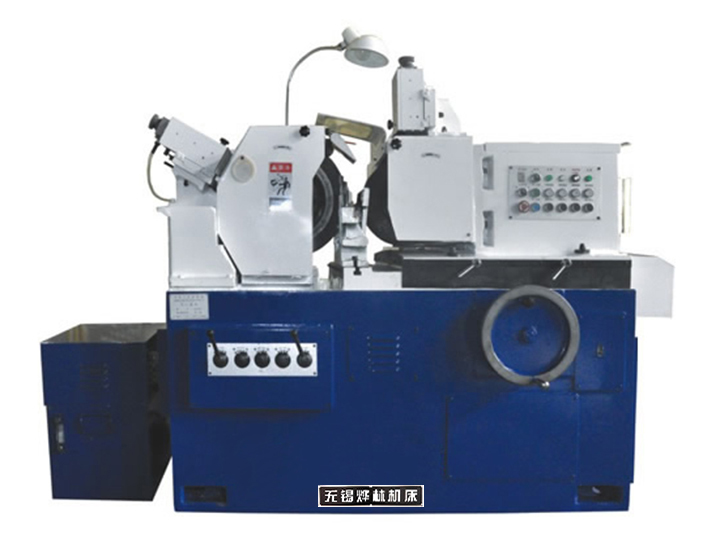
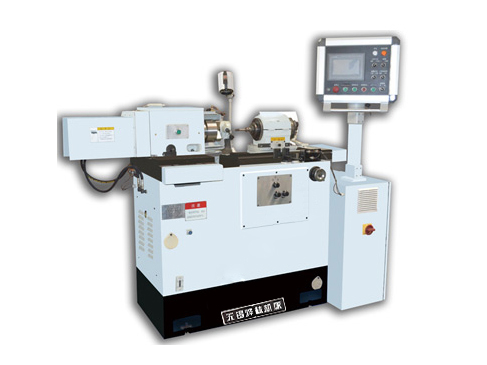
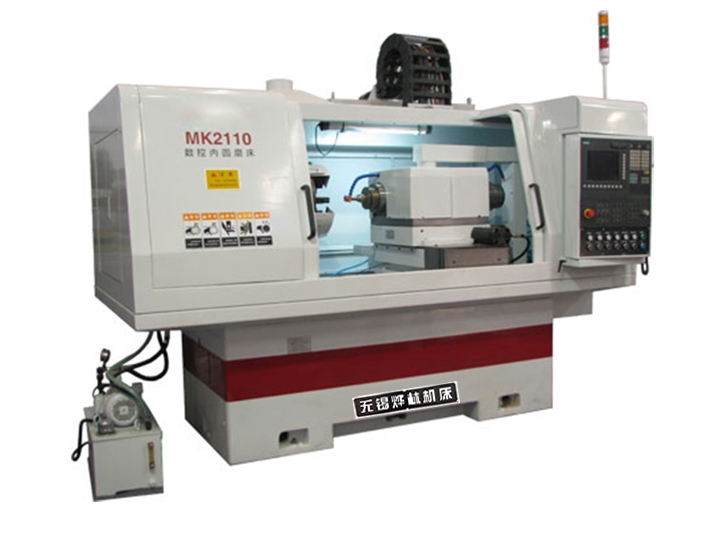
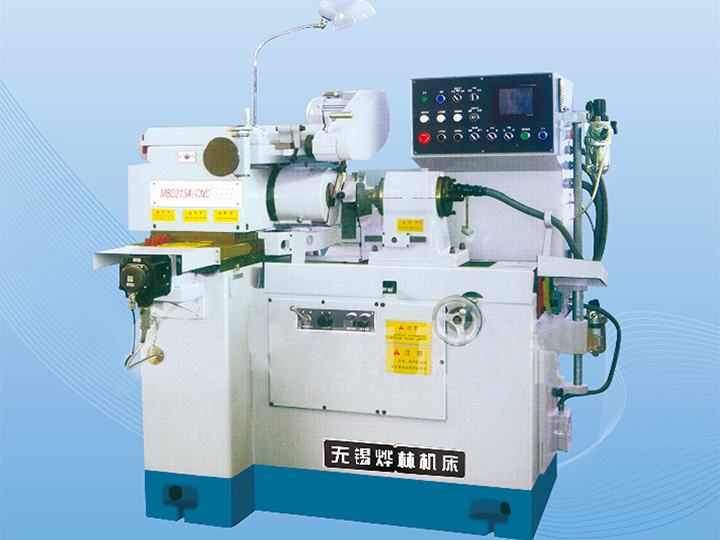
- Machine Base: High-rigidity cast iron structure with vibration-damping design, ensuring stable operation and avoiding vibration-induced contour errors during grinding.
- Grinding Head: Equipped with CBN/diamond grinding wheels of various shapes, matched with a high-precision rotating mechanism to adapt to different curved contour machining needs.
- Multi-Axis Motion System: Composed of X, Y, Z axes and rotary axes (A/C axes), supporting multi-axis linkage to drive the grinding wheel to move along the preset curved trajectory precisely.
- Clamping & Positioning Mechanism: Precision fixtures with high positioning accuracy, ensuring the workpiece is firmly clamped without deformation and aligned with the grinding trajectory.
- Control & Cooling System: Full-CNC control system (Siemens/Fanuc) for precise trajectory programming, and a high-pressure cooling system to reduce grinding temperature and flush debris.
2.2 Working Principle
The CNC system inputs the curved contour program, and the multi-axis motion system drives the grinding wheel and workpiece to move coordinately. The grinding wheel rotates at high speed to generate micro-cutting, while moving along the preset complex trajectory to remove material evenly. For optical
profile grinders, optical alignment technology is used to ensure the grinding trajectory matches the required contour, achieving ultra-precise machining without thermal deformation.
3. Classification and Key Characteristics
3.1 Classification
- By Processing Method: Optical profile grinders (for ultra-precise small contours) and CNC profile grinders (for large-batch complex contour machining).
- By Structure: Horizontal (for long workpieces with curved contours) and vertical (for small to medium-sized precision components).
- By Axis Configuration: 3-axis, 4-axis, and 5-axis linkage models, with 5-axis models suitable for complex free-form surface machining.
3.2 Core Characteristics
- High Contour Precision: Contour accuracy ≤ 0.002 mm, surface roughness Ra ≤ 0.02 μm, ensuring consistent machining quality of complex curves.
- Strong Adaptability: Compatible with various materials (alloy steel, ceramics, optical glass) and curved contours, including arcs, non-circular curves, and free-form surfaces.
- High Automation: CNC programming and multi-axis linkage realize automatic machining of complex contours, reducing manual intervention and improving efficiency.
- Precise Trajectory Control: Advanced motion control technology ensures the grinding wheel moves along the preset contour accurately, without deviation.
4. Key Parameters and Selection
4.1 Core Parameters
Core parameters include processing capacity (max workpiece size: length 50–1500 mm, width 50–500 mm, weight 10–300 kg), contour precision (≤ 0.002 mm), spindle speed (1000–8000 rpm), and axis travel (X-axis: 0–500 mm, Y-axis: 0–300 mm, Z-axis: 0–200 mm), with stepless speed regulation for different materials and contours.
4.2 Selection Principles
Select axis configuration based on contour complexity (5-axis for free-form surfaces), processing method by precision requirements (optical type for ultra-precision), and structure according to workpiece size. Choose grinding wheel material based on workpiece hardness (CBN for hardened steel, diamond for optical materials).
5. Industrial Applications
Widely used in mold manufacturing (stamping mold edges, plastic mold cavities), aerospace (turbine blades, precision instrument contours), automotive (gear profiles, camshaft curves), optical industry (lens molds, prism contours), and precision machinery (micro-component curved surfaces). They are particularly essential for machining high-precision complex contours that conventional grinders cannot handle.
6. Operation and Troubleshooting
6.1 Operation Tips
- Program the contour trajectory accurately, and simulate the machining process before operation to avoid collision.
- Adjust spindle speed and feed rate according to workpiece material and contour complexity; use appropriate cooling fluid to prevent thermal deformation.
- Regularly dress and balance the grinding wheel, and calibrate the multi-axis motion accuracy to ensure machining precision.
6.2 Common Troubleshooting
Common faults and solutions: Contour deviation is caused by inaccurate trajectory programming or axis motion error, resolved by re-programming and calibrating the motion system; surface scratches result from grinding wheel passivation or debris, fixed by dressing/replacing the grinding wheel and cleaning the cooling system.
7. Development Trends
Developing towards intelligence (AI-based trajectory optimization and real-time monitoring), higher precision (contour accuracy ≤ 0.001 mm), multi-axis integration (5-axis and above linkage), and integration with measurement systems to realize closed-loop machining of processing-measurement-compensation.
8. Conclusion
As core equipment for complex curved contour machining, profile grinders play an irreplaceable role in high-end manufacturing. Their precise trajectory control and high adaptability meet the machining needs of various complex components, supporting the development of mold, aerospace, and automotive industries.
 English