Center Hole Lapping Machines: Precision Benchmark for High-Accuracy Component Machining
Release time:2026-06-22 Visits:497
1. Introduction
As the positioning benchmark for shaft-like and disc-like components, center holes directly determine the accuracy of subsequent machining processes such as grinding and turning. After initial drilling or grinding, center holes often have tiny defects like uneven roughness or micro-scratches, which affect component assembly accuracy and service life. Center hole lapping machines specialize in refining these defects, achieving ultra-smooth and high-precision center holes (roundness ≤ 0.001 mm, Ra ≤ 0.01 μm) to ensure the quality of high-end precision components.
2. Structure and Working Principle
2.1 Core Components
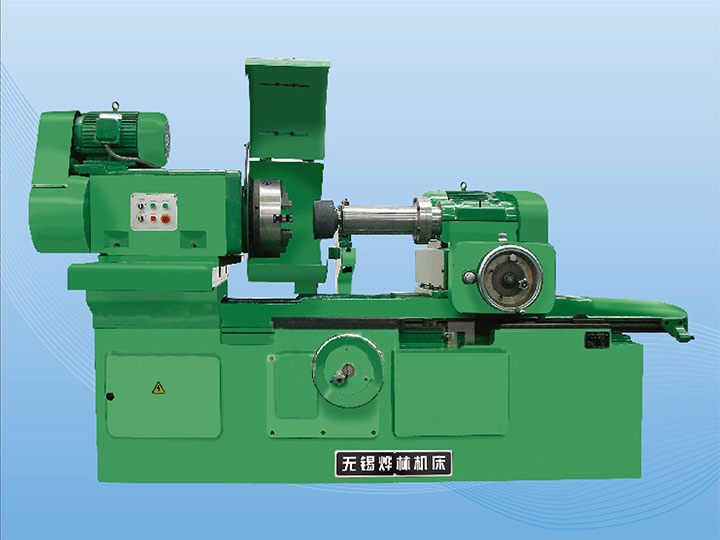
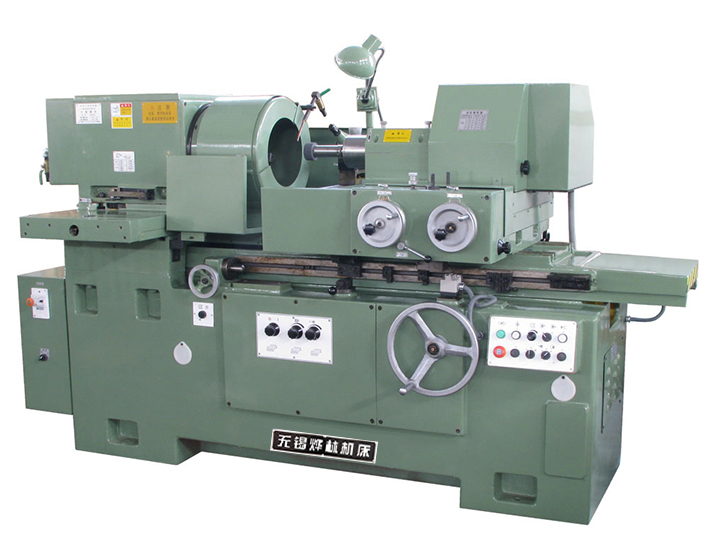
- Machine Base: High-rigidity cast iron structure with vibration-damping design, ensuring stable operation and avoiding vibration-induced precision errors during lapping.
- Lapping Head: Equipped with multi-edge CBN/diamond lapping tips and an adjustable expansion mechanism, ensuring even contact with the center hole surface for uniform material removal.
- Spindle System: High-precision spindle with minimal runout (≤ 0.0005 mm), driving the lapping head to rotate stably at adjustable speeds.
- Clamping & Positioning Mechanism: Precision fixtures with auxiliary support for long shaft workpieces, ensuring alignment between the center hole and lapping head to avoid eccentric lapping.
- Cooling & Cleaning System: High-pressure coolant delivery and air-blowing function, reducing lapping temperature, flushing debris, and keeping the center hole clean during processing.
2.2 Working Principle
The workpiece is firmly clamped and positioned, with the lapping head aligned to the center hole. The spindle drives the lapping head to rotate at a constant speed, while the adjustable expansion mechanism ensures proper contact pressure. Micro-cutting is generated between the lapping tips and the center hole surface to remove tiny defects gently, avoiding thermal deformation and achieving ultra-precision finishing. The cooling and air-blowing system works synchronously to ensure processing stability and surface quality.
3. Classification and Key Characteristics
3.1 Classification
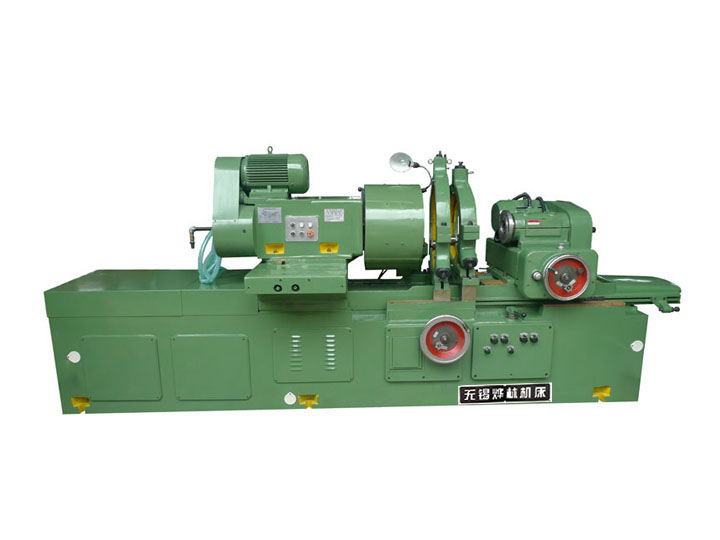
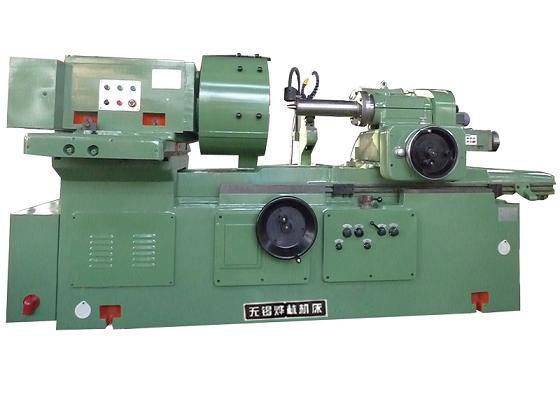
- By Structure: Horizontal (for long shaft workpieces) and vertical (for small to medium-sized precision components).
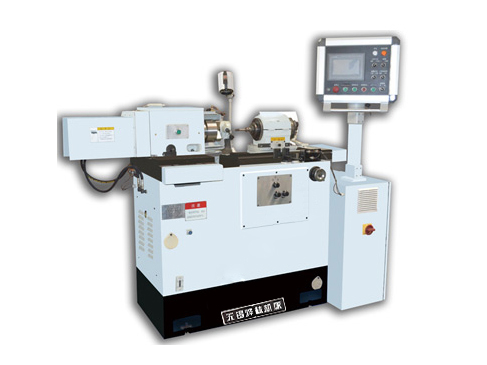
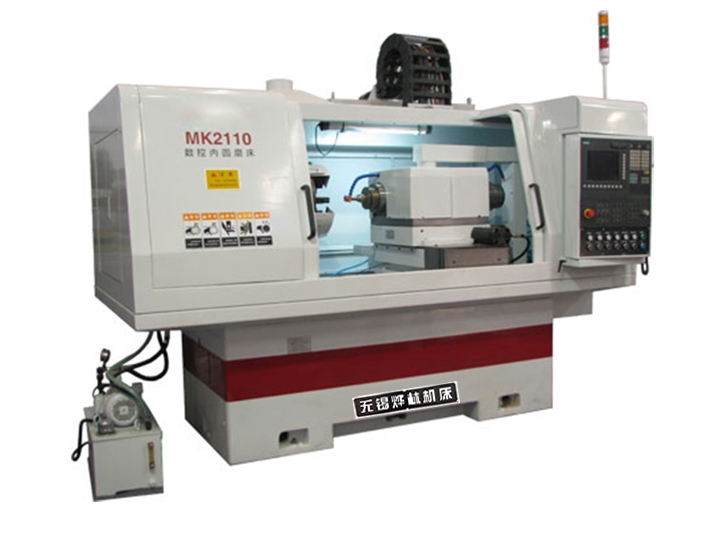
- By Control: Manual (small-batch repair), semi-automatic, and full-CNC (mainstream for large-batch high-precision production), with full-CNC models supporting automatic feeding and parameter adjustment.
- By Function: Single-station (single workpiece processing) and multi-station (simultaneous processing of multiple workpieces) models, improving production efficiency.
3.2 Core Characteristics
- Ultra-High Precision: Center hole roundness ≤ 0.001 mm, surface roughness Ra ≤ 0.01 μm, ensuring accurate positioning for subsequent machining.
- Gentle Processing: Low-pressure micro-cutting avoids thermal deformation and damage to workpieces, suitable for hardened and fragile precision components.
- Strong Adaptability: Compatible with various materials (alloy steel, cast iron) and center hole sizes (φ0.5–φ20 mm), adapting to different workpiece types.
- Stable Efficiency: Uniform lapping head wear and automatic parameter control ensure consistent processing quality for batch production.
4. Key Parameters and Selection
4.1 Core Parameters
Core parameters include processing capacity (max center hole diameter φ0.5–φ20 mm, max workpiece length 50–3000 mm, max workpiece weight 10–500 kg), lapping precision (roundness ≤ 0.001 mm, Ra ≤ 0.01 μm), and spindle speed (100–3000 rpm, stepless speed regulation for different materials and hole sizes).
4.2 Selection Principles
Select structure based on workpiece length (horizontal for long shafts, vertical for small components), control mode by production scale, and lapping tip type by workpiece material hardness. For hardened workpieces after heat treatment, choose CBN lapping tips for better wear resistance.
5. Industrial Applications
Widely used in precision machinery (precision motor shafts, bearing rings), automotive (engine crankshafts, transmission shafts), aerospace (aerospace bearings, instrument spindles), and precision instrument industries. They are particularly essential for refining center holes of heat-treated workpieces to correct deformation and ensure subsequent machining accuracy.
6. Operation and Troubleshooting
6.1 Operation Tips
- Adjust lapping speed and pressure according to workpiece material and center hole size; reduce speed and pressure for precision finishing.
- Ensure accurate alignment between the workpiece and lapping head; use auxiliary support for long shafts to avoid bending deformation.
- Regularly check and replace worn lapping tips; maintain the cooling system to keep coolant clean and ensure uniform cooling.
6.2 Common Troubleshooting
Common faults and solutions: Eccentric center holes result from misalignment between the workpiece and lapping head, resolved by repositioning and calibrating the clamping mechanism; surface scratches are caused by contaminated coolant or passivated lapping tips, fixed by replacing coolant and dressing/replacing lapping tips.
7. Development Trends
Developing towards intelligence (AI-based parameter optimization and real-time monitoring), automation (integrated with feeding robots for unmanned production), higher precision (Ra ≤ 0.005 μm), and multi-station integration to improve production efficiency and adapt to mass customization needs.
8. Conclusion
As a critical precision finishing equipment for center holes,
center hole lapping machines provide a reliable positioning benchmark for high-precision component machining. Their unique gentle refining capability ensures the quality of subsequent processes, playing an irreplaceable role in the development of high-end manufacturing industries.
 English