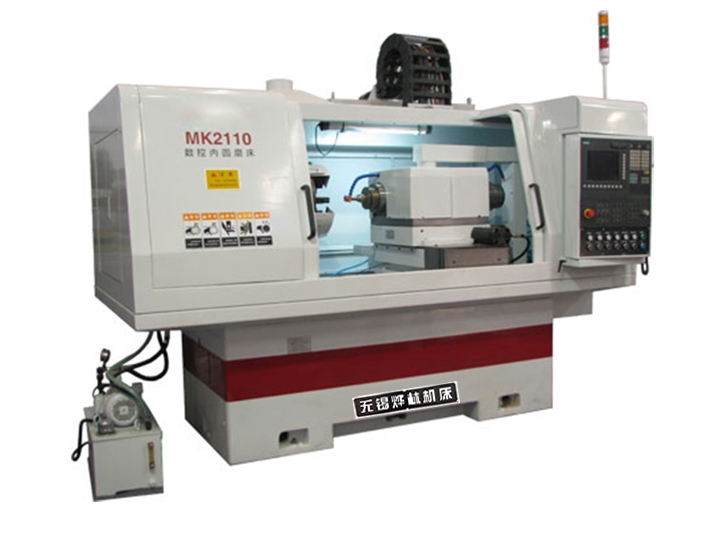
Analysis of Ultra-Precision Machining Machine Tool Technology: Core Equipment and Application Prospects of Nanoscale Precision
Release time:2026-04-13 Visits:584
Ultra-precision machining machine tools are key equipment for achieving sub-micron to nanoscale machining accuracy, and their technical level directly determines the core competitiveness of high-end manufacturing. These machine tools achieve high-precision material removal or forming through the integrated application of precision machinery, advanced control, high-resolution measurement, and environmental stability control technologies, and are widely used in optics, semiconductors, medical care, new energy and other fields.
In terms of machining accuracy, ultra-precision machining generally refers to processes with accuracy between 0.3 and 0.03 microns and surface roughness better than 0.03 microns. When the accuracy is improved to within 0.03 microns (30 nanometers), it belongs to nanoscale machining. Mainstream processes include diamond turning, ultra-precision grinding, precision lapping and polishing, etc., which are suitable for the manufacturing of key components such as optical elements, semiconductor substrates, and high-performance bearings.
The core technology of ultra-precision machining machine tools is reflected in several aspects. The ultra-precision spindle system uses aerostatic or hydrostatic bearings to achieve extremely high rotational accuracy; the feed system mostly uses linear motors with laser interferometer feedback to ensure nanoscale positioning; environmental control requires strict control of temperature fluctuations, vibration and dust to eliminate external interference. The integration of online measurement and error compensation systems can real-time correct machining deviations, further ensuring forming accuracy.
Its application fields have expanded from early national defense and aerospace to many key industries of the national economy. In semiconductor manufacturing, ultra-precision machining machine tools are used for processing lithography machine components; in the information technology field, they support the mass production of hard disk platters and laser printer polygon mirrors; in new energy and medical equipment, the requirements for precision parts are also increasing. Future technological development will focus more on composite machining capabilities (such as turning-milling-grinding composite), intelligent process control, and higher efficiency and stability improvement.
It should be noted that China still needs to break through the independent research and development capabilities of high-end equipment and core functional components (such as ultra-precision spindles and measurement systems) in this field to narrow the gap with the international advanced level. Through continuous innovation and technological accumulation, ultra-precision machining machine tools will play an increasingly important role in the global high-end manufacturing industry.
 English