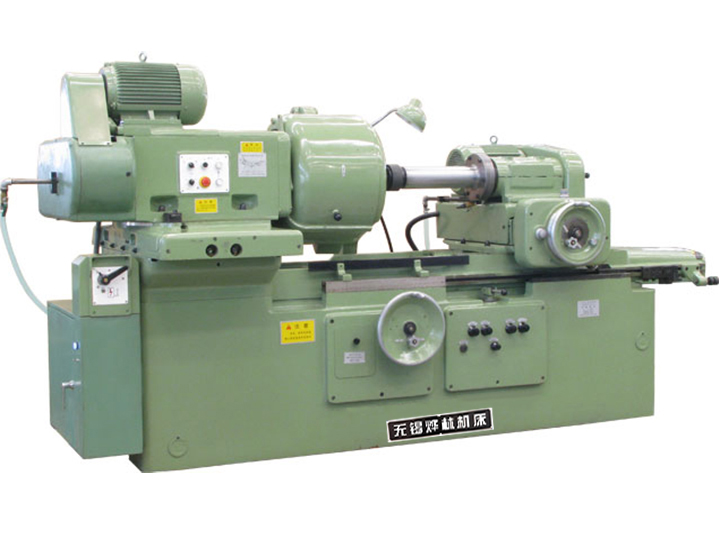
Centerless Cylindrical Grinder: A Precision Machining Solution for High Accuracy and Efficiency
Release time:2026-03-27 Visits:611
A centerless cylindrical grinder is a machine tool used for precision machining of cylindrical, conical, or other rotationally symmetric external surfaces. Its core feature is that the workpiece does not require center positioning using centers or chucks; instead, it is supported and guided to rotate by mechanisms such as a work rest blade and regulating wheel, thereby achieving high-precision and high-efficiency grinding operations. This unique centerless clamping design gives it an important position in modern precision manufacturing, particularly suitable for mass production and high-precision requirement scenarios.
Working Principle and Motion Forms
The machining process of a centerless cylindrical grinder relies on the coordinated movement of the grinding wheel, regulating wheel, and workpiece. The grinding wheel performs the main cutting role, rotating at high speed to remove material from the workpiece surface; the regulating wheel rotates in the same direction at a slower speed, primarily controlling the workpiece's rotational movement and feed rate. The workpiece is placed on the work rest blade between the grinding wheel and regulating wheel. By adjusting the regulating wheel's angle and rotational speed, longitudinal or transverse feeding of the workpiece can be achieved. This design avoids the deformation problem caused by clamping forces in traditional cylindrical grinders, making it especially suitable for processing easily deformable parts such as slender shafts and thin-walled components. Centerless cylindrical grinders mainly use two grinding methods: through-feed grinding, suitable for continuous feeding of long workpieces, and in-feed grinding, suitable for workpieces with shoulders or bosses.
Structural Composition
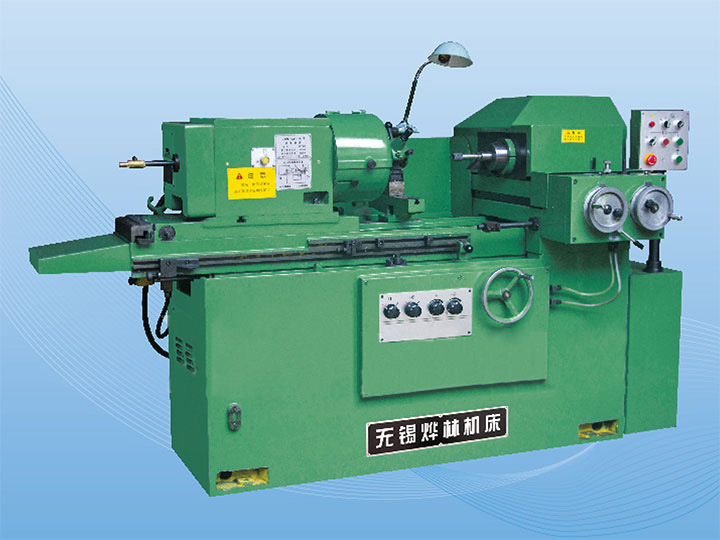
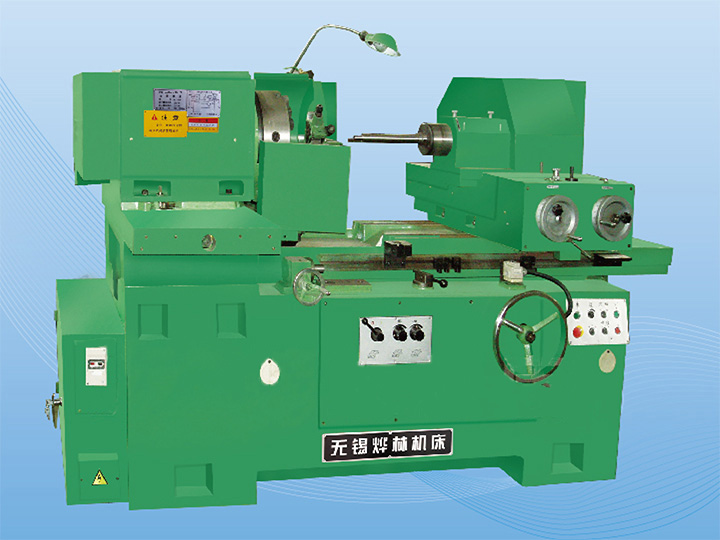
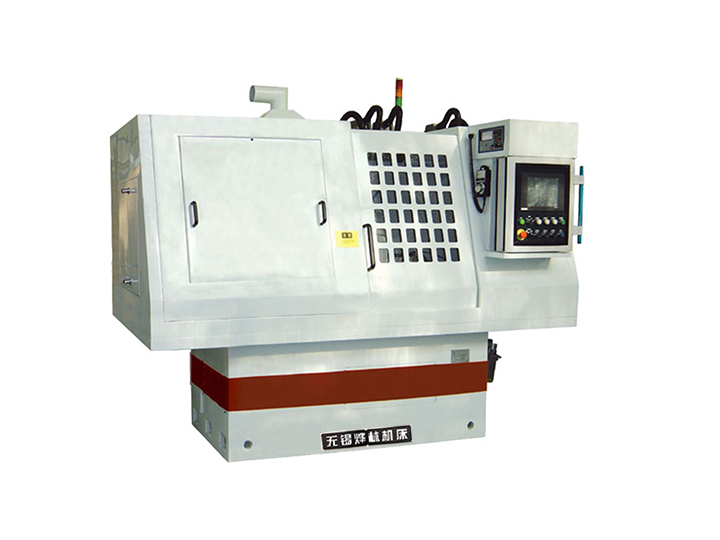
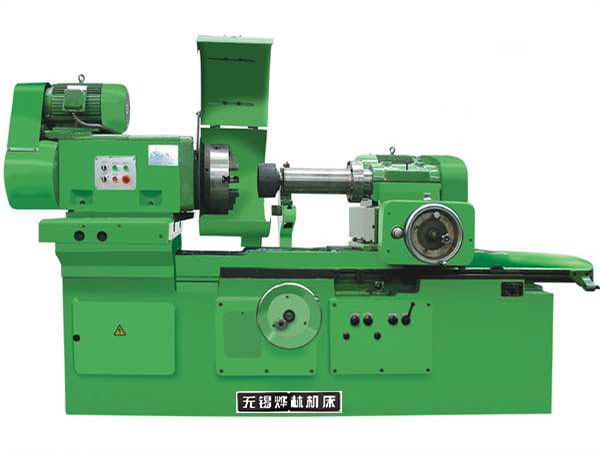
The core components of the machine tool include the bed, grinding wheel headstock, regulating wheel headstock, work rest blade, and dresser. The bed, as the basic supporting structure, must have high rigidity and shock resistance to ensure processing stability. The grinding wheel headstock mounts the grinding wheel and controls its transverse feed, usually equipped with a precision servo system to achieve micron-level cutting depth adjustment. The regulating wheel headstock adjusts the regulating wheel's inclination angle and rotational speed to control the workpiece's rotation speed and feed rate. The work rest blade supports the workpiece, while the dresser shapes and sharpens the grinding wheel and regulating wheel to maintain grinding accuracy. Modern CNC centerless cylindrical grinders also integrate motion control, parameter setting, and real-time monitoring functions to support automated machining processes.
Technical Features and Advantages
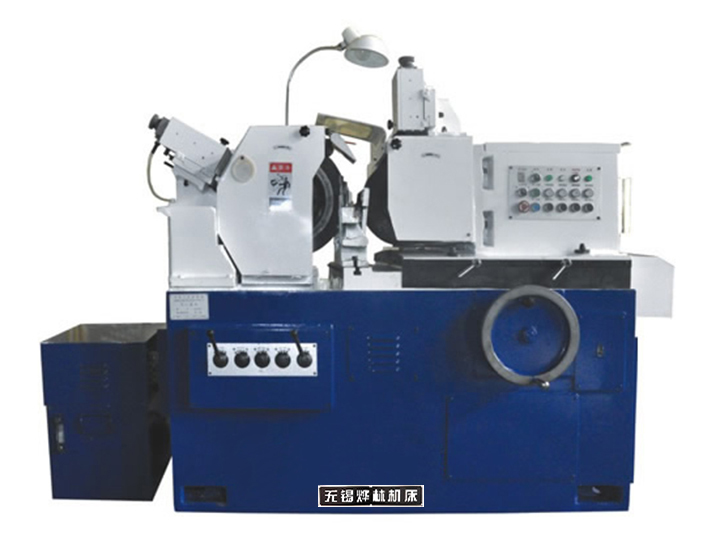
Centerless cylindrical grinders possess high-precision machining capabilities. Since the workpiece does not require clamping, clamping errors are avoided, achieving roundness errors ≤ 2 μm and dimensional accuracy ≤ 4 μm; high-precision models can even achieve roundness of 0.5 μm and dimensional accuracy of 2 μm. Their high-efficiency production characteristics support continuous feeding processing, making them especially suitable for rapid grinding of mass-produced small parts such as bearing rollers and piston pins. The equipment has good versatility: by adjusting the regulating wheel angle and work rest blade height, it can handle workpieces with diameters ranging from millimeters to hundreds of millimeters and grind complex shapes such as tapers and stepped shafts. It has a high degree of automation integration, often equipped with automatic loading/unloading, online measurement, and compensation systems to reduce manual intervention and improve production consistency.
Application Fields
This equipment is widely used in automotive, aerospace, precision instruments, and other fields. Typical machining objects include shaft parts (e.g., drive shafts, motor shafts), sleeve parts (e.g., bearing rings), standard parts (e.g., bolts, pins), and various high-hardness material workpieces (e.g., hardened steel, cemented carbide). Its high-efficiency batch processing and high-precision control capabilities make it one of the key equipment in modern precision manufacturing.
In summary, through its unique design and precise motion control, the centerless cylindrical grinder has significant advantages in scenarios requiring efficient batch processing and high precision, making it an ideal choice for improving production efficiency and product quality.
 English