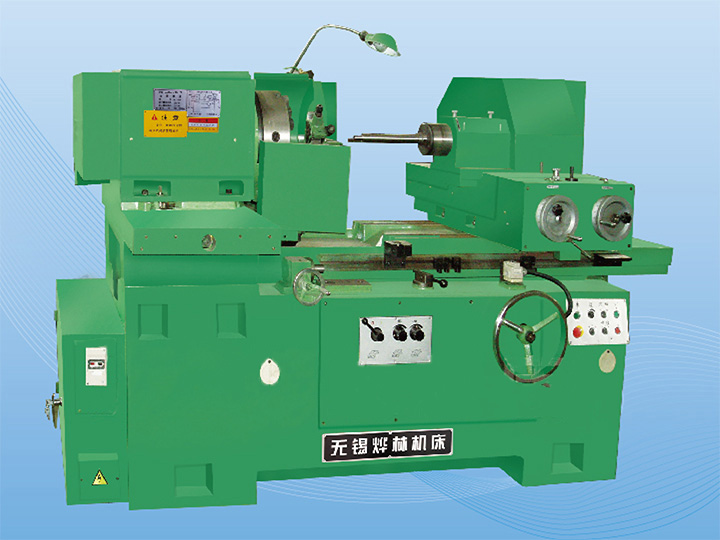
Guide to Curve Grinders: Principles, Applications, and Selection for Precision Complex Contour Grinding
Release time:2026-02-06 Visits:543
A curve grinder is a specialized machine tool for achieving high-precision grinding of workpieces with complex contours. Through its unique working principle, it solves the problem of precision grinding of complex surfaces that traditional machining struggles to handle, making it one of the core pieces of equipment in the precision manufacturing field.
Curve grinders are mainly classified into tool curve grinders and optical curve grinders, and have evolved into more advanced CNC optical curve grinders. Their core working principle is to achieve precision machining of complex surfaces through segmented grinding or optical projection comparison.
Tool curve grinders adopt the method of decomposing the complex workpiece contour into several straight line and arc segments, and finally combine them to form the overall contour through precise segmented grinding operations.
Optical curve grinders rely on a high-precision optical projection system to magnify the workpiece contour significantly (typically 25x or 50x) and project it onto a dedicated screen. The operator controls the grinding wheel to precisely compare and grind the magnified image of the workpiece with the pre-drawn standard enlarged drawing on the screen until the two contours completely overlap, thereby ensuring extremely high machining accuracy.
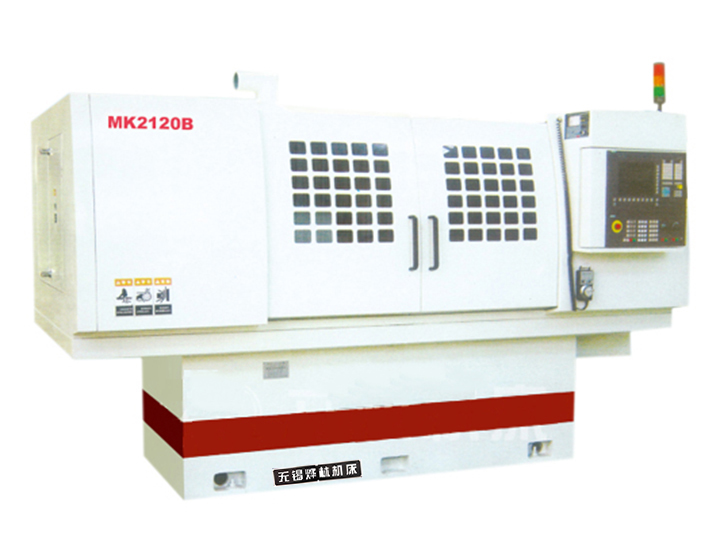
More advanced CNC optical curve grinders integrate a numerical control system to precisely control the movement trajectory of the grinding head through pre-programming, achieving a higher level of automation, repeatability, and machining consistency, and significantly reducing reliance on the operator's experience.
In terms of equipment structure, a curve
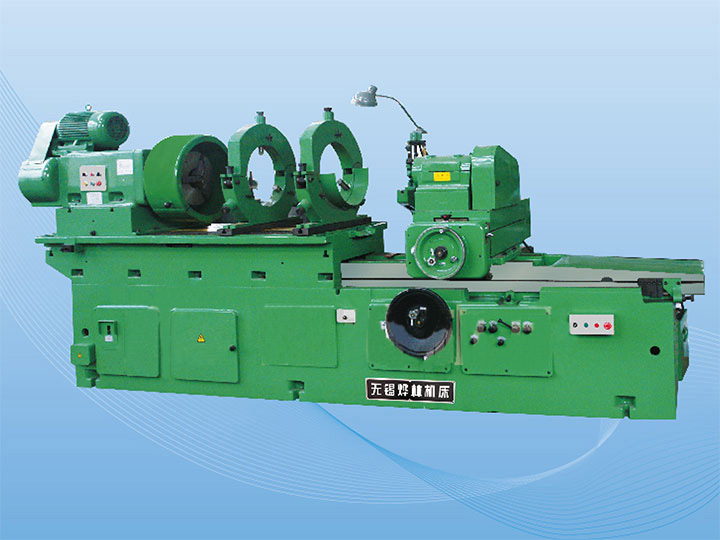
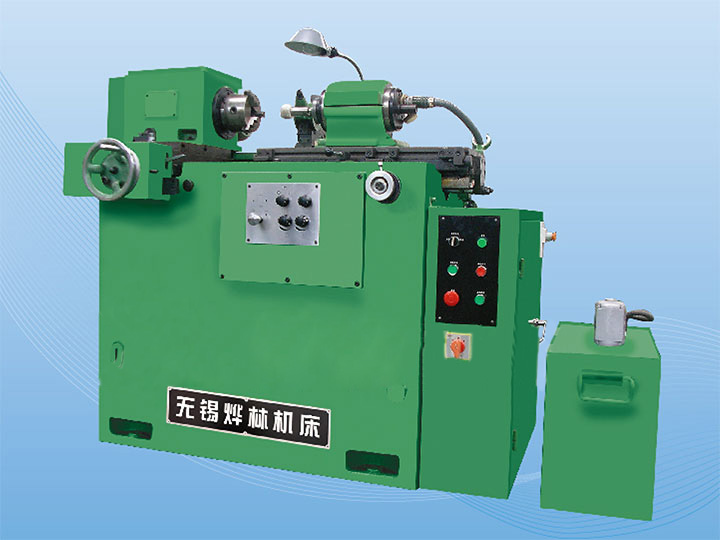
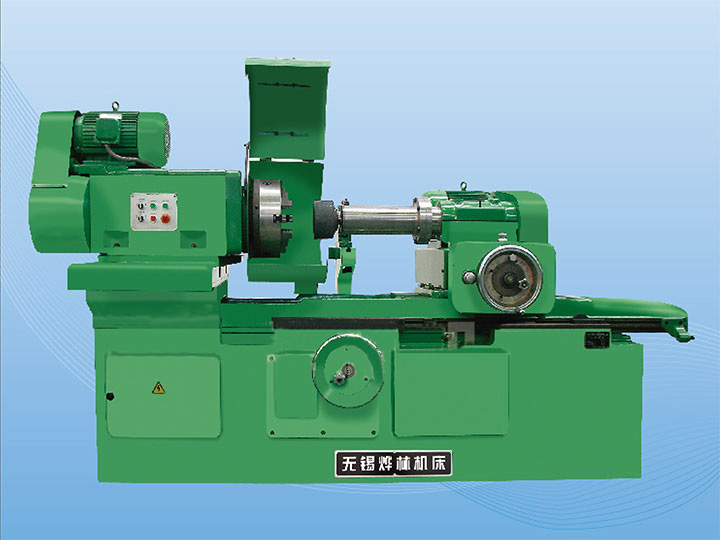
grinder usually consists of the following core components: a rigid bed, a high-precision coordinate table, a wheel head, and an advanced optical system or numerical control system. The coordinate table can achieve precise micro-movements in the longitudinal, transverse, and vertical directions; the wheel head not only drives the grinding wheel to perform high-speed rotation as the main movement but also can make precise reciprocating linear movements along the guide rails. Some high-end models of wheel heads also have the function of rotating around multiple axes, which greatly expands their ability to machine complex curved surfaces.
Its core components include a high-precision optical system (including a projector, precision lenses, etc.), a precision grinding head (often using specially shaped diamond or CBN grinding wheels such as thin sheets, pointed tips, etc.), and a precision feed mechanism with extremely high resolution.
Curve grinders possess excellent machining capabilities. Their typical machining accuracy can reach ±0.01 mm, and the surface roughness Ra value of the machined surfaces can be as high as 0.4 μm. They can handle the grinding of various complex profiles, including straight lines, arcs, multi-arc surfaces, and even Archimedean spiral surfaces.
It is particularly suitable for machining small precision parts with high hardness (such as 58-64HRC), poor rigidity, and complex shapes, thus being widely used in several key industries:
Precision mold manufacturing: Used for machining the core precision curved surfaces of molds.
Aerospace: Manufacturing engine blades, precision sensor components, etc.
Medical devices: Producing parts with extremely high requirements for surface finish and precision, such as micro ball head rods and surgical instrument joints.
Electronic products: Machining precision fixtures, lead frame molds, etc.
The significant advantage of curve grinders is their ability to economically and efficiently complete high-precision grinding tasks of complex curved surfaces that are difficult or even impossible to achieve with traditional machining methods, making them very suitable for R&D prototyping, repair, and small-batch production scenarios.
However, it also has certain limitations. Its machining efficiency is usually lower than that of fully automatic production line equipment dedicated to mass production. In addition, for traditional non-CNC models, the machining quality largely depends on the technical level and experience of the operator, requiring high skills from the operator.
When selecting a curve grinder, it is necessary to comprehensively consider the material characteristics, hardness, shape complexity, batch size, as well as accuracy and surface quality requirements of the parts to be machined, so as to make the most appropriate choice among tool curve grinders, optical curve grinders, and CNC optical curve grinders.
 English