Comprehensive Analysis of Cylindrical Grinders: From Working Principles to Selection Guide
Release time:2025-12-15 Visits:664
A cylindrical grinder is a high-precision metal-cutting machine tool specifically designed for precision machining of external surfaces of cylindrical, conical, and other rotationally symmetric workpieces. It grinds the workpiece using a high-speed rotating grinding wheel to achieve micron-level dimensional tolerances, ultra-high surface finish (Ra value up to 0.01μm), and precise geometric shapes (such as roundness and cylindricity). The following are its core points:
1. Core Types and Characteristics
1.1 Plain
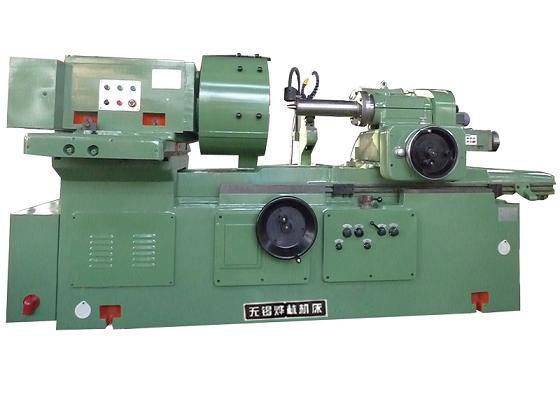
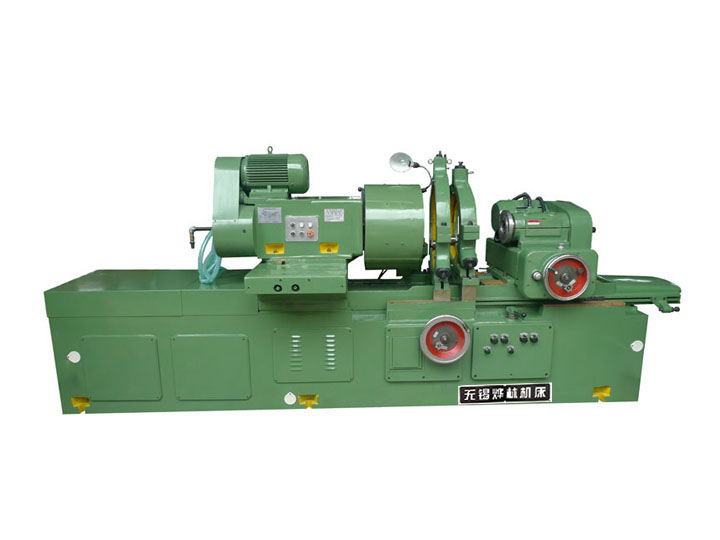
Cylindrical Grinder: Suitable for single-piece or small-batch production, capable of grinding external circles and tapered surfaces, with a simple structure but low automation level.
1.2 Universal Cylindrical Grinder: Equipped with internal grinding attachments, enabling processing of inner holes, inner tapers, and end faces, featuring comprehensive functions and suitable for maintenance and complex part machining.
1.3 Centerless Cylindrical Grinder: Workpieces are not fixed by centers, achieving efficient processing through the cooperation of grinding wheel, regulating wheel, and support plate, suitable for mass production of small parts (such as bearing rollers), but with complex setup.
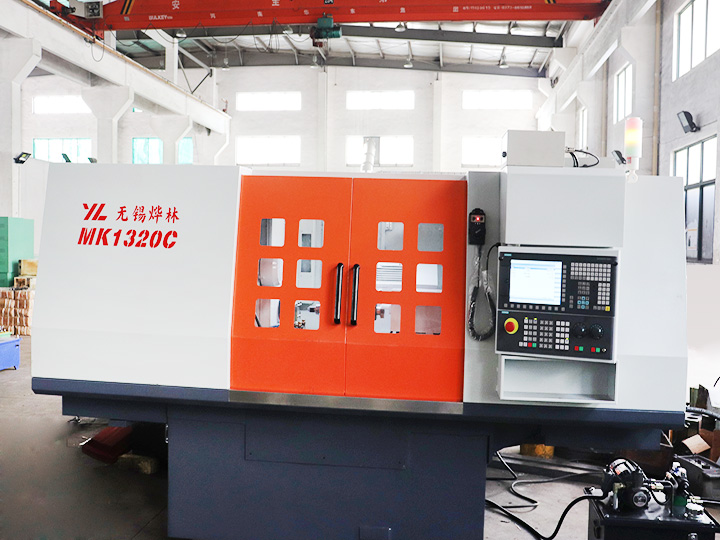
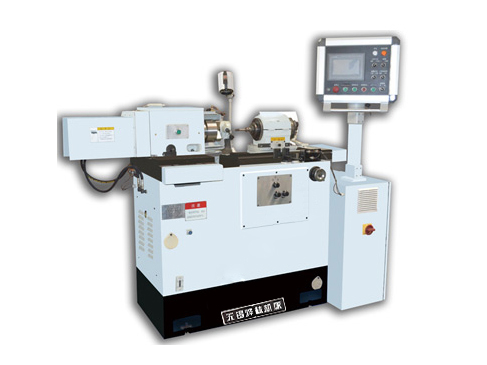
1.4 CNC Cylindrical Grinder: All movements are controlled by a computer system, with extremely high precision (roundness ≤ 0.1μm), capable of processing complex profiles, widely used in automotive, aerospace, precision machinery and other fields.
2. Technological Development and Applications
Cylindrical grinders have gradually evolved since the early 20th century, with centerless grinders emerging in the 1920s, mirror grinding achieved in the 1950s, and CNC technology introduced in the 1970s. Modern CNC models are equipped with active measuring devices, diamond dressing systems, and coolant filtering devices, supporting full closed-loop control. Their applications cover:
- Automotive industry: Engine components such as crankshafts and camshafts.
- Aerospace: Precision parts like rotor shafts and landing gears.
- Energy equipment: Steam turbine rotors.
- Textile and printing industries: Processing of rubber rollers and leather rollers.
3. Selection Recommendations
- High precision requirements: Prioritize CNC cylindrical grinders, considering complex profile machining capabilities.
- Mass production: Centerless grinders can improve efficiency but need to match part sizes.
- Multi-functional requirements: Universal cylindrical grinders are suitable for combined internal and external cylindrical machining.
In addition, pay attention to the grinding wheel linear speed (CBN grinding wheels can reach 80m/s), bed rigidity, and cooling system performance to ensure processing stability and service life.
Cylindrical grinders are core equipment in precision manufacturing. Selection should be based on processing requirements, batch size, and precision requirements to maximize production efficiency and quality.
 English